Showing posts with label Empire Cinema. Show all posts

Tuesday, 21 April 2026

So Who Was Archibald Hurley Robinson?

An A-Z of Architects of Loughborough

For a complete list of the A-Z posts please head over to the bloglist.


Short biography of Archibald Hurley Robinson

Like Harry Weedon, who ran the architectural practice that Archibald Hurley Robinson worked for, Archibald was born in Handsworth, albeit some 5 years before Weedon! By 1891 the family which consisted of parents Thomas, a pawnbroker, and Ellen, along with five children older than Archibald, and one younger, were living on Nineveh Road, Handsworth, with two servants. By 1901 when Archibald was aged 17, and a pupil architect, the family were living on Soho Road.

Archibald is listed in a 1908 trade directory under the architects section, at his practice on Cherry Street, Birmingham, and he is already an associate of RIBA. Even in 1911, when he is 27, Archibald is still living with his parents on Soho Street, where he’s described as being an architect and surveyor working on his own account. By the time of his marriage to Kathleen Ethel Smith in February 1913, Archibald was living on Booth Street, Birmingham, although when their first child, Beryl Clare was born in August 1915, they were living in a house called Hazlemere, on Russell Road, Hall Green in Worcestershire. 

Archibald’s served in the Royal Air Force during the First World War, the couple had another child, Keith Douglas in 1918, and by 1921 they had moved back to Booth Street in Handsworth and Archibald had moved his architectural practice to Waterloo Street in Birmingham. 1926 finds them living at Cole Bank Road in Sparkhill. During the 1930s much of Archibald’s work concentrated on cinemas, many of which were in the Midlands. Another house moves sees them on Warwick Road, Birmingham in 1939.

Curiously, Archibald died only a month after Arthur John Price, who had also worked for Weedon, and had designed Loughborough’s Odeon cinema. At the time of his death Archibald was still living at The Grove, 1156 Warwick Road, Acocks Green, Birmingham. Probate was granted 26 August to Keith Douglas Hurley Robinson who had followed his father’s footsteps into architecture, and Beryl Clare Mercer (wife of Bernard Rye Mercer). Effects were £11,030 7s. 9d. He was buried in St Mary’s churchyard in Acocks Green.

____________________________________      

What follows is a selection of buildings designed by Arthur John Price

Note: this is a selective, not a comprehensive listing.

____________________________________

*The Regal Coalville 1933

*The re-modelling of Loughborough’s Empire Cinema, Cattle Market (1936)

*Dudley Hippodrome Theatre (1938)

*The Rex Coalville 1938

____________________________________

Basic facts

Name: Archibald Hurley Robinson

Parents: Thomas A. Robinson, Ellen

Date and place of Birth: 14 June 1883 Handsworth, Birmingham

Spouse: Kathleen Ethel née Smith, m.February 1913

Children: Beryl Clare (b.1915), Keith Douglas (b.1918)

Death: 24 February 1953, Birmingham

Places lived: Nineveh Road, Handsworth; Booth Street, Birmingham; Hall Green, Worcestershire;

Place of work/Offices: Waterloo Street, Birmingham; Corporation Street, Birmingham

Qualifications

Associate of RIBA (1907)

Fellow of RIBA (1914)

____________________________________

I’m taking part in the April A-Z Blogging Challenge!


____________________________________

Posted by lynneaboutloughborough

With apologies for typos which are all mine!

_______________________________________________

Thank you for reading this blog.

Copyright:

The copyright © of all content on this blog rests with me, however, you are welcome to quote passages from any of my posts, with appropriate credit. The correct citation for this looks as follows:

Dyer, Lynne (2026). So Who Was Archibald Hurley Robinson? Available from: https://lynneaboutloughborough.blogspot.com/2026/04/so-who-was-archibald-hurley-robinson.html [Accessed 22 April 2026]

Take down policy:

I post no pictures that are not my own, unless I have express permission so to do. All text is my own, and not copied from any other information sources, printed or electronic, unless identified and credited as such. If you find I have posted something in contravention of these statements, or if there are photographs of you which you would prefer not to be here, please contact me at the address listed on the About Me page, and I will remove these.

External Links:

By including links to external sources I am not endorsing the websites, the authors, nor the information contained therein, and will not check back to update out-of-date links. Using these links to access external information is entirely the responsibility of the reader of the blog.

Blog archive and tags:

If you are viewing this blog in mobile format, you will not be able to easily access the blog archive, or the clickable links to various topics. These can be accessed if you scroll to the bottom of the page, and click 'View Web Version'. Alternatively, there is also a complete list of posts, which when clicked will take you to the page you are interested in.

Searching the blog:

You can search the blog using the dedicated search box that appears near the top of the blog when viewed in the web version. Alternatively, you can search using your usual search engine (e.g. Bing, Google, DuckDuckGo etc.) by following this example:

site: https://lynneaboutloughborough.blogspot.com/ “Radmoor House”

NOTE – the words you’re actually looking for must be in “” and the first of these must be preceded by a space

Thank you for reading this blog.

Lynne

Sunday, 18 December 2016

Cinema memories

The current Odeon in Loughborough

Last week I was lucky enough to go to a workshop in Leicester on cinema and memory, a session which was focused on people's memory of films they'd seen and research that is being done into this area, with the aim of developing more collaboration between community groups and researchers working in this area.

One of the points that was made was that if you asked someone something like what was the first film they went to see, they didn't usually remember much about the actual film, and were more likely to describe the whole experience. While I was thinking about this I was trying to remember my own experience of going to the cinema, and I found I was no different, so this is my story of the first time I went to the cinema on my own.


It was a James Bond film, with Sean Connery: it was 1971, so it was Diamonds are Forever. I can't remember anything specific about the film, except for the noise and the excitement, but I do remember other things, like: it was at the Odeon in Newport, which was situated on a busy road, at a traffic-light controlled junction. I went on the bus with a school-friend; we were both 11. I'd been into town on the bus before, to meet friends, and I knew where the bus stop was, but I also knew that the bus sometimes had to stop at the traffic lights, and people often got off there. My mother also knew this. She very firmly told me we were not to get off at the lights if the bus had to stop there, but to continue on and get off at the proper bus stop. As we approached the lights, they turned to red. We got off the bus! And that it what I remember about that cinema trip!!

You may be wondering what this has to do with Loughborough? I wasn't brought up in Loughborough, and I don't remember the double seats in the back row (apparently called Chummies in Scotland!) at the Victory, so I was going to ask you what your memory of your first cinema visit was: did you go to the Victory, or the Essoldo (or the Empire, or the New Empire, or the Classic)? Or, was it the Odeon the showing that film you desperately wanted to go and see? Maybe your first cinema-going experience was to the Curzon (yes, I know this was formerly the Essoldo, Empire etc.)? 

The former Odeon in Loughborough
And then I thought I wonder if the Newport cinema is still there, so I went off and searched the internet, as you do! And I was surprised! It's had mixed fortunes, and is a Grade II listed building, now called the Neon, and is showing films again. But that wasn't the only thing that surprised me! If you'd asked me to describe the cinema I visited over 40 years ago, I'd have been able to tell you the doors were kind of sideways on to the footpath, and there was a lot of black around them, but I wonder if subconsciously I remembered this, hence why I am so attracted to our own former Odeon, now Beacon Bingo? I used Google maps to walk virtually along the street I remembered and was shocked when I saw the building and how similar it is to our former Odeon! 


The similarity, of course, was because they were both built for the Oscar Deutsch chain, and designed by Arthur Price, of the Harry Weedon Architect firm, and built in the streamlined moderne style. Loughborough's cinema was built in 1936, Newport's in 1938: both are now Grade II listed.

Anyway, back to cinema memories: if you want to check the cinema memories website, which is still under construction, you can find it at cinemamemories.org    

You are welcome to quote passages from any of my posts, with appropriate credit. The correct citation for this looks as follow:

Dyer, Lynne (2016). Cinema memories. [Online] Available from: http://lynneaboutloughborough.blogspot.com/2016/12/cinema-memories.html [Accessed 8 December 2016]


Sunday, 13 March 2016

Loughborough and its cinemas

I recently had the good fortune to attend a lecture session and picture show in the Phoenix in Leicester. Lots of great stuff in the lectures, but I was particularly interested in Matt Jones's work to uncover the history of the many cinemas that have been in Leicester. There have been a number of books written on the history of Leicester cinemas, but Matt's own research discovered that many cinemas had been built along the routes of public transport, especially along the tram routes, so it was easy for people to get to the cinema. He also discovered that at first there were lots of small cinemas, in about the 1970s many were converted into two screens, and in the 1990s many introduced further screens. Some of the cinemas were known as flea pits, because people didn't have the opportunity to bathe so often in the earlier days of the cinema, so fleas were quite common in the buildings. Also, there seems to have been lots of name-changes going on!  

A friend, who has recently moved to Belper, told me all about the Ritz Cinema there, which was originally built as a municipal hall, and at various times has housed the library and a theatre, and has been a court and a meeting hall. Apparently there used to be two cinemas in Belper, and both The Ritz and The Palace were owned by the same family, the Morley family. 

Both these recent conversations reminded me of the cinemas in Loughborough, and that they have a very similar history to those in Leicester and in Belper. 

At one time there were 3 cinemas in the town: The Victory in Biggin Street (opened 1921, demolished 1967), The Odeon (built 1936, re-named as The Classic in 1974 and converted to a Beacon Bingo in 1977) on The Coneries, and The Empire (opened 1914, and still going strong as an Odeon) in Cattle Market. 

At one time both The Victory and The Empire were owned by Charles Deeming,  who also owned several other cinemas, for example The Olympia / The Regal in Coalville. 
A suitcase belonging to Charles Deeming

In its day, The Victory was known as the "flea pit", and like cinemas in Leicester had those famous "double-seats" in the back row!! I think The Victory has been immortalised in the 1957 film "The Last Show on Earth", a small "flea pit" situated in Sloughborough, and suffering a bit of a decline! Watch it, see what you think!

The Empire, which opened in 1914, was originally called The New Empire Palace of Varieties, although advertised as The Empire. In 1929 the façade was changed, and in 1936 extra space was added, the frontage again changed, to the Art Deco façade we see today, and the name changed to The New Empire. In 1954, when Deeming sold The Empire (as it had then become known) to the Essoldo chain, it became known as The Essoldo. 
As The Curzon
Then in 1972 the Essoldo chain sold The Essoldo to the Tigon Group who also owned the Classic (which is what the original Odeon became), but since there was already an Classic in town (the former Odeon), The Essoldo became known as The Curzon, before becoming The Classic when The Classic (i.e. the former Odeon) closed in 1973. Also in 1973 the cinema was spilt into three screens. The Classic name didn't last long though, and it reverted to being The Curzon in 1974, and a new screen was also opened. In about 2009 it was taken over by the Odeon chain.
The former Odeon, now Beacon Bingo
So, today we still have our Odeon cinema, with its Art Deco façade, but we are also about to have a Cineworld multiplex cinema, opening on the site of the former Baxter Gate general hospital. Not only is there going to be a cinema, but there will also be lots of restaurants and bars. The building work seems to be going well, and I believe things are scheduled to open in May. Here's a couple of pictures of how the site looked recently:
Taken from Jubilee Way

Building works on the former general hospital site Baxter Gate

The multiplex cinema will be set back from the former nurses' home on Baxter Gate


Sunday, 11 January 2015

Needlemaking and other Loughborough connections

This week the Loughborough Archaeological and Historical Society held their members event which sees members of the society give presentations on things they've been researching that would be of interest to others. This year, I decided to give it a go, and presented a short talk on archaeology - my kind, not the trench-digging, field-walking kind - with examples of artefacts I've found on my travels that have informed my research.

If you would like to see the presentation, I've uploaded the slides , and I've included the transcript below.

Archaeology and the fundamental interconnectedness of all things (with thanks to DA)

In late 2012, when I responded to an advert for members of the public who were interested in the history of Loughborough to enrol on a 6-month course in Leicester on learning how to lead a guided walk, little did I know what was actually in store for me!

At the first session of the course I felt like a complete interloper! Almost everyone else there was attached to a museum  - The Old Rectory, The Abbey Pumping Station, The Space Centre, The GCR, Newarke Houses etc. – so I attached myself to the unattached chap next to me and we got on like a house on fire, which was great as he was a retired fire officer!

As a daughter of the grim industrial areas of South Wales, what exactly did I think I had to offer to people who might be interested in the history of our little market town – and probably knew more about it than I did anyway!

Well, to cut a very long story short, I may have known very little about Loughborough at the start of the course, but many years of researching significant (that’s significant to me) areas of Wales, and endless hours of pouring over census returns and bmd records in a quest to complete the family tree, all held me in good stead. And maybe, just maybe, being a librarian by day was also a bit of help!

So, I passed the tour guiding course, and have shared some of my knowledge on guided walks. But when I read on Twitter about 18 months ago that some people viewed Loughborough as a rubbish town, I decided to try and do something to raise the profile of the town. Thus, the blog, lynneaboutloughborough was born. Each Sunday evening I write a piece about, or related to, our wonderful town, and share this on the internet for anyone to read.

Articles are prompted by my own interests, by things people have said to me, by events happening in and around the town, and by chance finds.

I know the Loughborough Archaeological and Historical Society started life as the Loughborough and District Archaeological Society, and although I was daunted at the prospect of joining such a prestigious group, I paid my subs and showed up at meetings. Now, I know nothing about archaeology except what I’ve seen on television programmes like Time Team, and in truth, I have a bit of an aversion to getting dirty, but I bit the bullet and went on a fieldwalking event, and thoroughly enjoyed walking through a recently ploughed field looking for bits of debris that might be a flint arrowhead, or some kind of pottery. Problem was though, having been brought up in South Wales I could easily recognise slate, and had there been any granite I would have recognised that too, from regular holidays in Cornwall. But, I didn’t find anything significant, and was really rather more interested in the 19th century horseshoe I spotted!

So, if digging trenches and walking ploughed fields isn’t quite my kind of archaeology then what is?

Well, antique and junk shops are! Charity shops are! 2nd hand bookshops are! The internet is!

So, I dig around all of these, looking for clues, usually about something specific, but equally often just picking up things that might be of interest. Everything I see of buy helps me to build up a picture of what I’ve been researching into and helps me to understand more about social history.  

Take this postcard. A picture of Leicester, sent to someone in Loughborough and bought over 100 years later from Lichfield. To me, this is all hugely significant: My journey from home to town takes me along Albert Street, and I’ve always been fascinated by the engineering factory on the corner. Research revealed that it had once been a needlemaking factory, one of the ones run by the Grudgings family, at least one of whom died during WW1, and at least one other who survived (and whose WW1 diary is tweeted via the Carillon Museum). And here I am holding a postcard sent to Flo Grudgings, an elementary school teacher and a member of that needlemaking family. The card was posted in 1903.

And then, of course, there’s the Lichfield connection. Wasn’t Lichfield Cathedral once the cathedral associated with our town? And at least some of the current bells were cast by Taylor’s Bell Founders in 1947. It was Taylor’s, of course, who cast the bells for our beautiful war memorial, which can still be heard on Sundays when the carillon is played.

I did a spot of volunteering at the Carillon Museum this year, just before my grandmother died. How strange then to learn at her funeral that a long lost uncle who emigrated to the States in the ‘60s, regularly plays the carillon in his home town of Morristown, New Jersey.

But, back to archaeology! Earlier, I said I could recognise slate and granite, but perhaps I should also add alabaster to that list. I first met Ray State in the local studies library about a week after I’d written an article on spar ornament makers of Loughborough, so it was a real pleasure to come along and hear him talk, just before Christmas. Curiously, also a couple of weeks before Christmas, we had a sale of unwanted goods at work: We’re trying to raise money to train a guide dog, and for the huge sum of 50p I bought this alabaster egg. I got the feeling people thought I was a bit mad, but I’m now so glad I did buy it! Needless to say, I have been scouring the shops for other alabaster ornaments, but I don’t think I’ll ever find any! But, who knows, I might yet be surprised …

… as I was on another recent shopping trip looking for suitable Christmas presents!

Imagine my total astonishment and excitement when I stumbled across this trunk! Ok, so it’s a steamer trunk, but not just any old steamer trunk! Fortuitously, the last luggage label had been left on: This trunk belonged to Charles Knight Deeming, he, latterly of One Ash House, the former owner of the current Odeon (aka The Empire, The New Empire, The Curzon, The Reel), and the now demolished Victory Cinema, which stood in Biggin Street on the site now occupied by a card shop, Games Workshop and Bonkers.  

Ironically, I’m a little bit interested in cinema and theatre and had been researching the family tree of Charles Deeming. Unfortunately, at £165 the trunk was too expensive for me to buy – so no prop to show you!

Finally, it was a visit to a 2nd hand bookshop in Warwickshire that led me to this publication,  Needlemaking, and the list of places to visit in the back. This included Forge Mill Needlemaking Museum in Redditch. This, of course, takes us back to the Grudgings family where we started, unless we want to explore these connections further, for Bordesley Abbey was on the same site as the needlemaking museum and there is a strong connection to Garendon Abbey and has been the subject of a community dig.

So, our archaeologies are fundamentally interconnected, but I must stop here, otherwise I could carry on connecting for a very long time!

Thanks for listening!

Sunday, 13 April 2014

The Empire Cinema, WW2 and Sir Malcolm Sargent!


In May 1939, Malcolm Sargent went on tour in Australia, conducting their National Symphony Orchestra. Sargent had been in talks with ABC, an independent Australian broadcasting corporation, and after he’d guest conducted a series of concerts and written a report on the future of Australian music-making, ABC asked him to return on a more permanent basis. He’d only been there about six weeks when Britain declared war on Germany. Ironically, on the day war was announced, he was conducting a performance of Britten’s Belshazzar’s Feast, a choral work about war and conquest. Sargent’s son, Peter was sure that if war hadn’t been declared, Sargent would have taken his whole family to Australia to live. ABC tried to persuade him to stay until the war was over, but the outbreak of war made Sargent think, and his sense of honour meant that he asked to be relieved of his duties so he could return home to Britain. ABC refused his request, and he had to conduct about 16 concerts before he was able to travel home to Britain, and arrived on 27 November 1939.

Apparently, English life hadn’t changed much, despite the fact that the country was at war, and Sargent was able to conduct many one-off concerts. But, by the summer of 1940, war had come a bit closer to home, as Hitler turned his attention to an invasion of Britain, sending bombers over British cities. However, the Royal Air Force was too powerful for the Luftwaffe and the threat of an invasion passed, although the Blitz continued. The areas attacked tended to be near ports, or manufacturing areas.

Just before the outbreak of war, the government had started an initiative (the Council for the Encouragement of Music CEMA), to take the arts to factory workers and to arrange for musical performances that were affordable for ordinary people. A number of Britain’s large orchestras performed such concerts, and were pleased to help boost morale. However, factory workers were not always keen on the classical music on offer to them, so in 1940 there was a need for someone to make classical music more popular.

One of England’s most well-known dance band leaders of the day, Jack Hylton, approached Sargent’s orchestra, the London Philharmonic Orchestra, to undertake a 3-month national tour, which would involve performing twice a night in music halls, mostly in big industrial cities in the North and Midlands. His aim was two-fold: To raise public spirits, and to boost the popularity of record companies. In America, some classical musicians had already been taking advantage of the new broadcasting medium and were quite revered, however, this wasn’t yet the case in Britain.

Jack Hylton reassured the manager of LPO that the orchestra wouldn’t have to play with any music hall acts, but that they did need a flamboyant conductor with a sense of entertainment: Malcolm Sargent was the obvious choice, because as well as being an orchestral conductor, he was also interested in lighting and staging, and he had also been broadcasting popular programmes on the BBC. Two weeks after being asked, Malcolm Sargent gave the first of the Blitz Tour concerts, at the Glasgow Empire on 12 August 1940. This concert really was the start of the attempt to take classical music to the masses, and seems to have worked as the Empire was full, the cheap seats having been sold mostly to workers from the dockyard.

The programme Sargent presented that evening comprised some of the more popular classical pieces, and the audience was most appreciative and it is often claimed that these “Blitz Tours” became part of the war effort.    


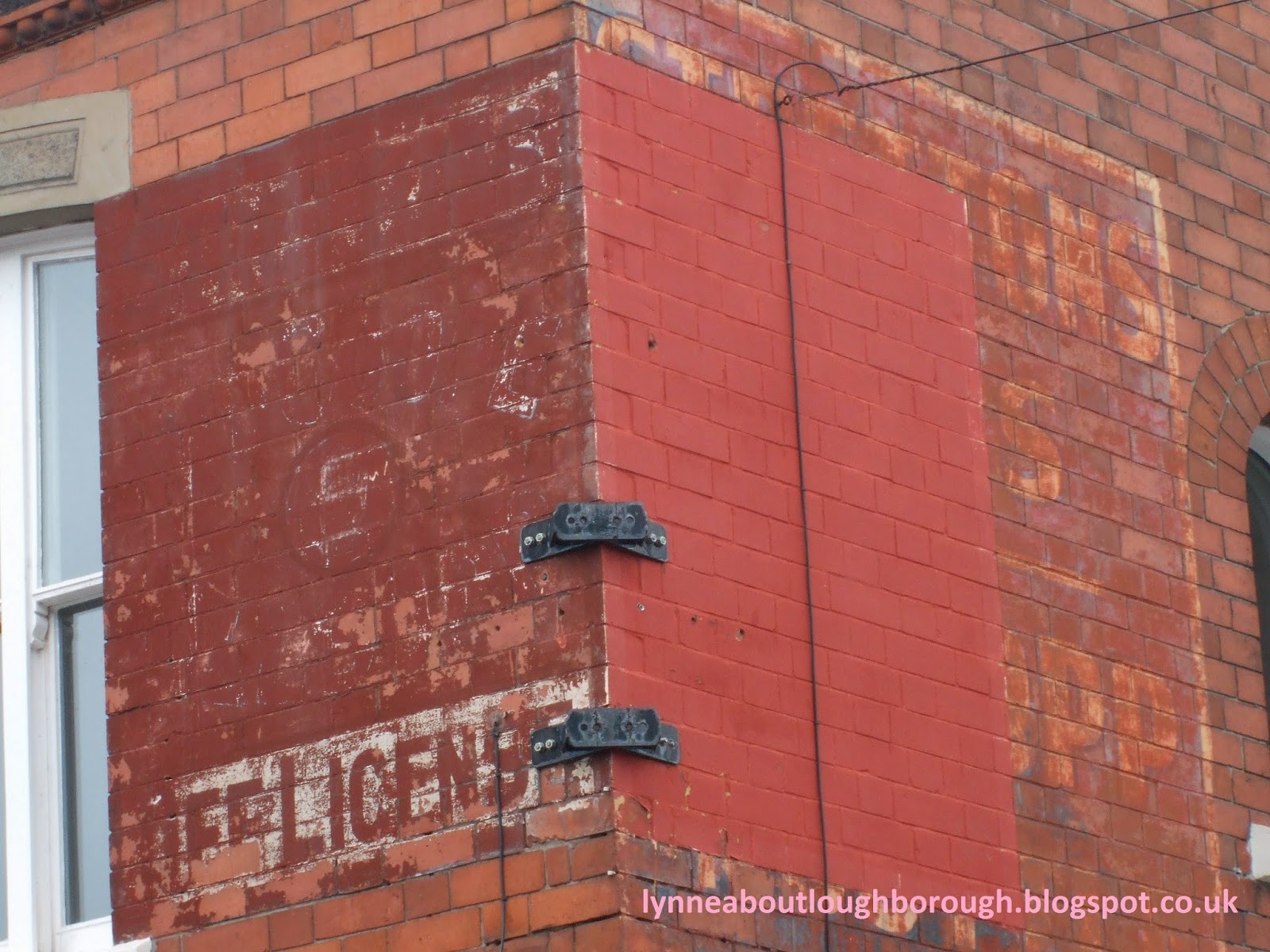
Ghost sign on the side of today's Odeon in Cattle Market.

Now, I’m hoping I’ve piqued your interest about where all this is going and what this has to do with Loughborough, but I suspect you’ve already guessed that Malcolm Sargent came to the Loughborough Empire cinema and conducted one of his Blitz Tour concerts! Moreover, a friend and I actually found a concert programme from one from of these London Philharmonic Orchestra concerts that Malcolm Sargent conducted!


What a joy! The programme was a simple fold-out A5leaflet, containing programme notes for each of the pieces being performed. As we already know, these concerts were set up with a view to raising spirits in the industrial towns of Britain, and to bring classical music to a new audience. It is wonderful to learn that the concert included Dvorak’s Carneval Overture, Eine Kleine Nachtmusik by Mozart, Delius’s Walk to the Paradise Garden, and the Peer Gynt Suite No. 1 by Grieg which filled the first half of the concert, while the second half was filled with the sounds of Tchaikovsky’s 5th Symphony in E Minor. Each half would have lasted about 50 minutes.
 
The front and back of the concert programme

The middle of the concert programme with programme notes
 
Isn’t this all so exciting? However, in my efforts to find out a bit more about this concert, I trawled through the local newspapers of the day and found an advert for the event.
 
Loughborough Echo 30 July 1943, p.1. The prices are: 7/6, 5/-, & 2/6
 
And then, joy of joys, I found a couple of reviews! But wait!! Both reviews report that on the afternoon of the concert Malcolm Sargent was indisposed and never made it, his conducting role being undertaken by Warwick Braithwaite instead! Such a shame, although I do expect that Braithwaite was an excellent conductor too!
 
Review from the Loughborough Monitor, August 5th, 1943, pg.3
 
And this it the text of the review from the Loughborough Echo, Friday August 6th, 1943, pg.3: 

London Philharmonic Orchestra
“The London Philharmonic Orchestra, led by Jean Pougnet, gave an excellent programme at The Empire Cinema on Sunday afternoon. Dr. Malcolm Sargent was unable to conduct owing to indisposition and his place was taken by Warwick Braithwaite.*
 
The programme opened with Dvorak’s “Carneval” Overture, the brilliant, rhythmic character of which was much appreciated by the large audience. A feature of this item was the excellence of the percussion instruments, cymbals, timpani and tambourine, all of which helped to mark the strong rhythm, together with the persistent figure of the cor anglais, which stressed the melody.
Mozart’s Serenade Eine Kleine Nachtmusik, was perhaps the most popular item of the programme. Written for strings only, its effect was soothing and melodious, as Mozart always is.
 
The intermezzo from “A Village Romeo and Juliet” by Delius employs more instruments than the Mozart number and abounds in fragments of melody that seem to float about with but little decision. The work is characteristic of Delius, and a perfect diminuendo was produced at the end.
 
“Peer Gynt” Suite No.1 showed Grief to advantage. Once again rhythm was predominant and the ever-popular “In the Hall of the Mountain Kings [sic]”was excellently given. It was noticeable that in one of the pianissimo passages the crowing of a back-yard rooster in the neighbourhood could clearly be heard.
 
Tchaikovsky’s 5th Symphony, in E Minor, concluded the programme and showed together with what had gone before, Mr Braithwaite’s complete control of the orchestra, whose light and shade throughout were delightful.”
 
M.R.
 
*Henry Warwick Braithwaite was a conductor from New Zealand who studied at the Royal Academy of Music and spent most of his career in Britain, particularly conducting opera. He played a part in the film “Battle for Music” which documents the plight of the LPO before and during the war.  
Of course, I’m now wondering about the identity of the Echo’s music critic: Who was M.R.? 
The Odeon during its life as the popular Curzon.


Sunday, 16 March 2014

Ghost signs of Loughborough


Someone recently posted a question on facebook about ghost signs in Loughborough, so here are a couple of pictures I've taken over the last couple of years. If you know of any more, do let me know, and I'll do a follow-up to today's post. If you don't want to register to leave comments below, you can email me by converting the following to text with punctuation: lynnedotdyeratgooglemaildotcom

There are also a couple of websites associated with ghost signs generally, that you might like to read, including this article from November 2013, the History of Advertising website, a flickr group, and one specifically on Leicestershire ghost signs.


Aumbry Gap

Cottons (I think) on Baxter gate

Butchers on Moor Lane

Collin Bros on Baxter Gate

Nottingham Road

Olde Packe Horse

Ratcliffe Road

Nottingham Road

Corner of Storer Road

Corner of Storer Road

Corner of Storer Road and George Street

Corner of Storer Road and George Street

Corner of Storer Road and Station Street

The Empire Cinema


Towles Nottingham Road
William Street

Nottingham Road