Showing posts with label Medieval. Show all posts

Sunday, 14 September 2014

Loughborough to Canterbury!

Loughborough's old buildings


Last week I found myself in Canterbury, attending a conference at the university. As part of the final afternoon’s activities, some of us popped along to look at the cathedral library: Historic, atmospheric, and truly remarkable! After I’d finished there, I took the time to have a look around Canterbury, not a place I’d ever been to before, nor a place I’d ever considered visiting. As I wandered round, I came across a mill (no longer working) and was quite staggered by the timber-framed buildings and narrow streets which reminded me very much of York. This set me to thinking …

John Leland [sometimes spelled Leyland], a native of Leicester, travelled and wrote about his experiences. Now, I’ve not had time to go back to the original source, but several books in my collection quote (and possibly, misquote) Leland as saying (in relatively modern English):

“The whole town of Leicester at this time is builded of tymbre; and so is Loughborow after the same rate. The town of Loughborow is in largeness and good buildings next to Leicester of all the market towns in the shire and hath in it 4 main streets or more well paved …”

Canterbury made me wonder, where are all these timber buildings in Loughborough today? And York made me ask, did we have a Shambles?

To the first, I discovered that whilst some, like the fifteenth century Merchant’s House, that was on Church Gate, on it’s corner with Warner’s Place, where the Irish shop is now, is no longer there, being demolished in about 1975, others, remain, if you know where to look!

To the second, consulting my sources, I can comment in the affirmative: In about 1688, Loughborough did have a shambles. This was an open space where cattle and sheep were slaughtered, and above this, on huge wooden pillars, was the Chamber of the Court Leet. This building was on Cattle Market, on its corner with Market Street and Market Place, opposite the Town Hall, so where Clemerson’s and Gilesports used to be, and where there is now a ‘phone shop.

I haven't even mentioned the similarities between our two universities, from the 1960s buildings, to the popularity of the Sports courses ...

Anyway, pop back again next week, and I’ll tell you about Loughborough’s “tymbre” buildings, but, in the meantime, scroll on down for some pictures of Canterbury.

Detail on the cathedral

Part of the cathedral


Can't think of a better building to house a bookshop!

The mill

Part of the mill workings


Sunday, 17 August 2014

The Old Rectory Museum

A visit to the Old Rectory Museum

If you live in Loughborough, it's possible that you might have heard of the Old Rectory Museum: In fact, you might even have played in the grounds when you were a youngster! If, however, you're a student, or you're just visiting then it's possible you might have missed this treasure, tucked away in the old part of Loughborough, near All Saints with Holy Trinity Church, close to the former Manor House, the former Guildhall, and what is probably the oldest pub in town!!

The Old Rectory is, as its name suggests, the former rectory associated with what was at the time probably known as the church of St Peter and St Paul, later All Saints, and now combined with the Holy Trinity Church (which is situated on the corner of Moor Lane and Trinity Street and is now an independent school). 

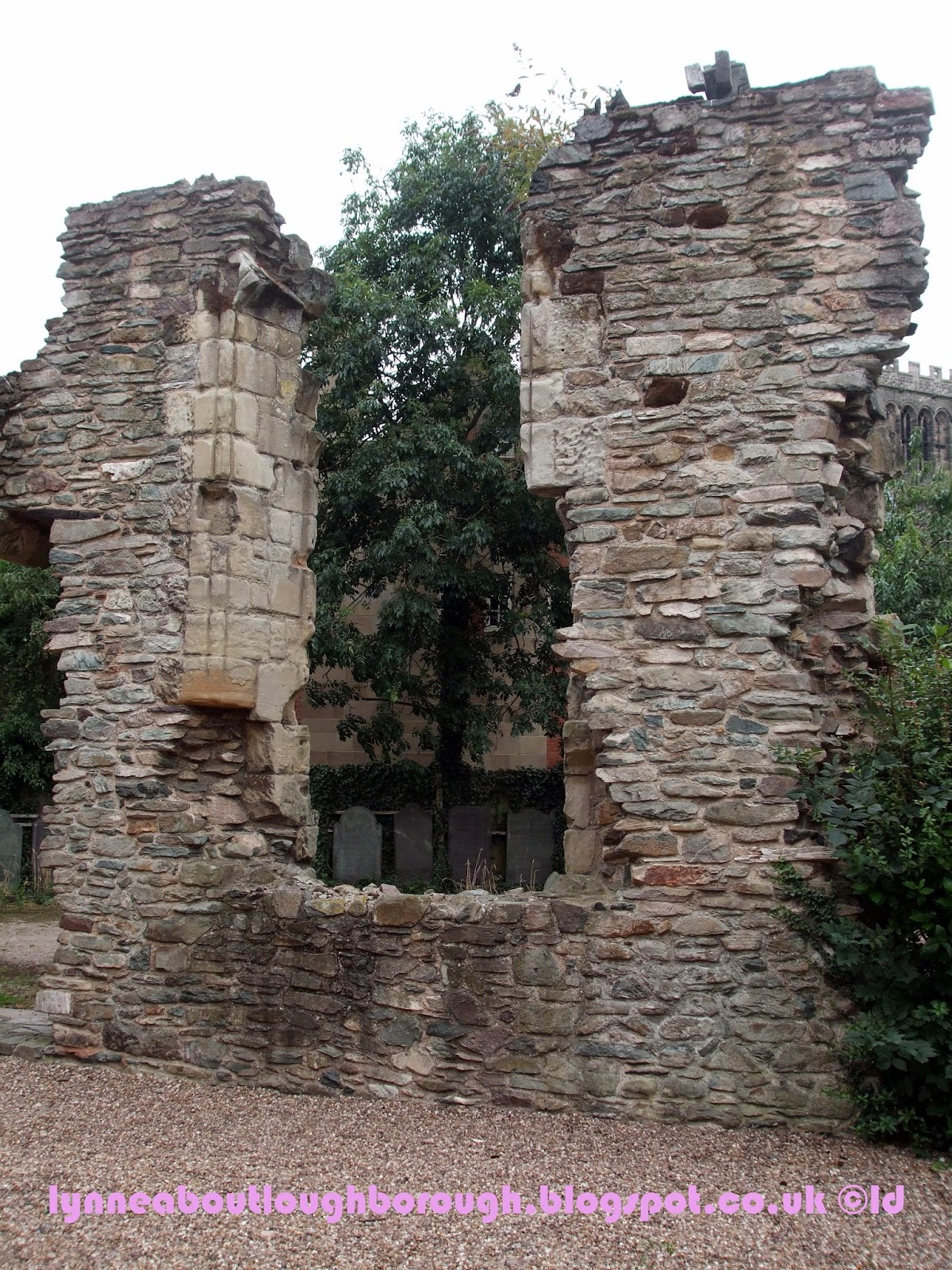
It's quite possible that there was a rectory in this place from about the early 1100s, but in the late 19th century the building looked quite different, being a substantial family home. When a new vicar was installed, he deemed the rectory too big for his and his family's needs, so a new home was built, in about 1960. The Old Rectory was then scheduled for demolition, but in the process, the old stone building that you can see today was found inside the newer building. Such was the significance of this Old Rectory, that demolition was halted, and the stone building retained and turned into a museum.

I believe that the Old Rectory and the Warner Street School are the only stone buildings to remain in the town centre, although the school has now been demolished, leaving only the former headteacher's house. Some significant stonework from the school has been housed in the Old Rectory Museum.

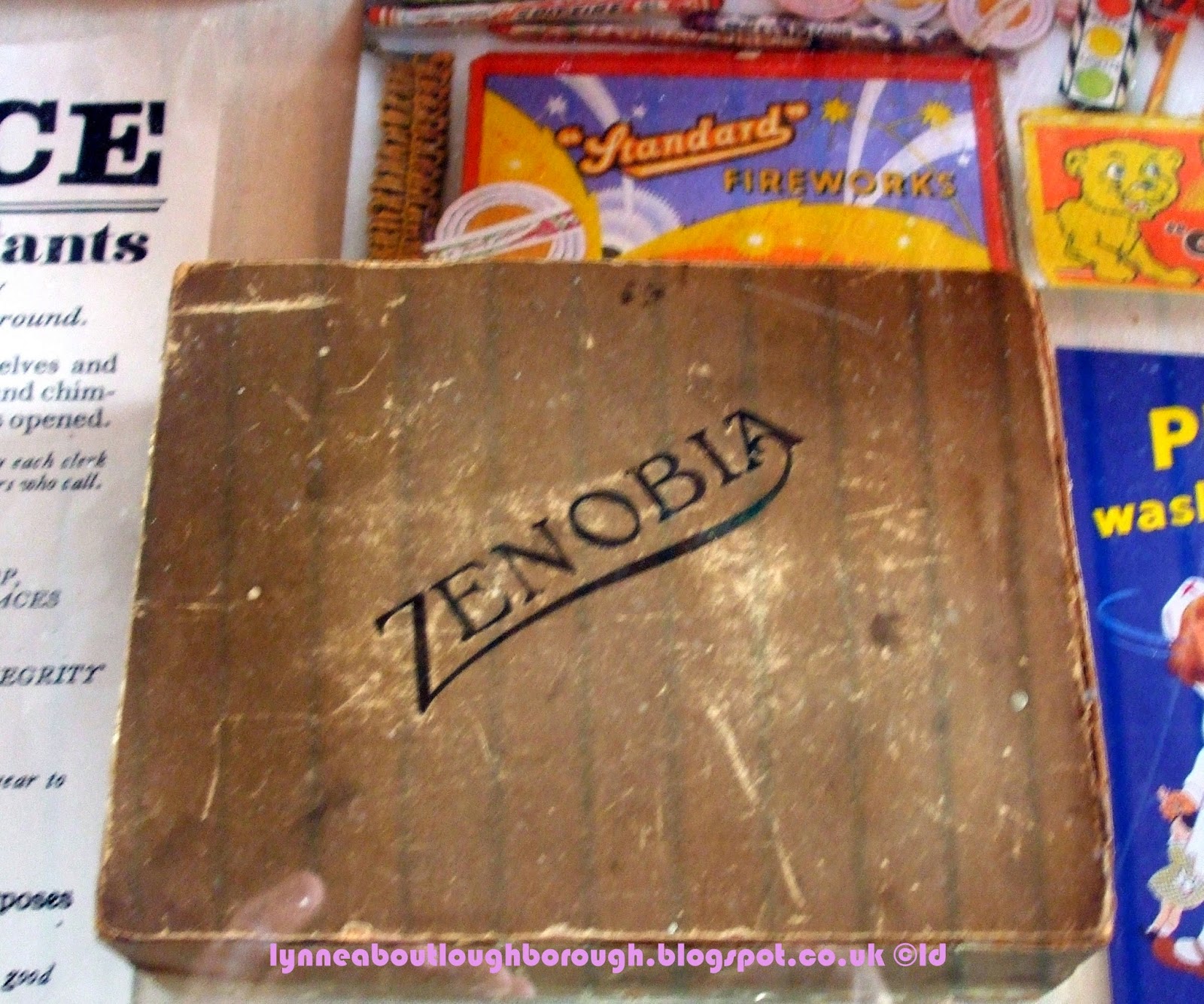
The Old Rectory was at one time a scheduled Ancient Monument, but is now a Grade II* listed building. The museum contains a large variety of artefacts, including archaeological finds, tiles from Garendon Abbey, has a variety of displays, including several on locally important people, and has an area devoted to an exhibition which changes each year. This year the exhibition is based around the Big Meadow in Loughborough, the oldest meadow in the country, dating back to 1762. This meadow is one of the few remaining lammas meadows in the country, and was chosen by Prince Charles to be one of the 60 coronation meadows to celebrate the Queen's reign. 

Below is a selection of photos I've taken of the Old Rectory Museum. These are probably the worst photos I've ever taken, but at least they will give you an idea of what to expect when you visit the museum, which is run by volunteers from Loughborough Archaeological and Historical Society, and which is open every Saturday from April to September, 11-3.