Showing posts with label Derby Road. Show all posts

Sunday, 13 October 2024

So Who Was A.E. King Part 2

So Who Was A.E. King Part 2

Last week we had a look into the life and career of A.E. King, i.e. Albert Edward King. Today we’re going to consider another A.E. King with a Loughborough connection, and indeed another architect and surveyor.

Arthur Ernest King was born on 15th May 1871, just three years before Albert Edward King, but of no relation. Arthur Ernest was born in Loughborough to parents William Henry Whatton King, a railway clerk, and his wife, Fanny, nee Perkins. Both Arthur Ernest’s parents were born in Loughborough, William Henry Whatton King to parents William Henry King and Harriett Susanna (nee Whatton), and Fanny Perkins to parents George a hosiery factory warehouseman, and his wife Selina (nee Barson).

William and Fanny were married in 1868 in Loughborough, and their first child, Willam Henry was born in 1869, making Arthur Ernest the couple’s second child, born whilst the family were living at 19 Chapman Street, and while William Henry was a 23-year-old railway clerk. Bearing in mind that although Chapman Street lies fairly close to the Great Central Railway, this was not opened until 1899, and the Charnwood Forest Railway, off Derby Road, didn't open until around 1883, so Henry was most likely to be working at the Midland station. 

In 1875 Arthur Ernest’s sister, Alice was born, but unlike her older siblings, her birth was registered in Cambridgeshire, while that of her younger brother, Walter born in 1879, and Herbert born in 1880 was Mansfield. This location is confirmed by the 1881 census return which lists that family as living at 12 Queen Street, Mansfield. William is a railway station master and goods agent, now aged 32.

In 1891, when Arthur Ernest was 19 years old, he was an assistant architect and surveyor. He was still living with his father William and mother, Fanny, and siblings on Queen Street Mansfield, although the census records the property number as 11 rather than 12. Father, William was still a railway station master and goods agent, and brother, William Henry was now a railway ticket collector. The younger children, Alice (16), Walter (12), and Herbert (10), now joined by Ethel (6) and Frederick (3) were all listed on the census as scholars.

Eight years later, on 18 October 1899, Arthur Ernest married Isabel Hughes, at St Margaret’s church in Toxteth. At the time, Arthur Ernest was living at 102 Derby Road in Loughborough, and he was aged 29, and working as a civil engineer. His father, William was a stationmaster at Mansfield. Isabel was the 25-year-old daughter of stockbroker, Edward Gerard Hughes, and at the time of the marriage she was living at 43 Mulgrave Street, Liverpool. She had originally been called Isabella, and was baptised on 16 February 1874 in St James Church, Whitehaven, Cumberland. I wonder how they met?

'Stamford Villas' built 1884, no.102 Derby Road to the left, pictured in 2016


Arthur Ernest’s parents, William and Fanny were still living at 11 Queen Street in Mansfield in 1901, along with daughters (Alice) Maud (25), Ethel (15), and son Frederick (13) who don’t seem to be employed, and sons Walter G. (aged 22) who is a railway clerk, and son Herbert (20) who is a lithographic artist. Meanwhile, back in Loughborough, Arthur Ernest and wife Isabel were living at 126 Park Road. Arthur Ernest was aged 29, and was an assistant civil engineer. They had been blessed with a new baby, Dorothy, who at the time of the census return was 9 months old.

126 Park Road (black front door) pictured in 2017

In 1905, Fanny, Arthur Ernest’s mother died in Mansfield, and it was shortly after this, in April 1906 that Arthur Ernest’s older brother, William Henry, married Blanche Elizabeth Chambers. William Henry was a railway station inspector, living at Clough Villas, Clough Road, Masbrough, near Rotherham, and his father, William Henry Whatton King, was still a railway goods agent in Mansfield. In July 1909, Arthur Ernest’s younger brother, Walter George, married Florence Louise Savage at Mansfield parish church. He was a 28-year-old clerk, living at Watson Avenue, Mansfield, and his father, William Henry King, was now listed as a gentleman.

By 1911, Arthur Ernest, Isabel, and Dorothy had moved back to Mansfield where they were living at Stanton Place, and Arthur Ernest was now an architect and surveyor, and certainly by 1913 his office was established at West Gate, Mansfield. His offices were also the place where details of land and property could be picked up. Naturally, things didn’t always run smoothly, and there was a time in 1914 when Arthur Ernest took someone to court for not paying him for the plans he had drawn up in relation to alterations to a property in Pelham Street, for which a dance and music licence was to be requested.

Sometime after 1914, and before 1921, Arthur Ernest, Isabel, and Dorothy moved to Richmond in Surrey. On the 1921 census returns they were living at 36 Montague Road, and Arthur Ernest was an architect and surveyor to H.M. Office of Works. The family remained living at number 36 until at least 1924, and it was on 31 December that year that Dorothy married Henry Theodore Andrew at St Matthias Church in Surrey. Henry, who lived a few doors away at 22 Montague Road, was a lieutenant in the navy, and his father was Thomas Andrew, a gentleman.

In 1925 Arthur Ernest was elected as a licentiate of RIBA, and five years later, his father, William Henry Whatton King, who had been a station master for over 40 years, had received a gold watch for his long service to mark his 25 years’ service, and who was a keen bowler, died.

Details about Arthur Ernest that he provided to RIBA in 1933-7 showed that he had moved from 36 Montague Road, Richmond, to a street very close by, number 5 Kings Road, also in Richmond. However, by 1939, Arthur Ernest and Isabel had moved to Hodgson Howe, Newlands, Bridge, Cockermouth, Cumbria, presumably as Arthur Ernest had now retired from his position as architect and surveyor. Cockermouth was only about 13 miles from where Isabel had been baptised in Whitehaven, which might be another reason they moved there.

Unfortunately, this is where the trail runs dry, and as yet I have been unable to establish any later information about the family. 

____________________________________

Posted by lynneaboutloughborough

With apologies for typos which are all mine!

_______________________________________________

Thank you for reading this blog.

Copyright:

The copyright © of all content on this blog rests with me, however, you are welcome to quote passages from any of my posts, with appropriate credit. The correct citation for this looks as follows:

Dyer, Lynne (2024). So Who Was A.E. King Part 2. Available from: https://lynneaboutloughborough.blogspot.com/2024/10/so-who-was-ae-king-part-2.html 

Take down policy:

I post no pictures that are not my own, unless I have express permission so to do. All text is my own, and not copied from any other information sources, printed or electronic, unless identified and credited as such. If you find I have posted something in contravention of these statements, or if there are photographs of you which you would prefer not to be here, please contact me at the address listed on the About Me page, and I will remove these.

External Links:

By including links to external sources I am not endorsing the websites, the authors, nor the information contained therein, and will not check back to update out-of-date links. Using these links to access external information is entirely the responsibility of the reader of the blog.

Blog archive and tags:

If you are viewing this blog in mobile format, you will not be able to easily access the blog archive, or the clickable links to various topics. These can be accessed if you scroll to the bottom of the page, and click 'View Web Version'. Alternatively, there is also a complete list of posts, which when clicked will take you to the page you are interested in.

Searching the blog:

You can search the blog using the dedicated search box that appears near the top of the blog when viewed in the web version. Alternatively, you can search using your usual search engine (e.g. Bing, Google, DuckDuckGo etc.) by following this example:

site: https://lynneaboutloughborough.blogspot.com/ “Radmoor House”

NOTE – the words you’re actually looking for must be in “” and the first of these must be preceded by a space

Thank you for reading this blog.

Lynne

Sunday, 4 December 2022

No.1 Co-op

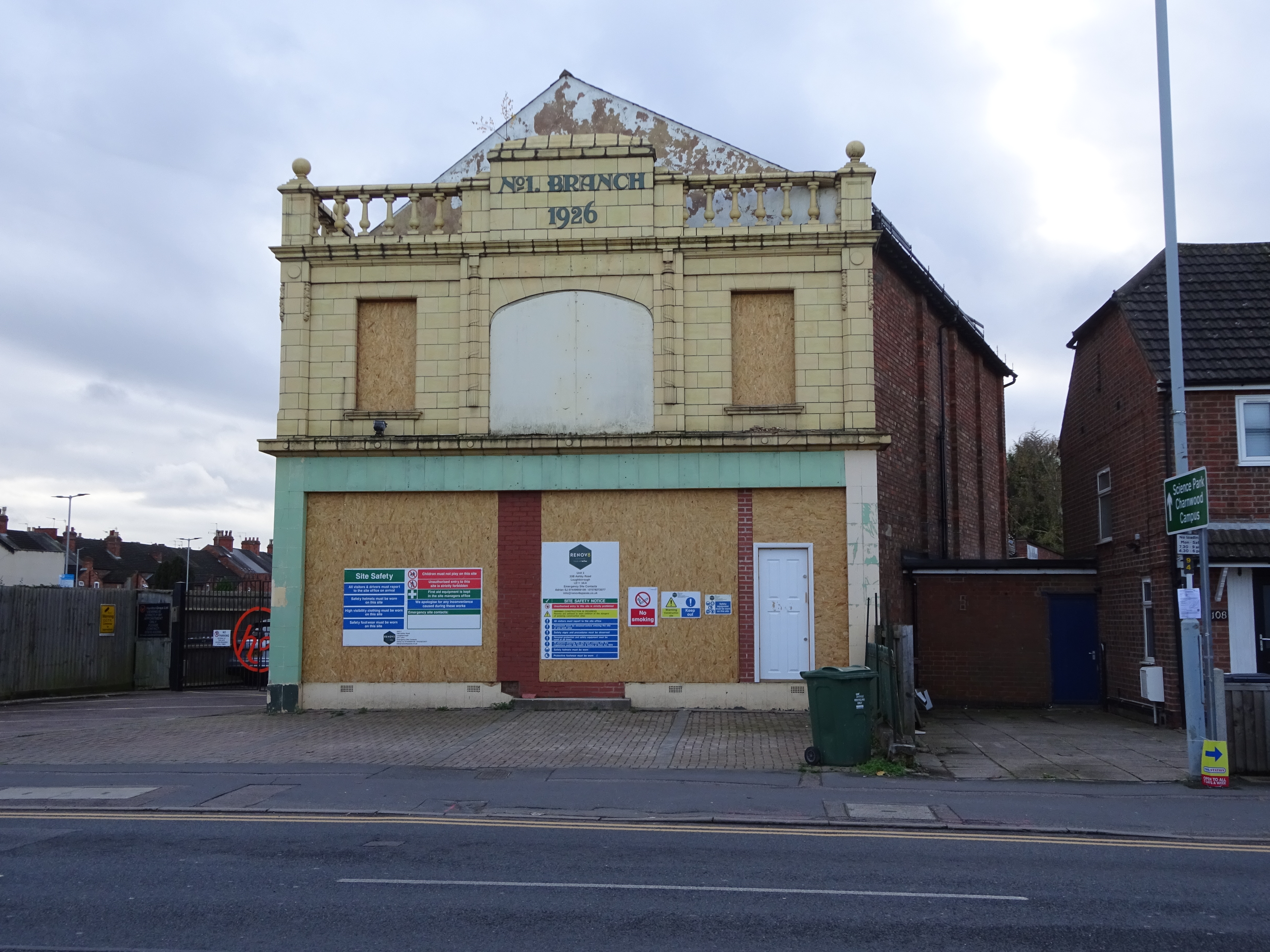
Back in June 2021 (gosh, I thought I'd written that post only a couple of months ago, but it turns out to be nearly 18 months since it was done!) I wrote about the former No.1 Co-op store down on Derby Road, close to the new supermarket, the chip shop, and Belton Road. Before the Co-op was built, the land was close to the Charnwood Forest Railway, and adjacent to the Wood Brook. 

Pictured in 2020

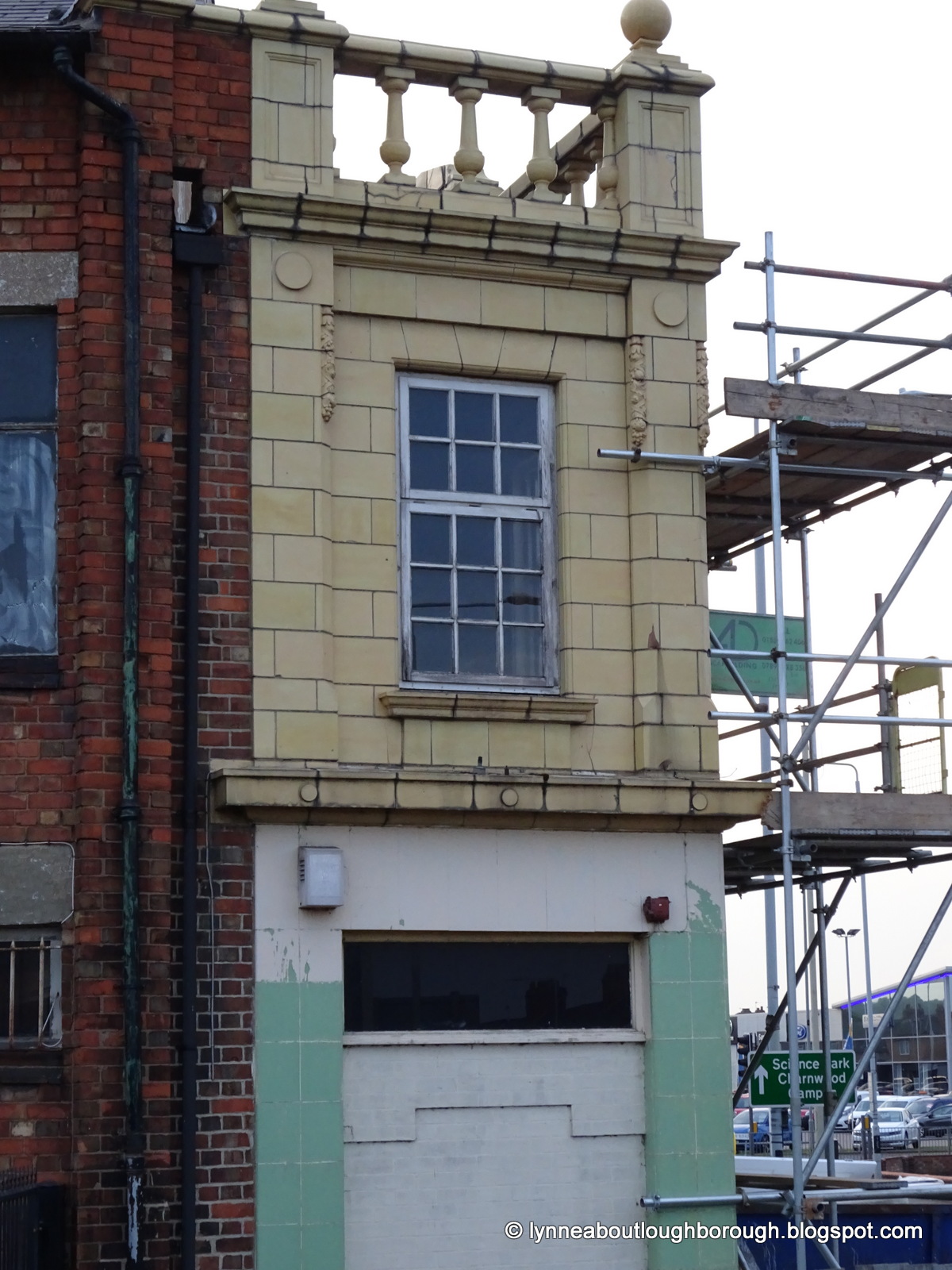
Detail from 2020

I think it was sometime the year before, so, in 2020, that the former Co-op, which was then an Oriental restaurant, had been sold, and was being converted to flats: the June 2021 post was a record of progress with that conversion, but also a brief history of the Co-op stores, the movement having definitely been active in Loughborough from around 1866. The Derby Road Co-op, despite being called 'No.1' was not the first Co-op in Loughborough, that honour going to the store on Wood Gate, coincidentally, now an Oriental restaurant.

Detail of the Wood Gate store

At the time, it was a puzzle as to why the Derby Road Co-op was called the No.1 Co-op, having been built in 1926. 

Several theories had emerged:

*Was it the first Co-op in Knightthorpe? It could not have been the first Co-op store in Loughborough, as the store on Wood Gate opened in the 1860s

*Had the Loughborough Co-operative Society merged with another local society, and this was the first building to be built and occupied by the merged Society?

*Was it a road number? Perhaps intended to be the start of Alan Moss Road?

*Was it the first of Loughborough's buildings to be clad in Hathernware faience tiles?

*Was it the first to be built along the Charnwood Forest railway line, with others planned along the route?

*Was it the first self-service Co-op in the area?

A recent chance conversation on Facebook, about the No.1 Co-op in Farnborough, has led me to what I believe might be the answer. I might not quite have got the dates right, but I think it does all have to do with parish boundaries.


At one time Loughborough was surrounded by a number of different parishes, including Woodthorpe to the south, Knightthorpe, and Thorpe Acre cum, or with,  Dishley, the latter two being northwest of Loughborough. 

In 1871, Knight Thorpe is described in Wilson's 'Imperial Gazetteer of England and Wales', as "a township in Loughborough parish, Leicester; near Loughborough. Real property, £1,533. Population, 58. Houses, 12."

The same source describes Dishley-Cum-Thorpe Acre, as "a parish in the Loughborough district, Leicester; adjacent to the river Soar and the Midland railway, 1.5 miles NW of Loughborough. Post town, Loughborough. Acres, 890. Real property, £1,742. Population, 194. Houses, 54. Bakewell, the distinguished agricultural improver, lived and laboured here; and has bequeathed to the place marked benefits of his skill. The living is in the diocese of Peterborough. Value, £150. Patron, the Bishop of Peterborough. The church was built in 1845 [designed by William Railton]. A school has £11 from endowment, and other charities £11."

By 1925 this had all changed, as shown by the following extract from Kelly's 1925 directory. This explains that by an Order of the County Council, confirmed by Local Government Board Order, which came into operation on 25th March 1892, parts of the parishes of Knight Thorpe, and Dishley with Thorpe Acre were constituted the new parish of Knight Thorpe, and parts of the parishes of Garendon and Dishley with Thorpe Acre constituted the present parish of Dishley with Thorpe Acre, and parts of the parishes of Garendon, Knight Thorpe and Dishley with Thorpe Acre formed into the new parish of Garendon.

So, looking at a map of the municpal boundary, i.e. post-1888 when the borough became incorporated, it appears that the Knightthorpe boundary runs alongside the Wood Brook, down to part of what is now the university campus, and up past the site of the No.1 Co-op (X marks the spot), along what is now Belton Road.


As the No.1 Co-op built in 1926 on Derby Road, is on the Derby side of the Wood Brook, it might therefore follow that the store, being outside the boundary of Loughborough, was the first one to be built in Knightthorpe parish. But I could be wrong!

Anyway, over the years there have been, and indeed still are, various Co-op stores across town including, on Loughborough High Street and Swan Street, on Lansdowne Drive, on the site of the Maltings pub off Epinal Way, on Nottingham Road, on Derwent Drive and on Ashby Road.

And so the renovation continues ...

Photographed November 2022

____________________________________

posted by lynneaboutloughborough

With apologies for typos which are all mine!

_______________________________________________

Thank you for reading this blog. You are welcome to quote passages from any of my posts, with appropriate credit. The correct citation for this looks as follows:

Dyer, Lynne (2022). No.1 Co-op. Available from: https://lynneaboutloughborough.blogspot.com/2022/12/no1-co-op.html [Accessed 4 December 2022]

Take down policy:
I post no pictures that are not my own, unless I have express permission so to do. All text is my own, and not copied from any other information sources, printed or electronic, unless identified and credited as such. If you find I have posted something in contravention of these statements, or if there are photographs of you which you would prefer not to be here, please contact me at the address listed on the About Me page, and I will remove these.

Blog archive and tags:
If you are viewing this blog in mobile format, you will not be able to easily access the blog archive, or the clickable links to various topics. These can be accessed if you scroll to the bottom of the page, and click 'View Web Version'. Alternatively, there is also a complete list of posts, which when clicked will take you to the page you are interested in.  
 
Thank you for reading this blog. 

Lynne

Sunday, 27 June 2021

Derby Road Co-operative Store

The former Co-operative stores building on Derby Road has had many uses over the years, since opening as a Co-op store in 1926, and there is currently a planning application in to convert the upper floors to flats.


Former Co-operative store on derby Road undergoing renovation


The Co-operative Society was begun by pioneers in Rochdale – the Rochdale Society of Equitable Pioneers – a group formed in 1844 of 28 people, half of whom were weavers, who found themselves descending into poverty because of the mechanisation of work they’d previously done manually and skillfully. And so, the 28 tradesmen worked together to open a food store, each contributing £1, which enabled them to purchase foodstuffs that individually they would not have been able to afford. As we now know, this led to the successful Co-operative Society movement across the country.

Leicester’s Co-op society began in 1860, and like the Rochdale group consisted mostly of weavers, web weavers to be precise, although there were only 7 of them. Messrs Woodford, Wilford, Norton, Herbert, Sharpe, Silverwood and Burrows each contributed 3d. to the share account and so formed the society. After a difficult few years, by 1871 the society was thriving and had a membership of over 3,000 and 12 stores.

By comparison, the Loughborough Co-operative movement was certainly active as early as 1866, for in November of that year there is a newspaper report covering a great reform demonstration that was held in the town, which mentions the group:

“Following the example of other large towns…a great demonstration took place at Loughborough for the furtherance of the cause of Reform.”

“At two o’clock a procession began to be formed in the Market Place, in front of the Corn Exchange [Town Hall], in the following order: The Nottingham Temperance Sax-Tuba Band, the deputations from Leicester and Manchester, the General Committee in a wagonette, with postillion, the Leicester Albion Band, the Loughborough Trades’ Unions, and Friendly Societies, the Loughborough Co-operative Society and Band …”

Further reference to a Loughborough store appears in a newspaper of December 1867, when the store on Wood Gate was advertising for a grocer’s assistant: they wanted someone who was at least partway through their seven-year apprenticeship.


The former Co-op store on Wood Gate


I haven’t investigated the history of the Wood Gate store, apart from the fire of 1884, so let’s move onto the Derby Road store. We know from the façade of the building that it was built in 1926, and we know from the look of the façade that it is clad in faience tiles. If these tiles were provided by the Hathern Station Brick and Terra Cotta Company, they would be known as Hathernware. The Co-operative building is situated adjacent to the Burleigh Brook, which is itself on the Derby side of what was then the Charnwood Forest Railway, which terminated/began at the Derby Road between the brook and what was the Station Hotel, now a funeral parlour.

Former Co-op store on Derby Road

Former Co-op store on Derby Road showing detail


Former Charnwood Forest Railway building


In January 1932, the building was the subject of an attempted burglary, by a person armed with a screwdriver, a flash-lamp, a file and a gimlet. Clearly, the building was at one time surrounded by a fence, as the man was apprehended by a police constable who had unlocked the front gate and found the burglar, sitting on the steps of the store.

In February 1939, due to the diligence of a local fire-fighter, who noticed smoke coming from the garage associated with the Co-op, serious damage to the buildings was averted, as he single-handedly tackled the blaze. The garage at the back housed the mobile shop which used to travel around various parts of Loughborough at one time.

The building had space upstairs that was big enough to be used for parties, wedding receptions, dance lessons and dances.

In 1960 the Loughborough Co-operative Society merged into the Leicester Co-operative Society, the latter being joined with Oadby in 1957, and Glenfield, Kirby Muxloe, Ratby, Quorn, Croft and Groby having joined in 1959. Burbage also joined the Leicester society in 1960, while Mountsorrel joined in 1963. Further mergers continued until in 1969 the Leicester Co-op Society itself merged and became part of the Leicestershire C-operative Society.

South Leicestershire Co-operative Society was the last to join the Leicestershire Co-op in 1984, before In 1985, the Leicestershire Co-operative Society merged with the Central Midlands Co-operative Society to become the Midlands Co-operative Society. In 2001 the latter was joined by the Chesterfield and District Society, followed in 2006 by Desborough and Ilkeston, and by 2010, the Midlands Co-operative Society was the biggest independent retail society in the UK.

The Derby Road Co-op seems to have continued to be a Co-op store into the 1970s, but certainly by about 1978 it had become a sort of bric-a-brac shop selling railway-related items, upstairs was a working model train. Later, the shop became a pine furniture shop and finally ended up being a Chinese restaurant. In 2017 it was reported that it was to become a venue and meeting place for the Redeemed Christian Church of God, but that seems never to have happened, and the place has remained empty since then … until now, as it is being renovated and converted to flats.

The question still remains, however, as to what the No.1 on the building’s façade, relates to. Several theories have emerged:

*Was it the first Co-op in Knightthorpe? It could not have been the firstCo-op store in Loughborough, as the store on Wood Gate opened in the 1860s

*Had the Loughborough Co-operative Society merged with another local society, and this was the first building to be built and occupied by the merged Society?

*Was it a road number? Perhaps intended to be the start of Alan Moss Road?

*Was it the first of Loughborough's buildings to be clad in Hathernware faience tiles?

*Was it the first to be built along the Charnwood Forest railway line, with others planned along the route?

*Was it the first self-service Co-op in the area?

Anyway, over the years there have been, and indeed still are, various Co-op stores across town including, on Loughborough High Street and Swan Street, on Lansdowne Drive, on the site of the Maltings pub off Epinal Way, on Nottingham Road, on Derwent Drive and on Ashby Road.


Posted by lynneaboutloughborough 27 June 2021

You are welcome to quote passages from any of my posts, with appropriate credit. The correct citation for this looks as follow:

Dyer, Lynne (2021). Derby Road Co-operative Store. Available fromhttps://lynneaboutloughborough.blogspot.com/2021/06/derby-road-co-operative-store.html [Accessed 27 June 2021]

Take down policy:
I post no pictures that are not my own, unless I have express permission so to do. All text is my own, and not copied from any other information sources, printed or electronic, unless identified and credited as such. If you find I have posted something in contravention of these statements, or if there are photographs of you which you would prefer not to be here, please contact me at the address listed on the About Me page, and I will remove these.

You can leave comments below, but do check back as my reply will appear here, below your comment.

Thank you for reading this blog. 

Lynne           

Sunday, 20 June 2021

Midland Brewery Company

The Midland Brewery Company Ltd. 

Midland Brewery Advert from 1889


Over the recent weeks one of the interesting pieces of information I have come across concerns the Midland Brewery Company, which was at one time based on Derby Road, in Loughborough. In his wonderful book of boozers (1), my friend Bill talks a bit about the MBC, and the following article appears in a publication from 1892 (2). It’s so interesting that I have quoted it in full, on the grounds that the original document is now out-of-print, and what I have quoted I less than 10% of the total text.

“The Midland Brewery Co. is one of the oldest limited liability companies in existence (3). For many years it has been practically the only representative of the brewing interest in the Loughborough district, and as the directors are just about to inaugurate important changes with a view to a further extension and development of the business, some slight account of the resources at their disposal may not come amiss.

Fairly typical layout of brewery buildings of the time

The company’s premises adjoin the Derby Road, the offices fronting on the highway and the malt houses, brewhouses and stores are built in two ranges to the rear. Entering the yard, and making our way to the new malthouse, we are shown the various processes involved in the preparation of barley for brewing purposes. Here in the basement are large tanks in which the barley is steeped, and a splendid concrete growing floor, 100 feet in length by some 30 feet in width. Overhead is another growing floor of similar dimensions, as well as two kilns, which are heated by means of furnaces in the basement.

The average malthouse does not afford much scope for description. There is a level waste of soft grain broken up by rows of iron pillars, and lighted by a double row of windows. A quiet, inactive sort of place, in which very little seems to be done, and yet it is here but the quality of the ale to be brewed is in a great measure determined, for if the malting be bad or insufficient, a corresponding deterioration in the liquor produced, follows as a matter of course.

An example of a malting floor


The Midland Brewery Co. manufacture the whole of the malt used in their brewery, and their steeping and growing floors, kilns etc., are arranged on scientific principles. Leaving the maltinghouse, we find a portion of the same block of buildings devoted to the purposes of a malt store or garner, whilst at some little distance away are the stables and dray-houses, coopers’, smiths’ and painters’ shops etc.. The company do their own coopering and painting.

The next object to attract our attention is the brewhouse, containing the capacious mash tub with its interior machinery of revolving forks known in the trade as a ‘porcupine’. The tub has a capacity of over 2,000 gallons, and to get a peep into its depths it is necessary to ascend a wooden stairway which communicates with a sort of gallery built around the brim. From the mash tub the liquor is drained off into the under back (4), it is then forced up into the copper where the hops are added, and passes from the hop-back (5) into the coolers - a series of shallow tanks which occupy a large room over the fermenting room.

Of the variety of hot and cold-water tanks, refrigerators, tubs, coppers, pipes etc., which we saw in the main portion of the brewhouse, we shall not attempt any detailed description. Every nook and corner of the place, which is traversed by galleries and stairways in every direction, seem to be fitted with bulky apparatus of one sort and another, all no doubt useful and necessary, but to the uninitiated, somewhat puzzling.

Passing to the fermenting room, we are shown six large vats - known as ‘rounds’ - in which the actual process of fermentation is taking place, and we afterwards pay a visit to the ‘union’ room, which in the matter of appearance is perhaps the most striking department of the establishment. Here are 72 unions, arranged in long rows and built on frames, which with their polished ‘tits’ and pipes make a very neat show. It is in the ‘unions’ that the fermentation of the liquor is completed, and from them it is sent by means of pipes to the ‘running-in’ room, where the barrels are filled.

Adjoining are the stores; they are wonderfully cool and airy, and at a rough guess we should say they afford a floorage of 4,000 square feet.  From the stores we proceed to the tasting room and the wine and spirit department. The Midland Brewery Co. have long had a reputation for the high quality of their wines and spirits, as well as for the excellence of their ales. They hold a large bonded stock in addition to the stores kept at the brewery. It is in this department more especially that the changes mentioned at the commencement of this article will take place, for the company is about to add the compounding and rectifying of spirits to their already comprehensive business.

They do an extensive public trade, and have built up a big connection amongst farmers and private families. The bottling of ales, stouts, wines, spirits etc. forms an important feature of their business. A vigorous adherence to the best traditions of the brewing industry characterise the whole place. Cleanliness is one of the great points insisted on. The plant is captain capital condition, and the barrel-washing etc. is conducted on a regular system, into which steam enters very largely. The machinery is driven by a horizontal engine, hydraulic power being employed to drive the lifts. The company’s premises occupy an area of nearly four acres.  Besides the buildings we have mentioned, there are offices, a testing-room, and brewer’s office, a house for the manager, and a number of cottages for the workmen.”


References:

(1) Wells, Bill (2014). Billy’s book of Loughborough boozers. Loughborough: Panda Eyes.

(2) Loughborough: its history, manufactures, trade. Brighton; London: Robinson, Son & Pike, 1892

(3) I have found references in my research that suggest the Midland Brewery existed in 1812, and perhaps as early as 1791.

(4) the 'underback' - a 'back' is a vessel, so a vessel usually below the mash tun (vessel in which the mixing together of gist and hot water at precise temperatures to form malt sugars, i.e. mashing takes place), which collects wort (unfermented beer) during sparging (the spraying of hot water over mash in the mash tun through a rotating arm to ensure complete extraction of the malt sugars)

(5) 'hopback' - vessel designed to remove hops from boiled wort  

Posted by lynneaboutloughborough 19 June 2021

You are welcome to quote passages from any of my posts, with appropriate credit. The correct citation for this looks as follow:

Dyer, Lynne (2021). MIdland Brewery Company. Available fromhttps://lynneaboutloughborough.blogspot.com/2021/06/midland-brewery-company.html  [Accessed 19 June 2021]

Take down policy:
I post no pictures that are not my own, unless I have express permission so to do. All text is my own, and not copied from any other information sources, printed or electronic, unless identified and credited as such. If you find I have posted something in contravention of these statements, or if there are photographs of you which you would prefer not to be here, please contact me at the address listed on the About Me page, and I will remove these.

You can leave comments below, but do check back as my reply will appear here, below your comment.

Thank you for reading this blog. 

Lynne

Saturday, 22 February 2020

Out and about in Loughborough

So, I do hope you enjoyed last week's article on what eventually happened to Zeppelin L 20 after its part in the raid on Loughborough on the night of January 31st 1916. Again, HUGE thanks to Ian Castle for such an interesting article, and good luck to him with his latest book and with the next volume of Zeppelin Onslaught, which will include Loughborough.

So, it's back to lynneaboutloughborough for a commentary on this past couple of weeks which, as ever, have been busy and interesting! I suppose the first thing to mention, in the true tradition, is the weather!! We've experienced some very high winds, had lots of rain, and seen much flooding. There's some excellent aerial footage of our area under water, and lots of photographs. Here's my recent (16 Feb 2020) video of the Wood Brook in full flow: 


and some photos I took of various areas, including Forest Road, Derby Road, Cotes, and Meadow Lane.
Forest Road


Derby Road


Cotes


Meadow Lane


Other things happening around Loughborough recently have been singing practice in the parish church for International Women's Day: no matter what the occasion, nor where, you can't beat a good sing!!

I've also had a couple of late-night walks, which show Loughborough in a different light!!


Down at the Old Rectory, we've been meeting to plan the season of events for this year. Lots to look forward to, including an exhibition to commemorate the work of Reverend Fearon in respect of getting a fresh water supply to the town, art displays and more!

2020 is looking good so far!!


You are welcome to quote passages from any of my posts, with appropriate credit. The correct citation for this looks as follow:

Castle, Ian (2020). Out and about in Loughborough. Available fromhttps://lynneaboutloughborough.blogspot.com/2020/02/out-and-about-in-loughborough.html  [Accessed 23 February 2020]

Take down policy:
I post no pictures that are not my own, unless I have express permission so to do. All text is my own, and not copied from any other information sources, printed or electronic, unless identified and credited as such. If you find I have posted something in contravention of these statements, or if there are photographs of you which you would prefer not to be here, please contact me at the address listed on the About Me page, and I will remove these.
Thank you for reading this blog. 

Lynne 

Sunday, 27 January 2019

Lost buildings of 2018 Charnwood Forest Railway Goods Shed

The blog in 2019 seems to have started with a bit of a theme - lost buildings of 2018. Surely there can't be that many, can there?! Last week we had a look at the poor building on Granby Street (I've added a photo of how the site looks in January 2019) and the week before we looked at the demise of the Royal George pub on Nottingham Road. 

Today there follows a pictorial history of the remnants of the Charnwood Forest Railway buildings (I hope I've got it right and it is the goods shed!) and the re-development of the site up to this week, when the new Lidl supermarket seems to be close to being ready to open. 

It was in August 2018 when I visited the site that the foreman told me the story of the two German brothers who fell out and created rival supermarkets (Aldi and Lidl) which is why you often find both supermarkets close to each other. Well, since I was told this, I've checked it out and it turns out to be one of those urban myths!! In reality there are 2 branches of Aldi, run by brothers who may have fallen out about something, while Lidl is a completely different company.  


From March 2015:


From August 2018:


From January 2019:


You are welcome to quote passages from any of my posts, with appropriate credit. The correct citation for this looks as follow:

Dyer, Lynne (2019). Lost buildings of 2018: Charnwood Forest Railway goods shed. Available fromhttps://lynneaboutloughborough.blogspot.com/2019/01/lost-buildings-of-2018-charnwood-forest.html [Accessed 27 January 2019]

Take down policy:
I post no pictures that are not my own, unless I have express permission so to do. All text is my own, and not copied from any other information sources, printed or electronic, unless identified and credited as such. If you find I have posted something in contravention of these statements, or if there are photographs of you which you would prefer not to be here, please contact me at the address listed on the About Me page, and I will remove these.
Thank you for reading this blog. 

Lynne