Last week we
looked at pubs, focussing on their use as meeting places for various events, like
auctions and inquests, and for societies like gardening clubs and friendly
societies. This week, let’s have a look at the different ways pubs today are
managed.
In 1989, the
Monopolies and Mergers Commission produced a report on the supply of beer,
which resulted in two Statutory Instruments documents, which became known
collectively as the ‘Beer Orders’ 1989, Individually these SIs were ‘The Supply of Beer (Tied Estate) Order,
1989’ and ‘The Supply of Beer (Loan Ties, Licensed Premises and Wholesale
Prices) Order, 1989’.
The reason
for the ‘Beer Orders’ was because the Monopolies and Mergers Commission were
concerned by the lack of competition in the market, which was at the time served
by around six national brewers in the UK, and these breweries dominated the
market. I’m sure we’ve all heard of them -
Allied
Brewers, Bass, Courage, Grand Metropolitan, Scottish & Newcastle, and
Whitbread.
The ‘Beer Orders’
were aimed at loosening the tie between pubs and brewers, and the way it worked
was to restrict the number of tied pubs [1] that a large brewery could own
(they became limited to only 2,000 across the UK). In addition, the brewery was
obliged to introduce at least one guest beer in its premises. The whole premise
was to make the whole industry easier to get into, and to increase competition
between all those with vested interests – so, the brewers, the wholesalers, and
the pub retailers themselves.
And so it was
that pub-owning companies came into existence, usually referred to as ‘PubCos’,
some of which were large organisations who weren’t previously in the pub
business. Some of the ones we’re probably familiar with are Punch Taverns, which
were a spin-off from Allied Lyons Brewery; Enterprise Inn, which were spun off
from Bass, and Admiral Taverns, which were created by Scottish & Newcastle.
As well as the ‘PubCos’, there were other companies created specifically to buy
some of the pubs that the big breweries were obliged by the ‘Beer Orders’ to sell,
an example being the Pub Estates Group. So, as well as the PubCos etc., some
breweries who didn’t own more than 2,000 venues already, also bought more pubs
to add to their holdings, and some of these now have a variety of different
brands. An example of this is Greene King who run the brands we know as Hungry Horse,
Chef & Brewer etc.. Pubs were also sold to individuals, some continuing to
operate as pubs, other converted to housing.
I believe the
‘Beer Orders’ were all done in good faith that the market would diversify, and
the wealth spread more evenly, but, of course, we now know that the ‘Beer Orders’
seemed to have had the opposite effect, which was in many ways far less a desirable
outcome.
The ’Beer
Orders’ of 1989 were revoked 2003, and in 2004, the House of Commons produced a report on Pubcos. (There’s also a 2008-9 report from the House of Commons, which explains the
2004 report in more detail).
I
believe it was the 2003-4 event that led to the 2003 Licensing Act, and it was this which in turn led to the
creation of the microbreweries. The Charnwood Brewery was one of the first to
open in Loughborough, and has a small seating area at its Jubilee Drive premises,
and dedicated micropubs at Mountsorrel and Shepshed (soon to be joined by one
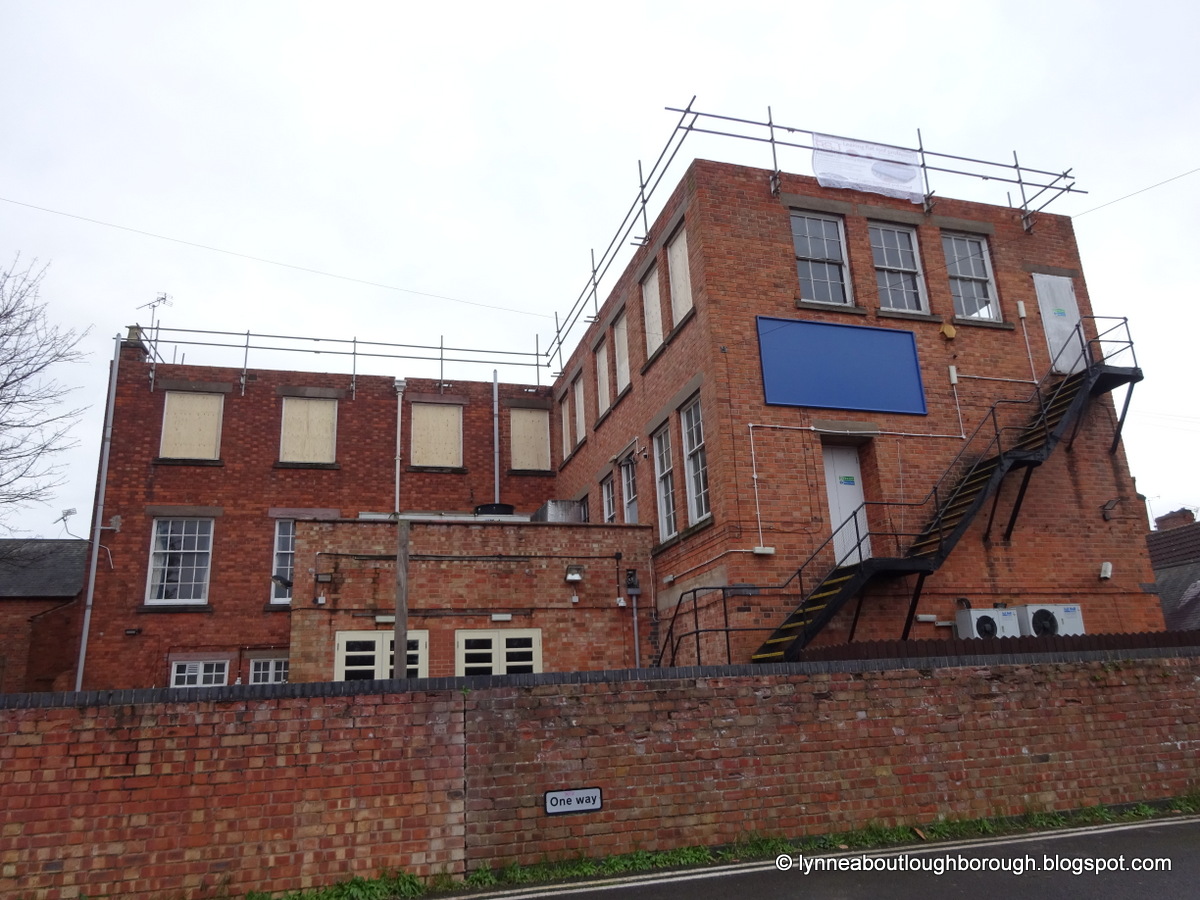
at Barrow). The Needle and Pin in The Rushes opened shortly after the Charnwood Brewery, and has been
followed by Moonface Brewery and Tap on Moira Street.
 |
| Charnwood Brewery |
 |
| Needle & Pin |
 |
| Moonface |
In 2016, the ‘Pub
Code Regulations’ were introduced, the aim of which was to regulate in some way
the relationship between the PubCo and the pub tenant. So, the PubCo would rent
the pub to the tenant and would sell supplies to them, effectively making them
into a tied pub. The regulations gave the tenant an opportunity to change the renting
model to one where they paid a Market Rent Only (MRO), meaning no more obligation
to buy supplies from the PubCo. The catch is that this can only be involved at
certain points, and the option is only open to tenants of PubCos that own over
500 pubs.
I must admit,
my poor brain finds it difficult to cope with, and understand all the changes
that have happened to our pubs over the years. So, who actually owns what? When
I visit the pub will I find a landlord, a lessee, a tenant, a building owner? I
suppose it doesn’t really matter as long as the experience of visiting the pub
lives up to expectations, and people are treated to excellence in customer
service, and an excellent product!!
So, the Stonegate Pub Company, which was created in 2010 when it bought 333 pubs from Mitchells and Butler,
has since that time taken over many, many other business, the latest being
Enterprise Inns (known as EI) in 2020. That latter acquisition has led to
Stonegate having about 5,000 sites, about one-third of which are held in the
managed division of the company, and about two-thirds are leased and tenanted.
The Slug and Lettuce is one of their venues, as is the Walkabout brand – neither
of which we have in Loughborough. Those Stonegate premises we do have in
Loughborough are The Phantom, and the Bell Foundry.
 |
| Phantom |
 |
| Bell Foundry |
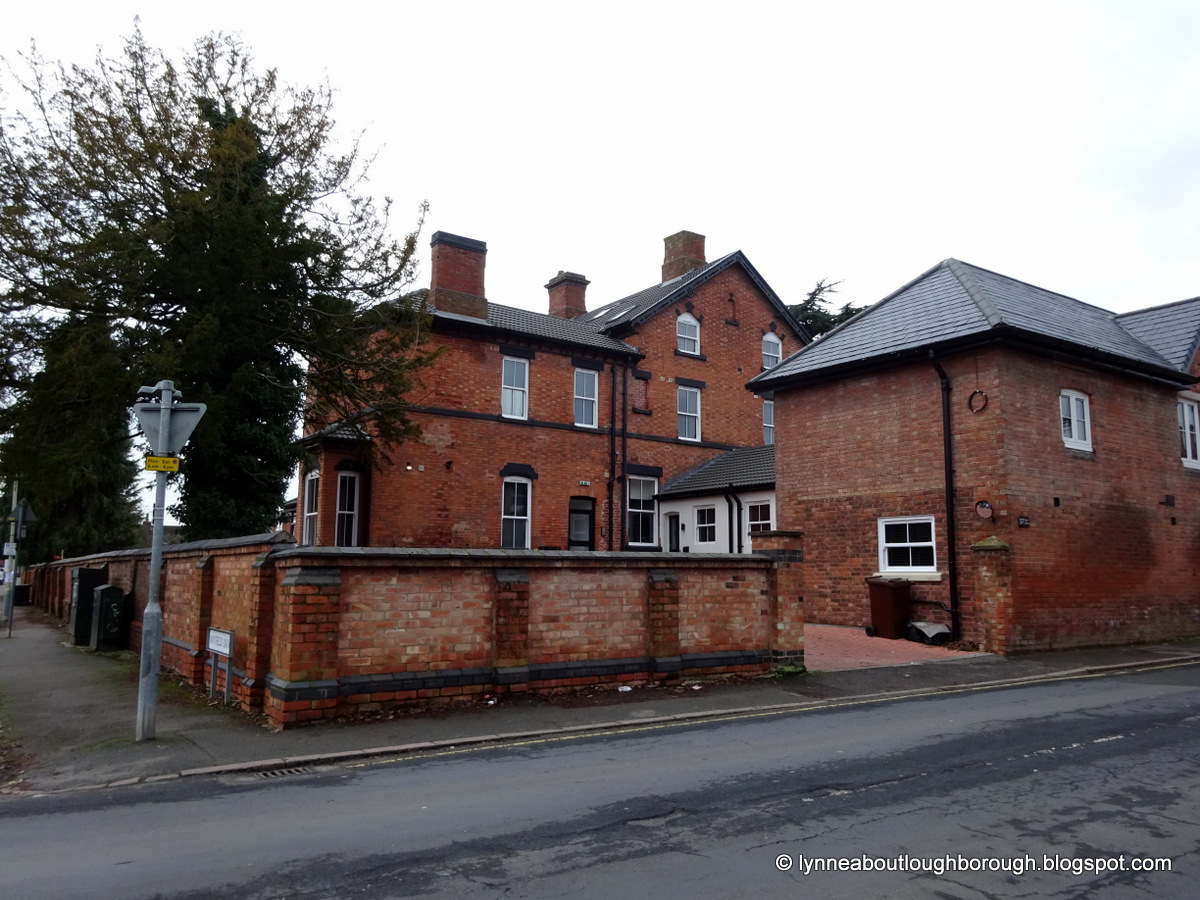
Admiral Taverns, which was founded in 2003, now have around 1,600 what they call community
pubs, which are run by what the group calls ‘entrepreneurial licensees’. There
are currently quite a few Admiral Taverns up for sale or lease, and our lovely
Windmill on Sparrow Hill was one of these until relatively recently.
Wetherspoons
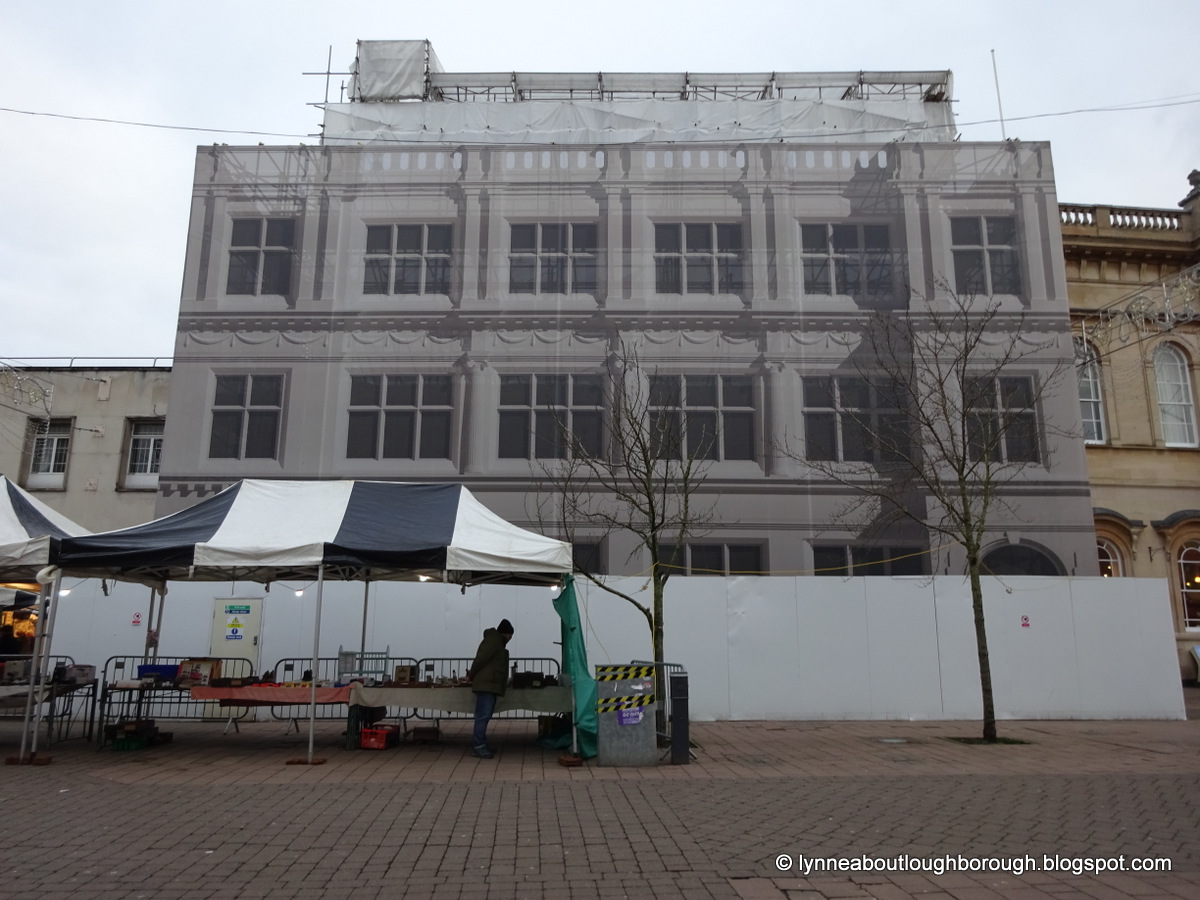
was also one of those PubCos that were created following the 1989 SI. Until
very recently, we had two of their pubs in Loughborough, The Moon and Bell, and
The Amber Rooms. Sadly, the former has now closed its doors as a pub.
 |
| Moon and Bell |
I think that's enough about pubs for one evening, don't you?? You can read more about some of the pubs mentioned in the above article in 'Loughborough Pubs'.
___________________________
NOTES
[1] A tied
pub is one which sells and promotes only the beer made by the company that owns
the pub. Compare with a free house which sells a wide variety of beers.
If you’re
interested in statistics of pubs from about 1990 to the year 2020, you can find
these in a House of Commons briefing paper.
____________________________________
Posted by
lynneaboutloughborough
With apologies for
typos which are all mine!
_______________________________________________
Thank you for
reading this blog.
Copyright:
The copyright
© of all content on this blog rests with me, however, you are welcome to
quote passages from any of my posts, with appropriate credit. The correct
citation for this looks as follows:
Dyer, Lynne
(2023). Pubs and recent legislation. Available from: https://lynneaboutloughborough.blogspot.com/2023/12/pubs-and-recent-legislation.html [Accessed 3 December 2023]
Take down
policy:
I post no
pictures that are not my own, unless I have express permission so to do. All
text is my own, and not copied from any other information sources, printed or
electronic, unless identified and credited as such. If you find I have posted
something in contravention of these statements, or if there are photographs of
you which you would prefer not to be here, please contact me at the address
listed on the About Me page, and I will remove these.
External
Links:
By including
links to external sources I am not endorsing the websites, the authors, nor the
information contained therein, and will not check back to update out-of-date
links. Using these links to access external information is entirely the
responsibility of the reader of the blog.
Blog
archive and tags:
If you are
viewing this blog in mobile format, you will not be able to easily access the
blog archive, or the clickable links to various topics. These can be accessed
if you scroll to the bottom of the page, and click 'View Web Version'.
Alternatively, there is also a complete list of posts, which when clicked will
take you to the page you are interested in.
Searching
the blog:
You can
search the blog using the dedicated search box that appears near the top of the
blog when viewed in the web version. Alternatively, you can search using your
usual search engine (e.g. Bing, Google, DuckDuckGo etc.) by following this
example:
site: https://lynneaboutloughborough.blogspot.com/ “Radmoor
House”
NOTE – the words you’re actually looking
for must be in “” and the first of these must be preceded by a space
Thank you for
reading this blog.
Lynne