Showing posts with label BBC. Show all posts

Sunday, 18 February 2024

Loughborough's Carillon

Every year, when I ponder what to write about the Zeppelin raid on Loughborough on 31st January 1916, or when I wander through the Queen's Park, or when I think about what I can do to promote Loughborough to visitors, and when I do promote the town when I lead guided walks, one of the features that always comes up is the Carillon. And, would you believe, in the recent Art Deco talk I gave to a local history society, the Carillon even made an appearance in there!!!

The Carillon Tower and War Memorial Museum is unique in the country. True, there are other carillons, for example, that at Bournville, and there's even one down at our own bellfoundry, but the uniqueness is attributed to the one in Queen's Park being a war memorial. The carillon itself is a musical instrument that has been regularly played by the Borough Carillonneur, who was Eric Jordan at the time of the opening, and is currently Caroline Sharpe, or by visiting carillonneurs, or student carillonneurs, since the day the Carillon was opened in 1923. Regular recitals were also broadcast from the Carillon by the BBC!

Of course, such a magnificent monument, the building of which was a truly local affair - bricks by Tuckers, steelwork by Morris, bells by Taylors, and actually built by Moss - but came at a cost, some of which money was raised by the creation of a bedspread, which was awarded as a prize to the person who guessed the correct weight - or at least, came closest - of the Carillon tower! 

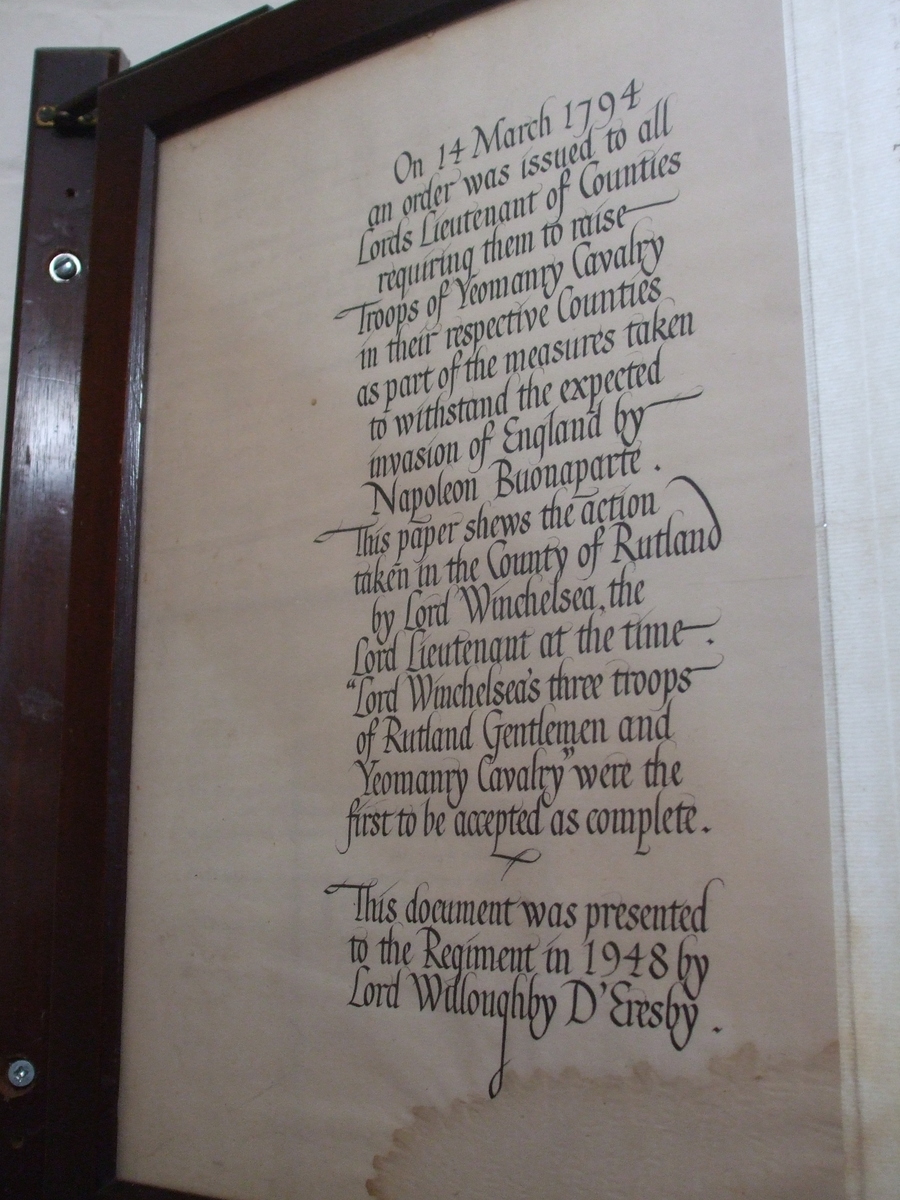
It was when I was doing my tour guide training, way back in 2012, that I first learned about Songster, the war horse who returned from the First World War and lived to an old age. Then, when I was a volunteer museum assistant at the Carillon for a couple of seasons, back in 2014, I encountered the life-sized Songster - well, it may not have been full size, but it seemed very large to me! - whose reins were being held by a mannequin dressed in full Leicestershire Yeomanry uniform. I have to say, both were rather scary! I also learned about trench art, which wasn't something I'd come across before. Since then, an attractive wire model of Songster has graced the flowerbed close to the Carillon!

The first year I volunteered I staffed the top museum floor; the second year, I was on the first floor museum - see the end of this article for a selection of photographs of some of the artefacts that were on those floors. Access to both floors - and to the clavier room, and the actual bell chamber - is via a wonderful, spiral staircase! Who doesn't love these?! I have to put my claustrophobia to one side, and concentrate fully on putting one foot in front of the other! It's really not unlike climbing to the top of a castle turret - and who doesn't love those, too?! Or climbing the church tower, either to get to the bell chamber, or out onto the roof to see the surrounding countryside!! Or even the tower of the Loughborough Grammar School which is often open during Heritage Open Days in September. When the Carillon tower is open, it is possible to climb to the top and survey the countryside around our wonderful town, and see the actual bells in the bell chamber.
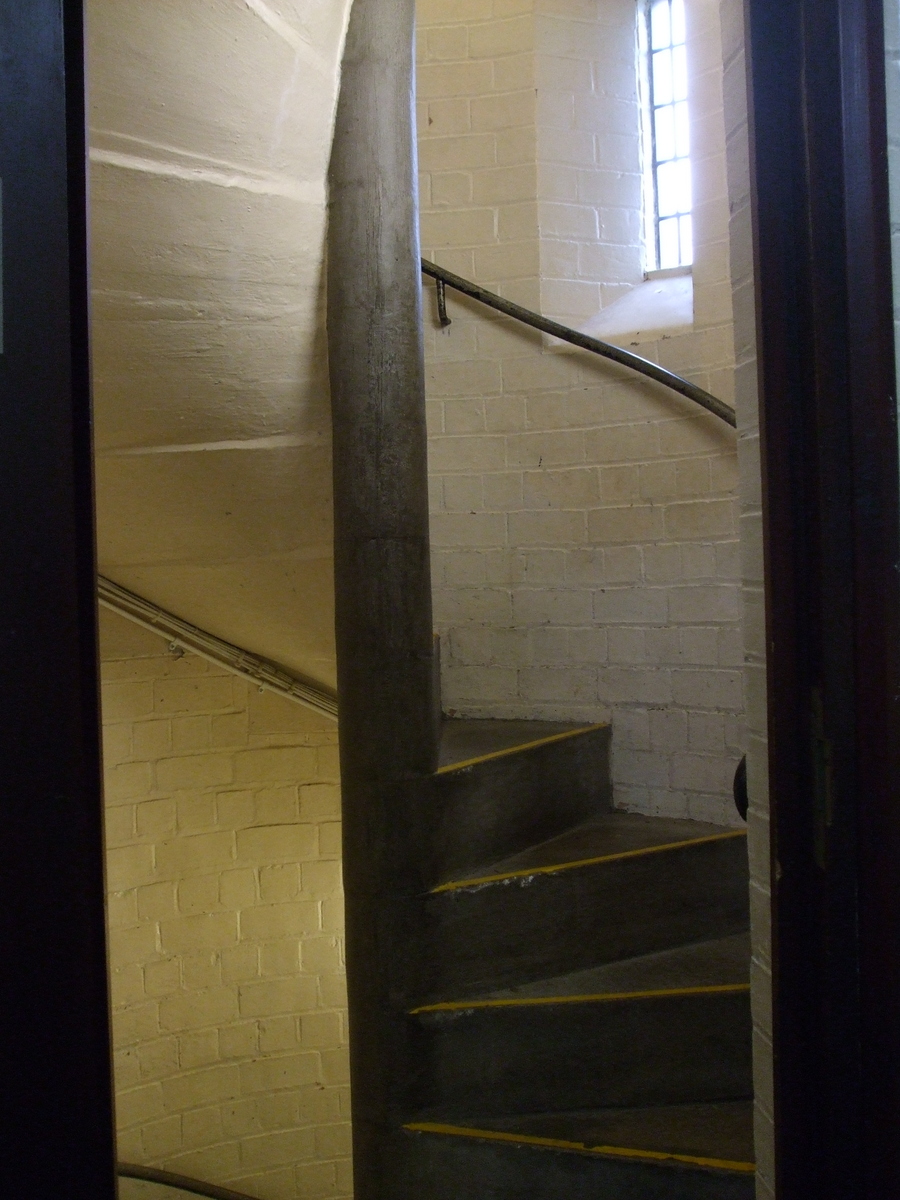
Carillon stairs

Descending the spiral stairs in the parish church

One of the bells in the bell chamber at the parish church

The spiral stairs in the Loughborough Grammar School Tower

In May 1952, the Leicester Evening Mail informed its readers that there was a "small museum inside where war relics are kept". 


In January 1964, the Illustrated Leicester Chronicle included a long description of the "unique building", saying:

 "Anyone may enter the tower to view the bells, at certain times of the day, for a small admission fee, however, one must be warned that there are 138 steps to the top of the tower! Half-way up there is a war-museum, relics brought back from the war by local men who served there." 

A comprehensive description of the contents of the museum then followed, and included both artefacts and documents.


It wasn't until Monday 5th November 1984 that the Carillon was added to the Register of Listed Buildings, and granted Grade II status. 

During the opening season, which I believe is usually Easter to October (but do please check the official website!), the Carillon receives all kinds of visitors, many of whom come from overseas on special visits. Locals and students alike climb the tower, listen to the carillon recitals, and learn from the museum exhibits, and from talking to the volunteer guides, and members of the Carillon team even go out into schools, sharing the story of the wonderful building, and taking along objects that the students can handle and learn more about.   

Last summer we celebrated the 100th anniversary of the completion of the Carillon in July 1923. I believe the weather on the occasion of the opening ceremony was quite reasonable and seasonable, however on 23 July 2023 it rained heavily and constantly! Nevertheless, enthusiasts did turn out for what was a momentous occasion. More recently, the Carillon was the destination for the replica of the Great Paul Bell, which was made from willow, and journeyed from the parish church to Queen's Park via the town centre!

Of course, every November, the Carillon is the focal point for the poignant Service of Remembrance, which is fitting, given its role as the town's war memorial, commemorating not only those who died during the First and Second World Wars, but also in subsequent, and more recent conflict.




____________________________________

Posted by lynneaboutloughborough

With apologies for typos which are all mine!

_______________________________________________

Thank you for reading this blog.

Copyright:

The copyright © of all content on this blog rests with me, however, you are welcome to quote passages from any of my posts, with appropriate credit. The correct citation for this looks as follows:

Dyer, Lynne (2023). Loughborough's Carillon. Available from: https://lynneaboutloughborough.blogspot.com/2024/02/loughboroughs-carillon.html [Accessed 18 February 2024]

Take down policy:

I post no pictures that are not my own, unless I have express permission so to do. All text is my own, and not copied from any other information sources, printed or electronic, unless identified and credited as such. If you find I have posted something in contravention of these statements, or if there are photographs of you which you would prefer not to be here, please contact me at the address listed on the About Me page, and I will remove these.

External Links:

By including links to external sources I am not endorsing the websites, the authors, nor the information contained therein, and will not check back to update out-of-date links. Using these links to access external information is entirely the responsibility of the reader of the blog.

Blog archive and tags:

If you are viewing this blog in mobile format, you will not be able to easily access the blog archive, or the clickable links to various topics. These can be accessed if you scroll to the bottom of the page, and click 'View Web Version'. Alternatively, there is also a complete list of posts, which when clicked will take you to the page you are interested in.

Searching the blog:

You can search the blog using the dedicated search box that appears near the top of the blog when viewed in the web version. Alternatively, you can search using your usual search engine (e.g. Bing, Google, DuckDuckGo etc.) by following this example:

site: https://lynneaboutloughborough.blogspot.com/ “Radmoor House”

NOTE – the words you’re actually looking for must be in “” and the first of these must be preceded by a space

Thank you for reading this blog.

Lynne

Wednesday, 6 July 2022

Loughborough Carillon and BBC100

This year sees the 100th anniversary of the BBC, so what better way to follow the recent posts on Loughborough Carillon, than with a post about Eric Jordan and broadcasting from Loughborough Carillon.


The history of the British Broadcasting Corporation (the BBC) is of course well-covered - for example try the
BBC's own history site, or the Wikipedia entry for the BBC. Essentially, the BBC was initially involved in radio broadcasting, which had begun around the middle of 1920, when Marconi provided the first live broadcast, featuring Dame Nellie Melba, who, as we read in the previous post, attended the opening ceremony at Loughborough's Carillon, in 1923.

As I understand it, each organisation or person who wanted to broadcast had to have a licence, and so to make the development of broadcasting services easier and more evenly spread, one licence was created, and the BBC made its first broadcast in late 1922. It seems that outside broadcasts could be made via one radio station and then transmitted to others across the country.

What follows are a few accounts of the early broadcasting of carillon recitals, some from our very own, but also some from other carillons.

The 1st May 1924 saw the inauguration of the extended Bourneville Carillon, being two recitals played by M. Antoine Nauwelaerts of Bruges. The Carillon had been built in 1908, with 22 bells, but George Cadbury Jnr. had this extended to 37 bells in memory of his father, also George Cadbury. The Birmingham Broadcasting Station (5.I.T.) was the first station – in the UK and possibly in the world - to broadcast a Carillon recital, using a microphone below the bells, and a telephone which took the sounds to 5.I.T., and from there they were successfully transmitted. The music played included Schubert’s ‘Ave Maria’, and part of Grieg’s ‘Peer Gynt’ suite.

On 31st May 1924, Loughborough’s Borough Carilloneur, Eric Jordan presented the second recital from Bourneville, and he was the first Englishman to perform such a recital, which lasted for two hours.

According to the ‘Radio Times’ of June 27th 1924, and the ‘Sunday Mirror’ of 29th June, the recital on 30th June by M. Jef Denyn, and Kamiel Lefevere from the Carillon at Mechelen (Malines) would be relayed from Mechelen, received in Canterbury, and sent by landline to London and from there on to all British radio stations except Bournemouth. The concert included ‘The British Grenadiers’, ‘The Bailiff’s Daughter of Islington’, ‘A-Hunting We Will Go’, and ‘Down Among the Dead Men’. Sadly, according to the ‘Western Morning News’, although the first notes of the recital were ‘heard with perfect distinctness’ the broadcast was far from successful, due, it was thought, to trunk line problems.

On 5th July 1924, the BBC broadcast the complete recital by M. Jef Denyn, who played the War Memorial Carillon of Ontario, that was lent to the British Empire Exhibition in Wembley.

On the evening of 20th July 1924, the first recital from Loughborough Carillon was broadcast. Eric Jordan was the carillonneur, and he was supported by Mr Anton Brees, a carillonneur from Belgium, several engineers, and Mr R. Till. 


On 13th May 1925, a recital on a carillon that had been made by Messrs. Gillett and Johnston, bellfounders of Croydon, which was due to be sent to New York, was so successful that shipping to the US was postponed by a day so another recital could be performed! The recital was presented by Mr Clifford Ball of the Bourneville carillon. Bizarrely, this performance seems to have been preceded by a broadcast talk on ‘Modern methods of teaching engineering’ given by Mr W. Birrell, who was the Registrar at Loughborough College!

In June 1925, a ‘Nottingham Post’ reporter takes forward to the radio station director at Nottingham (5.N.G.) the idea from a reader that ‘the Loughborough Carillon should be broadcast from Nottingham relay station’, and was assured that the idea was already receiving attention! However, by the end of August 1925, no broadcast had been made and a letter was sent to the ‘Nottingham Journal’ by one of its readers: “When will the BBC favour listeners with a broadcast of the carillon at Loughborough?” The Journal’s own correspondent had apparently referred to the carillon as ‘the finest in the world’. The letter-writer goes on to say: “If the authorities at Loughborough are to blame for the carillon not being broadcast, all I can say is : ‘Wake up, Loughborough.’ Loughburians boast that their carillon is famous the world over – let the world hear it then.”

In mid-November 1925, the Loughborough War Memorial Committee was corresponding with the Birmingham and Nottingham broadcasting stations concerning a carillon recital – and an important announcement was to be made soon!! Whether or not this announcement came, I have no knowledge. However, a notice appeared in the Nottingham Evening Post on 29th March 1926 announcing that there would be a broadcast recital from Loughborough carillon on May 2nd May 1926.

Before the broadcast, the ‘Nottingham Journal’ reported that this recital would be the first to be transmitted since the Birmingham station was permanently connected by landline, and thus it would be experimental. In order to ensure the broadcast would be a success, engineers had to sling a microphone from a ladder in the gallery, near the top of the tower, and above the bell chamber. They also had to make adjustments to filter circuits in the amplifier. The 15-minute recital was billed in the ‘Radio Times’ as:

LOUGHBOROUGH WAR MEMORIAL CARILLON, S.B. from Birmingham.” 

There was, however, a little trouble with the leads which were arranged outside the tower, which interfered with the broadcast.

A subsequent broadcast recital took place on Sunday 30th May 1926, and the ‘Tamworth Herald’ had this to say:

 “These recitals, which are regarded as one of the new and most attractive features of broadcast, begin with the tolling of the great bell in recognition of the purpose for which the carillon was erected, viz., as a memorial to the men of Loughborough who fell in the Great War.” 

This time the troublesome leads were brought into the building, but the microphone arrangements were as before.

This recital, again given by Eric Jordan, included ‘Introduction’ by B. Burrows, a medley of British airs (‘Rule Britannia’, ‘Annie Laurie’, ‘Kilarney’ and ‘Land of my Fathers’), and an arrangement of Mendelssohn’s ‘Spring Song’. There was also a collection of other items that were relayed to most radio stations, including ‘The Volga Boatman’, ‘The Bells of St Mary’s’, ‘Absent’, and ending with ‘Abide with Me’. This was not the end of the recital, but it was the end of the broadcast, so the large number of people who had come to Queen’s Park were treated to the rest of the music.

Another recital from Loughborough’s carillon was broadcast in July 1926. ‘Electra’, a reporter on the ‘Walsall Observer’ had the following to say: 

“The music of the carillon is finding an increasingly frequent inclusion in the broadcast programmes and a steadily growing number of listeners are becoming aware how exceptionally beautiful this music can be and how well it may, with care, be reproduced by wireless. The most frequent carillon broadcasts are from the Memorial Carillon at Loughborough, in Leicestershire, the largest and probably best-toned collection of bells in the country, from which the recitals by Mr. W.E. Jordan are relayed to Birmingham station and thence to other stations.” 

The reporter goes on to say that Mr Jordan had set himself the task of “establishing a distinctly English standard in this unrivalled form of bell music. In this, broadcasting is of course of great assistance, for it is making the beauty of the carillon known to the whole country.”  

A word of caution is given, and the following advice shared: “ …extra care [to the reception] is particularly desirable if a loud-speaker is to reproduce the transmission, because it is easy to over-amplify reception with the result that the sweet sonority of the bells is lost, and blasting occurs with some of the middle notes, which quite destroys the finer harmonic effects.”

Eric Jordan gave another broadcast recital on Sunday 19th September 1926, at which he played a variety of pieces, including ‘Solveig’s Song’ from Peer Gynt by Grieg; ‘Londonderry Air’; ‘Mother Machree’; ‘Rock of Ages’ and ‘Lead Kindly Light’. What was notable about this particular concert, although the listener would probably be unaware, was that Eric made a special journey from London to Loughborough to play, as he had been married only 4 days before, and was honeymooning in Hornsey! 

In an interview for the ‘Nottingham Evening Post’, Eric Jordan talks about the business of broadcasting: 

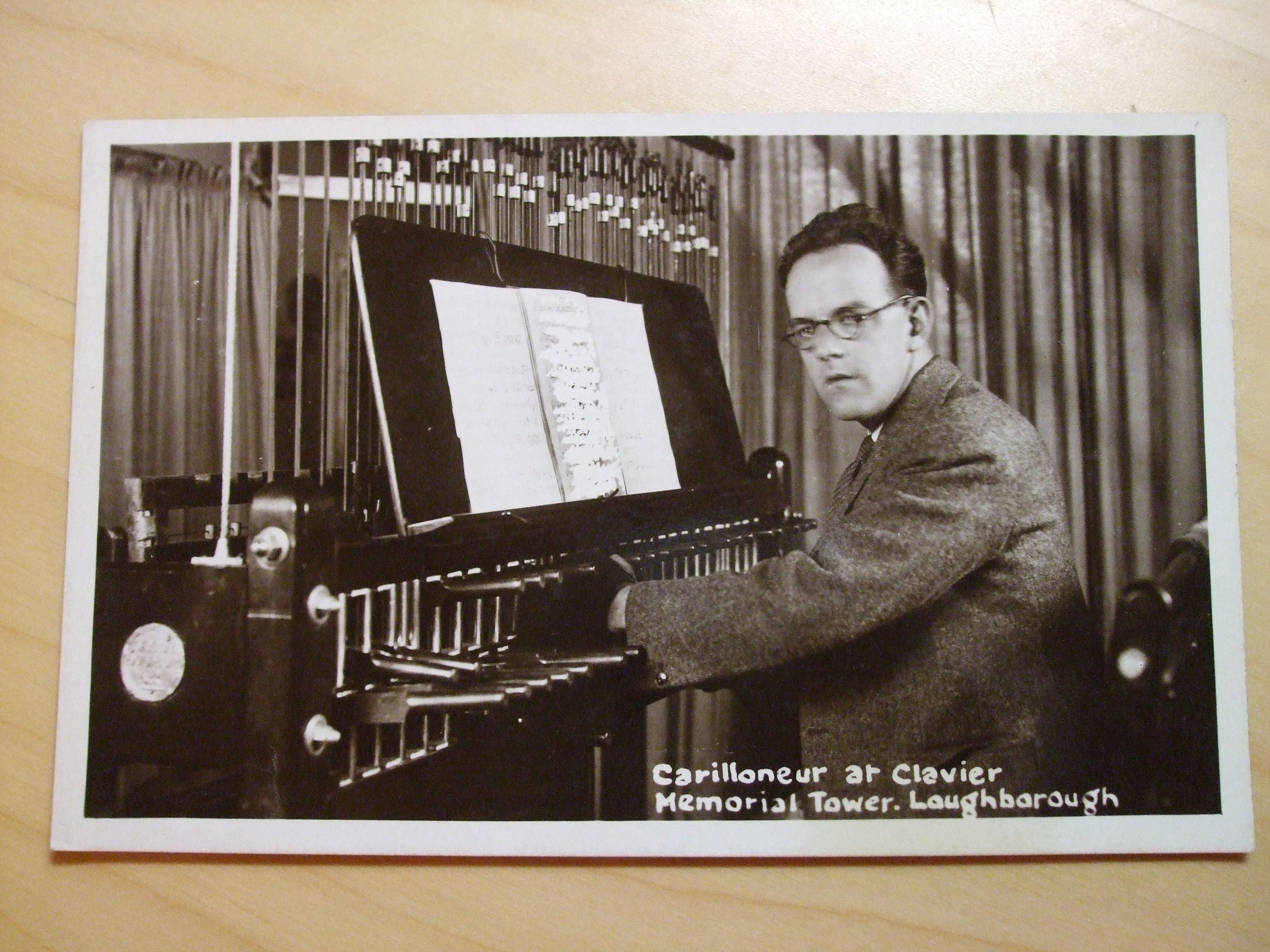
“Many do not realise the amount of work and trouble necessary for a broadcast on the carillon of even only a quarter of an hour’s duration. On the occasion of the last broadcast the engineers of Birmingham station travelled by car to Loughborough – a distance of 40 miles – together with the necessary apparatus weighing some cwts.. I met them at the tower two hours before the broadcast was due to commence, and, believe me, those two hours were very strenuous ones. Frequent journeys had to be made from a room situated half-way up the tower by all of us. Half an hour before the concert commenced, I took my seat at the clavier, and was repeatedly tested by the BBC. The test completed I received the message ‘All OK’ from the engineers. I then had in the short space of five minutes to undress and dress in my playing clothes, which consists of an athlete’s attire – cotton vests and shorts. Having received the message ‘Right away’, the programme commenced.”

Eric Jordan went on to say in that interview: “A carillonneur must possess two things, he must have good health and sound muscles, and he must have a good knowledge of music. In my case the playing on the carillon has been beneficial to my health and I like it immensely.”

Eric Jordan at the carillon

In a later interview, reported in the ‘Nottingham Evening Post’ in February 1933, Eric Jordan said that one of the most common questions he was asked, in relation to the broadcasting of recitals, was whether the weight of the heavy bells would smash loud-speakers or damage the valves on wireless apparatus. He noted that the BBC took many precautions to stop all heavy sound reaching the wireless sets. Eric Jordan’s advice to listeners was “to tune their sets to the maximum volume and then listen in another part of the house, or, if possible, outside, with the window or door open.” This particular broadcast, which was taking place on 1st March, was Loughborough’s contribution to the country’s ‘industrial week’ transmissions.  

Carillon recitals continued to be broadcast throughout the 1920s, and came from a variety of places, including, Armagh Roman Catholic Cathedral; Canberra (although this was not wholly successful); the Peace Tower of the Ottawa Parliament buildings, and the New Zealand war memorial (whilst it was on display in Newcastle-Upon-Tyne).

In August 1927, the ‘Newcastle Daily Chronicle’ carried the following headline:

“HOW WIRELESS AIDS THE SICK. DARLINGTON HOSPITAL’S SUPER-SET.” 

A wireless set was given to the Feethams Infirmary at Darlington, paid for by public subscription. A governor of the BBC outlined how successful similar installations had been at other institutions, and alluded to the influence music could have on sick patients. Apparently, a dying man, in Loughborough hospital, read that a carillon recital was to be broadcast, and so determined was he to hear this that by the time of the recital a week later, his condition had improved so much so that he was discharged in good health!

In January 1928, the ‘Nottingham Post’ reported that plans to record the Loughborough carillon had been on-going for about a year, but had finally come to fruition, and during the early part of January some well-known pieces, played on the carillon by Eric Jordan had successfully been recorded. This must have had an impact on Eric Jordan as he became the President of the Loughborough Recorded Music Society, being an active member of the society until well in his 80s.

On 28th June 1931, Eric Jordan gave his 1000th carillon recital!!! By Easter 1933, he was hoping to reach 1,500 recitals!

It is, of course, fitting that the Recorded Music Society paid tribute to Eric on his death, by playing some of his recordings, and some of his favourite music. Later that same year, 1994, Eric’s son Phillip, also played some of his favourite pieces at the last meeting of the Society in December.  

Thank you for reading this blog. You are welcome to quote passages from any of my posts, with appropriate credit. The correct citation for this looks as follows:

Dyer, Lynne (2022). Loughborough Carillon and BBC100. Available from: https://lynneaboutloughborough.blogspot.com/2022/07/loughborough-carillon-and-bbc100.html [Accessed 6 July 2022]

Take down policy:
I post no pictures that are not my own, unless I have express permission so to do. All text is my own, and not copied from any other information sources, printed or electronic, unless identified and credited as such. If you find I have posted something in contravention of these statements, or if there are photographs of you which you would prefer not to be here, please contact me at the address listed on the About Me page, and I will remove these.
Thank you for reading this blog. 

Lynne     

Sunday, 9 February 2020

Bellringing Loughborough and light show Nottingham

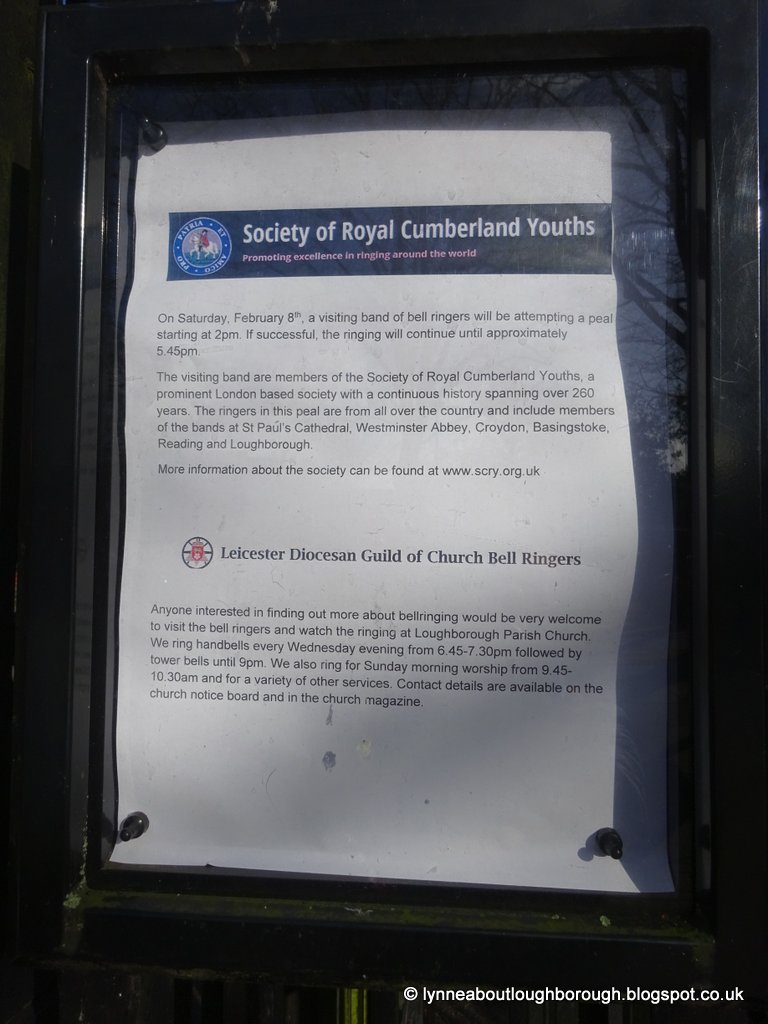
Well, this week has been a bit of a funny one, well, maybe 'funny' isn't quite the right word to describe the incapacitation that comes with a migraine. Recovery was aided somewhat by an interesting diversion when I found myself offering to be friendly, helpful and knowledgable down at the parish church on Saturday, when a visiting band of bellringers from across the country came to ring a specific, rather challenging peel. Friendly and helpful I can do, but I wasn't so sure about the knowledgeable, however, armed with the few snippets of info I did know, and the information that was available on the sheets provided for visitors to use written by more knowledgeable people than me, was very helpful and seemed to do the trick.

Anyway, we had a few visitors who were really impressed with our relatively big church, and I had some good conversations with a wide variety of people. We were also treated to a bit of an impromptu organ recital from one of the visiting bellringers!!

Entering the parish church

Open for visitors!

Some of the beautiful stained glass within

An impromptu organ recital!

About to ascend the tower

The bellringing challenge!

Church information sheets

Church information sheets


When I'd finished at the parish church I went off to Nottingham to see the lighting show they were putting on across the city. Luckily, by the time we got to Nottingham it was after 4pm so we didn't have long to wait for the darkness to fall and the light show to begin. I must admit, the show reminded me of the similar event we had in Loughborough, when in celebration of the inaugural Loogabarooga Festival, characters from children's books were projected onto the carillon. At the time I simply enjoyed the event, but in hindsight, it would have been great to have projected onto the Town Hall, like they did at the Nottingham event. Here's some photos of the Nottingham event:


And here are some photos I took at the Loughborough event. I have changed my camera a number of times since these were taken, hence the better quality of the Nottingham photos is down to the photographer, not the lighting show! 


The other thing I've done this week, probably because I was feeling unwell, was doing a bit of phisolophical thinking about Loughborough. I've done this before, but this time I was thinking about something someone had said about not knowing where you're going until you know where you've been. The statement was being applied to individuals, but as I see it, it can also apply to places. A knowledge of the past history of the town - the difficulties encountered, the successes, the makeup of the population, the wider societal context, and a whole range of other things - all help us to understand where we, as a town, are today, and perhaps to show where we could be in years to come. The problem for me comes with how far back in history do you need to go in order to understand how Loughborough became the town it is today? More particularly, why am I so fascinated by the Victorian era, and less so by the life of the town and its people in the Mediaeval period? I feel I should be interested, but find it quite hard to get over-excited, I suppose because I feel closer to the Victorian era, because my great-great-grandmother, who was born in 1871, was still alive when I was 2, so was very much alive in the minds of my great-grandmother, grandmother and mother for many years after this, and thus I felt a connection to her. That and the fact that I actually knew numerous of my great-great aunts and uncles who had been born in the late 1800s, many of whom lived into the last quarter of the twentieth century.

The other thing that I was thinking about was how Loughborough means different things to different people: there is no one Loughborough. I'm sure I've said this before on here, but if pop into the town centre on a Tuesday, you'd be forgiven for thinking Loughborough was a quiet, sleepy little place, whereas if you go into town on a Thursday or a Saturday, you'll think Loughborough is a bustling little market town. Of course, everyone is right! 

Finally, I convalesced yet further by watching the episode of Antiques Road Trip (1) where they came to Loughborough and visited Taylors Bellfoundry and the beautiful Carillon in Queen's Park. Staff of the bellfoundry and the Borough Carilloneur all seemed to really enjoy the visit!!    

Anyway, this blogpost is rather short because I've been out of action for a few days, but, here's the good news - next week, you wonderful readers will be treated to an absolute corker of a blog post!! Watch this space, and be sure to pop back next week!!

(1) Only available until 7 March 2020.

You are welcome to quote passages from any of my posts, with appropriate credit. The correct citation for this looks as follow:

Dyer, Lynne (2020). Bellringing Loughborough and light show Nottingham. Available fromhttps://lynneaboutloughborough.blogspot.com/2020/02/bellringing-loughborough-and-light-show.html  [Accessed 9 February 2020]

Take down policy:
I post no pictures that are not my own, unless I have express permission so to do. All text is my own, and not copied from any other information sources, printed or electronic, unless identified and credited as such. If you find I have posted something in contravention of these statements, or if there are photographs of you which you would prefer not to be here, please contact me at the address listed on the About Me page, and I will remove these.
Thank you for reading this blog. 

Lynne