Showing posts with label Georgian Theatre Richmond. Show all posts

Thursday, 8 September 2022

Secrets of the supermarket

During the pandemic, and especially during lockdown, I went along - via Zoom, of course! - to lots of different talks, and courses, which included a number of writing events. What follows is what I wrote during one of those writing events, in response to the writing prompt – ‘That place has a curious past and may hold many secrets’! 

And, we had to do this under a 30-minute limit!!! 

Hope the results are of interest! 

I walk a lot, and I particularly love urban walking. Over the years I’ve found myself not only looking up, but also looking down, and, in fact, looking all around as I walk! History is all around us, and it is because of that history that we are where we are today. Indeed, that is why I am here today, standing outside the International Supermarket, thirsty after my long walk!


The sun reflects off the white rendered building. The huge ground floor windows look somewhat out of place, disproportionate in size, ugly even, with wire grill shutters to deter non-shoppers from entering. Looking up, I see some curious brickwork that looks like window ledges, but there are no upstairs windows! In the middle of the triangular-shaped upper storey, alongside what looks like a 20th-century burglar alarm, is what appears to be a badge  - is it a crest of some sort, or just an ornament, a decoration?


The door to the shop is awkwardly placed in the middle of the building’s frontage, and I stagger up the two green-painted steps, to enter the shop – full of delicious delicacies and foodstuffs from a range of countries, like Poland and Greece, as you’d expect really, given the shop’s name.

It feels exciting to go into the shop, and yet, it also feels perhaps a little run down, and very much more like a corner shop than a clinical national chain food hall. Something – a tingling down my spine perhaps – tells me that there is far more to this building than meets the eye, so, refreshments purchased, I rush home to do a bit of desk research – we are still in the grips of the pandemic, after all, and so many buildings are still closed, and services non-operational, that desk work is currently the only option.

Several weeks pass as I amass more and more information about the building that houses the International Supermarket, until finally, I feel ready to tell its story, albeit somewhat briefly!

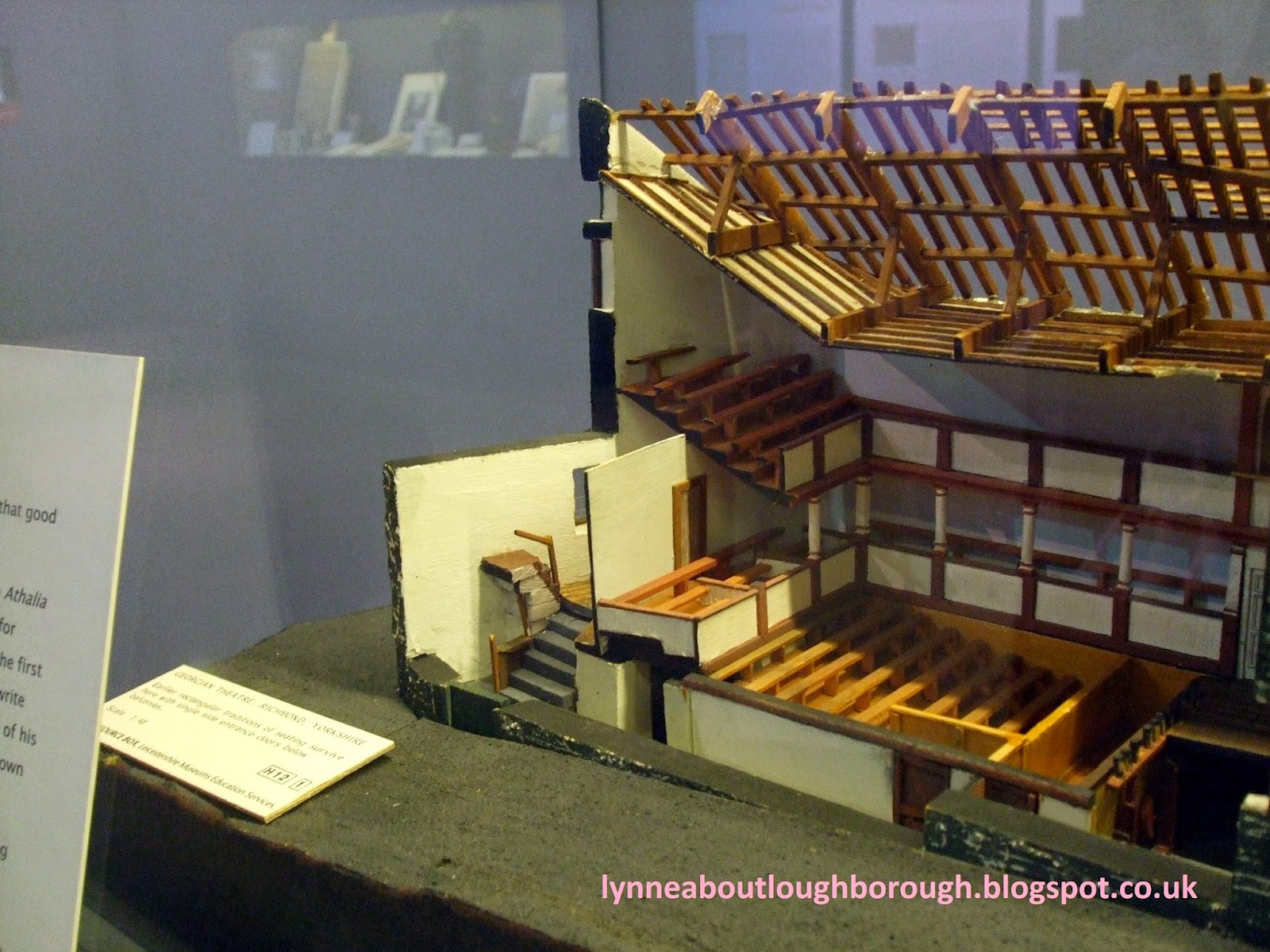
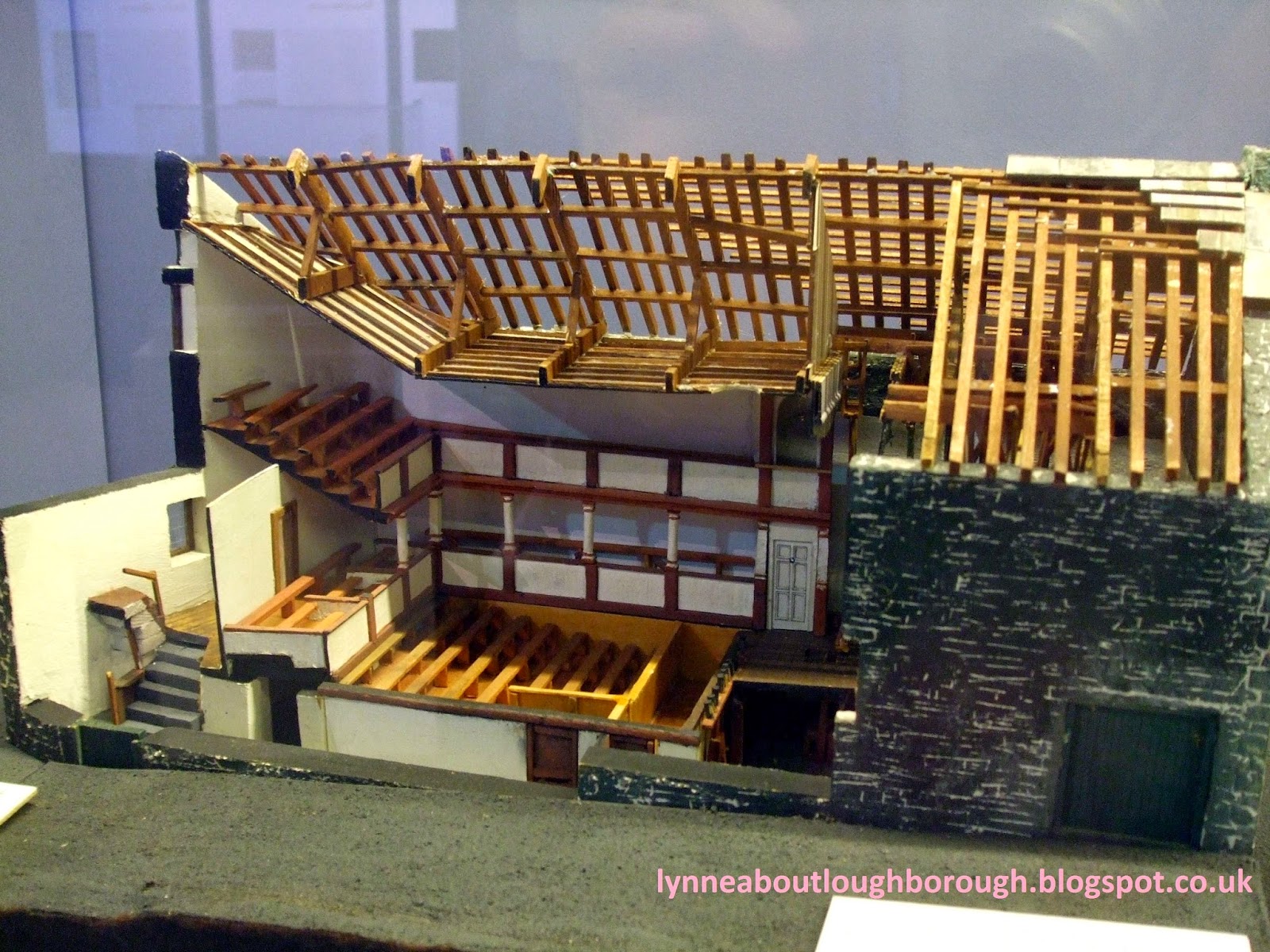
The building is far older than I had realised, and was originally opened in 1823, and according to Helen and Richard (1986) (1) it was constructed to be Loughborough’s first purpose-built theatre. If you know the Georgian Theatre in Richmond, Yorkshire, which is still operating as a theatre – pandemic permitting – then you have an idea of what Loughborough’s theatre was originally like. An expert in our local Leicestershire theatres has created a plan of the building as it probably was at its opening, showing the raked stage and the high ceilings, neither of which are visible today from the shop floor (2).

Mr Bennett, the producer for whom the theatre was created, had theatrical interests in other Midlands towns, like Sheffield, so he was rather experienced. He opened the theatre with a production of ‘Speed the Plough’, a comedy by Thomas Morton, that had first been performed in Covent Garden in 1798, and with ‘Warlock of the Glen’, first performed at the Theatre Royal, Convent Garden in 1820 (3). Later, Master B. Grossmith, performed his one-man show at the theatre, although there is speculation about how he could have remained seven years of age for so many years!

The theatre was initially successful, but gradually declined in popularity, so much so, that around 1856 it was used by the local lodge of Oddfellows, as their regular meeting place. It is the badge of the Manchester Unity of Oddfellows that adorns the front of today’s International Supermarket.

Once the Oddfellows left the building, it became a dance hall, showed early films before there was a dedicated cinema in town, and then became the office of a local auction mart – Adkinson and Freckletons, the latter of which still have offices on Loughborough’s High Street.

Although there was a period of intermittent performance at the theatre, once the auction mart had left, the building was put to use as a bicycle repair shop, a carpet shop, an outdoor clothing shop, and has now been an international supermarket for over 10 years. Did I say earlier that they sell lovely baklavas?

________________________

Notes

(1) Leacroft, Helen, and Leacroft, Richard (1986). 'The theatre in Leicestershire: a history of entertainment in the county from the 15th century to the 1960s'. Leicester: Leicestershire Libraries & Information Service

(2) ibid.

(3) Both according to entries in Wikipedia.

____________________________________

posted by lynneaboutloughborough

With apologies for typos which are all mine!

_______________________________________________

Thank you for reading this blog. You are welcome to quote passages from any of my posts, with appropriate credit. The correct citation for this looks as follows:

Dyer, Lynne (2022). Secrets of the supermarket. Available from: https://lynneaboutloughborough.blogspot.com/2022/09/secrets-of-supermarket.html     [Accessed 8 September 2022]

Take down policy:
I post no pictures that are not my own, unless I have express permission so to do. All text is my own, and not copied from any other information sources, printed or electronic, unless identified and credited as such. If you find I have posted something in contravention of these statements, or if there are photographs of you which you would prefer not to be here, please contact me at the address listed on the About Me page, and I will remove these.

Blog archive and tags:
If you are viewing this blog in mobile format, you will not be able to easily access the blog archive, or the clickable links to various topics. These can be accessed if you scroll to the bottom of the page, and click 'View Web Version'. Alternatively, there is also a complete list of posts, which when clicked will take you to the page you are interested in.  
 
Thank you for reading this blog. 

Lynne                     

Monday, 28 April 2014

Handel's Messiah, Snibston Discovery Museum, Jennens and an international supermarket - part 2!

Last week I mentioned to you that I'd been singing Handel at Snibston, and that I'd visited the wonderful exhibition connected with Handel's librettist, Jennens. This week I want to connect you with something in Loughborough you may have just dismissed as a rather scruffy old building ...

Information board in the Music & Performance display cabinet.


When I visited the Jennens exhibition, I'd expected to see nothing other than a history of his life, and maybe a bit about his connection with Handel, so imagine my surprise and excitement when there was a cabinet devoted to music and performance! So what, I hear you say! Well, there were a couple of things here that really "floated my boat" which I'll tell you about.


There's an international supermarket that I frequent on Sparrow Hill. It's a bit scruffy on the outside, but they sell a good range of pasta, dried beans, herbs and paklava! Before becoming a supermarket, it was an outdoor supplies shop, called "Up the Mountain" where I bought some ski kit for my eldest child when he was going on a Garendon High School skiing trip, quite a few years ago. When I first came to Loughborough I think it was Cunningham's the carpet shop, although I never went in there. Before that I think it was a cycle shop. If we go even further back, it was home to Adkinson and Freckletons auction mart (I don't know what happened to Adkinson, but Freckletons is now on the corner of Leicester Road and Woodgate).

18 months ago, when I was doing my guide training, this building was one that I investigated for my exam, so it holds a special place in my affection, as it helped me pass said exam! I also have memories of excitedly talking about this building on one of my guided walks, whilst it was pouring down with rain, and we were all getting awfully wet, but despite the rain, the group managed to show huge enthusiasm!

On 2nd June, 1823 Loughborough's earliest purpose-built theatre was opened in Sparrow Hill. The owner/manager was one Mr Bennett, who also had theatres in Ashby, Worcester, Coventry, and Wolverhampton. Local subscribers paid £700 for the building and the first plays to be performed were "Speed the plough", a comedy in 5 acts by Thomas Morton (1764-1838), written in 1800 and first performed 8th February 1800, and "The Warlock of the Glen", a melodrama in two acts by C[harles]. E. Walker, probably written around 1800, and certainly performed at the Theatre Royal Covent Garden on Tuesday April 3rd, 1821 and at the Edinburgh Theatre Royal* in April 1825. At the Sparrow Hill theatre, these plays played for about six weeks.

However, the theatre wasn't terribly successful, in its early years. There was somewhat of a revival in the 1830s, and Master B Grossmith**, aged about seven, performed all the characters in three short plays one evening. This was part of a mini revival and led to the installation of gas lighting in the theatre in 1845. However, the success was short-lived, and the theatre closed in about 1848, opening again seven years later, having been converted into a free church, before being remodelled again into a dance hall and music salon.

Only a year later, in 1856, the building changed hands and was managed by The Loyal Sovereign Lodge of Oddfellows. This branch of the Oddfellows was established in 1831, and according to the current District Secretary, they met at the "Odd Fellows Hall" in Sparrow Hill, presumably from those early days. During the next 90 years, the theatre building was used for the odd theatrical performance, to show some of the earliest films, and for dances and dancing lessons, before being sold to Adkinson and Freckleton in 1945.

One of the things that excited me about the Jennens display was that there was a model of the Georgian Theatre in Richmond in the Music and Performance cabinet. This was fascinating because not only had the model been made by students of Leicester Polytechnic (now De Montfort University, where I have worked for the past 27 years), but they'd done this with the help of Richard Leacroft, who has written a number of books on the subject of theatre and cinema nationally, in Leicestershire, and in Loughborough, some joint authored with Helen Leacroft.


So, I expect you've guessed by now that this all has something to do with that international supermarket? And you'd be right! There exists in our little market town, a theatre based on the model of the Georgian Theatre in Richmond, which is hiding under a coat of crumbling white paint, a society's crest and posters of appealing groceries! I have to admit, the new inner relief road has also revealed an interesting view of our former theatre. Although the ground floor was added a very long time ago, and its use, as outlined above, has changed dramatically over the years, there is still apparently, evidence of the theatre in the basement. Now that the relief road has been built the rear of the theatre is quite evident and it looks juts so like the theatre in Richmond that there really is no doubt of its original purpose.

The former Sparrow Hill Theatre, now an international supermarket.

Close-up of the Oddfellows crest and first floor window lintels.

The rear gable of the Sparrow Hill Theatre seen in front of the Post Office exchange
Over the years there have been a number of theatres in Loughborough, but now only the Town Hall (formerly the Corn Exchange) still stands and is used as a theatre.

*A review of the performance appeared in the Edinburgh Review, No. CXXIII, Volume III of Wednesday, April 13, 1825. "Gladly would we give this piece, excellent as it is, the go-be, to relieve ourselves of labour; but as the benefits are approaching, we cannot withhold praise from those to whom it is eminently due; - therefore, we are bound to observe that Pritchard's Warlock, the Andrew Mucklestane of Mackay, and the Sandy of Denham were most meritorious. Lee's Donald and McGregor's Murdoch were both good, and Rae's Ruthven far from amiss."


**Master B Grossmith was actually Benjamin Grossmith (1825-1849?), the younger brother of William Robert Grossmith (1816-1899), and both were uncles to George and Weedon Grossmith, the brothers who wrote the popular "Diary of a nobody", which was published in book form in 1892. Both young Grossmith actors were billed as the "Young Roscius": Quintus Roscius Gallus (died BC 62) was a very successful Roman actor, and the epithet has become a term used for a successful actor. One of the most famous Young Roscius to appear in the late 18th and early 19th century was William Henry West Betty (1791-1874), popularly known as Master Betty. A young actor who followed in the footsteps of the Grossmith brothers was Master Henry Herbert (born 1822), who was particularly influenced by them as his father opened a boarding school in Reading, and since this was where the Grossmiths were born and lived, young Master Herbert was able to see them acting on stage. More recently, Daniel Radcliffe, aka Harry Potter, has also been described as a Young Rosicus.