Allotments on Great Central Road
Windmill Road
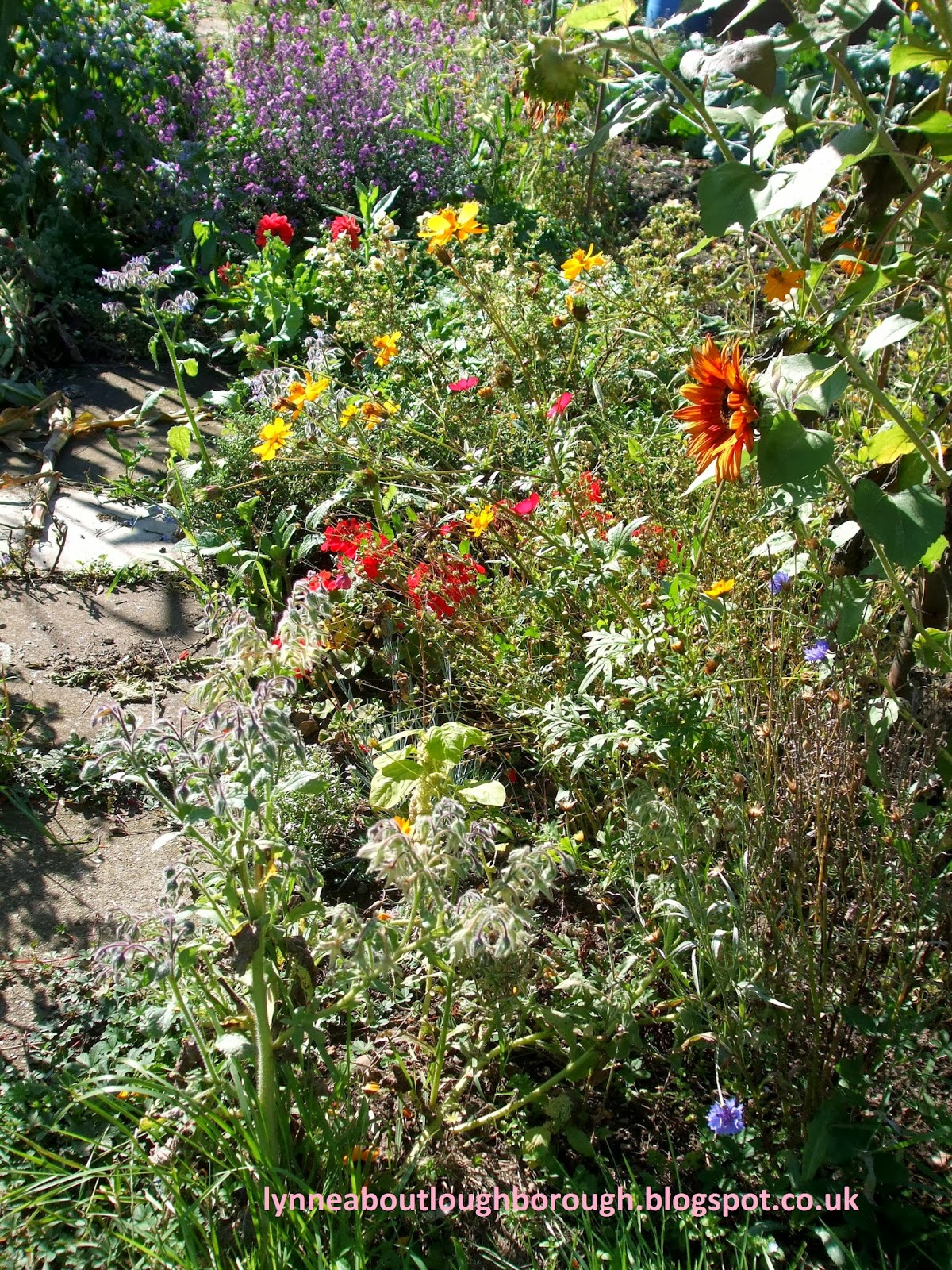
I've been musing upon allotments lately, and remembered that I'd read somewhere about the allotments that are on Great Central Road. After much hunting around I eventually found what I was looking for, although the photographs that I know I have are proving elusive, so I've added some from other allotments across town - notably, a photograph of the smallest area of plots, which is at the end of Castledine Street Extension.
 |
| The smallest of the town allotment plots on Castledine Street Extension |
There's a bit more about allotments in 'A-Z of Loughborough', but the below didn't make it!
In January 1918 the Loughborough
Echo, 11th January on page 2 carried the following article, which explains a bit about how the Great Central allotments came to be:
"MR. E.H. WARNER’S GIFT TO
LOUGHBOROUGH.
What was described as a most generous
gift to the town was mentioned at the meeting of the Town Council on Monday,
when the Town Clerk read a letter from Mr E.H. Warner, offering to the
Corporation, 7 acres, 1 rood, 10 perches of land on Windmill Road (off Great
Central and Beeches Roads) to be used as allotments during the war and
afterwards for a housing scheme on the garden city lines. The letter read as
follows:
'I propose to convey to the Corporation
of Loughborough the freehold of seven acres. 1r. 10p of land adjoining Windmill
Road, Loughborough, for the purpose of allotment gardens during the war, and
afterwards for development on garden city lines by the Corporation, so far as
the extent of the land will allow, preference of tenancy to be given to
disabled sailors and soldiers who have done and are doing such a splendid
service to their country. It seems to me that the Corporation is the body most
fitted to hold the deal in the land, and I hope it may take the same view. It
would have the opportunity of getting experience in development on a limited
scale that of making some provision for deserving men. It seems to be
reasonably certain that housing accommodation will be required after the war,
and not so certain how it is to be obtained. Unforeseen conditions may arise,
so I don’t wish to burden my proposal with any restrictions likely to be
onerous in the future. I should, however, like very much the following objects
to be kept in view when the time of development arrives:
1. The developments should be on
garden city lines, i.e. the houses should not be in rows but in detached groups
not more than four in one block
2. Each house to have its garden, some
with more land than others, to meet the tastes of tenants
3. No house to have less than three
bedrooms of more than four or five
4. Preference of tenancy to be given
to totally or partially disabled sailors and soldiers born in the parishes of
Loughborough, Quorn, and Barrow-on-Soar, who are willing to reside in
Loughborough
5. The rents should not amount to more
than is necessary to pay interest on money, sinking fund, repairs etc.
6. Somewhere about the centre of the
land should be planted a circle of trees with something ornamental in the
centre and seats round, with a decent approach from the road.
Perhaps you will kindly put my
proposal before the Corporation at an early date, and if it is favourably
entertained I gather that it will be necessary to refer it for sanction to the
Government authorities. I am prepared to convey the land on hearing your
Corporation desire to accept it. Yours very truly, E.H. Warner.'
The Town Clerk said that Mr Warner had
explained his proposal to him prior to writing the letter and he pointed out
that the Council would not be able to accept it with the conditions Mr Warner
wished to impose, but he said that he should not insist on the conditions being
carried out, but that he preferred them if it were possible. The Local
Government Board would have to give their sanction in the matter before the
Town Council could embark on a housing scheme to enable the Council to come to
a decision.
The Mayor moved that the warmest
thanks of the Council be voted to Mr E. H. Warner for his generous offer to
convey the land to the Corporation to be used as allotments during the war and
afterwards to be developed as a housing scheme after the war on garden city
lines.
Councillor Barrow supported, and added
that it was a handsome gift. He knew the land was an eligible plot for
manufacturing purposes, and Mr Warner could have obtained a very good price
indeed for it. Councillor Stenson and Councillor Clemerson also supported, and
the motion was unanimously carried.”
 |
| Allotments off True Lovers Lane and Radmoor Road |
In November of 1919, the Leicester
Journal of 28th November on page 7 printed the following article
"ALLOTMENTS AND GARDENS. NEED FOR FRUIT
CULTURE. WINDMILL ROAD ALLOTTEES.
Loughborough Allotment and Garden
Holders’ Association have secured for four lectures during the winter session
the services as lecturer of the newly-appointed horticultural expert for the
county, Mr T.G. Bullock, who gave the first lecture last Wednesday evening in
the Town Hall. There was a good attendance, presided over by Mr J.T. Smith,
FRHS.
Before the regular proceedings opened,
Mr Edward hands, solicitor, attended to make a statement with regard to the
land purchased by clients of his between Great Central and Windmill Roads, and
which is at present cultivated as allotments under the Food Production
Committee. The holders are all under notice to quit at the end of the year, and
Mr Hands said it was represented to him that the retention for a time of this
land as allotments would be beneficial to the town, and moreover for a time a
great portion of the land would be left derelict when the tenants gave up
possession. He had made representations to his clients with a view to the land
not required now being left in the cultivation of the present holders. The
plots which would be required in January for building to begin were Nos. 1 to
10 inclusive, and 41, 42, and 43. With
regard to the other lots his clients were willing to allow the tenancies to
continue to the actual present tenants. The plots could be retained only on the
distinct understanding that if any plot were required at any time possession
must be given at once – there must be no question of notice – and his clients,
however, would pay reasonable compensation for any work done, seeds sown, or
produce. The holders paid 1s. 6d. per 100 for the land, a low rate, because the
Corporation had paid no rent and had no outgoings, but his clients did not want
to make any profit, and would agree to terms which were thought reasonable.
Answering the Chairman, Mr Hands said
that while he could not bind himself in any way he should say that for a full
year at least the other plots would not be needed, and for some of the plots
several years might elapse.
The Chairman proposed a vote of thanks
to Mr Hands, and said they would call the members together to consider the
offer, for which they were greatly obliged,
In reply to the vote of thanks, Mr
Hands said he had the opportunity of trying to do someone a good turn, and had
desired to help the holders if possible .
In introducing Mr Bullock, the
Chairman said the subject of cultivation of hardy fruits was one upon which
they needed help. They had been noted in Loughborough for vegetable growing,
and were second to none, but in fruit culture we were somewhat behind the
times, and it was important we should improve. He hoped members would continue
to take as keen an interest in gardening as before, for it was just as
important to keep on to keep down food prices by the intensive cultivation of
the land. It was not a selfish idea this, though they themselves benefitted,
for they helped everyone by producing more.
Mr Bullock said we could produce a
better quality in fruit than abroad. Problems of limeing, drainage, shelter and
manuring were all dealt with in a practical manner. November was the best time
for planting, but they could plant right up to March with success. It was
difficult to procure four-year-old plants at present, and younger trees would
have to be used at present. Pollenation was very important, as 30 per cent of
varieties were sterile with their own pollen. This meant that a prolific
pollenbearer should be planted near the main fruit bearers. Neglect in this
respect usually led to failures. He advised his hearers to restrict to a few
good varieties, and it was desirable to plant to get a supply as continued as
possible, and extend the season as long as possible.
The Chairman, proposing a vote of
thanks to the lecturer, said many of the nurserymen had banded themselves
together to supply fruit trees for the devastated areas in France and Belgium,
and that was one of the reasons for the present shortage.
Mr J. Cliff seconded, remarking that
unfortunately he was one of those who had not the garden to take advantage of
the lecturer’s information.
In reply, Mr Bullock said he was glad
to hear of what was being done in the devastated areas abroad, for while he was
in the service one of the saddest sights was to notice the wanton and spiteful
destruction which the Germans had perpetrated on the fruit trees in France –
destruction done for no military purpose whatever.
An interesting exhibit was staged by Mr
H. Widdowson, of Ward’s end, of produce from the allotment which gained third
prize in the association’s garden competition. The exhibits were well staged
and attracted commendation by the members, Mr Bullock, the lecturer expressing
the opinion that the higher placed gardens must have been of great excellence.
It is desired to encourage these small exhibitions to which Mr Widdowson has
previously contributed. A self-sown swede turnip weighing 16 ½ lbs, was brought
by Mr Prince on behalf of the grower, Mr R. Webber."
 |
| Allotments off Beacon Road |
 |
| Advert for Transition Loughborough's annual Potato Day 2022, at Forest Road |
 |
| Beacon Road allotments |
So, today there are still allotments on Great Central Road, practically next to the Great Central Railway, which meet up with a children's park. There are also a few allotments on King George Road, at the bottom corner where it does an abrupt turn. What I don't know is if the houses on King George Road, King George Avenue, and Tuckers Road etc. are built on former allotments (the older ones were built in the late 1930s), or whether the allotments are the same area as they were when Warner gave up the land, which would have been part of his Elms Park estate, and an area that often hosted agricultural and horticultual shows, before they moved to Paget's Park.
You are welcome to quote passages from any of my posts, with appropriate credit. The correct citation for this looks as follow:
Take down policy:
I post no pictures that are not my own, unless I have express permission so to do. All text is my own, and not copied from any other information sources, printed or electronic, unless identified and credited as such. If you find I have posted something in contravention of these statements, or if there are photographs of you which you would prefer not to be here, please contact me at the address listed on the About Me page, and I will remove these.
Thank you for reading this blog.
Lynne