Showing posts with label Leicestershire. Show all posts

Wednesday, 22 June 2022

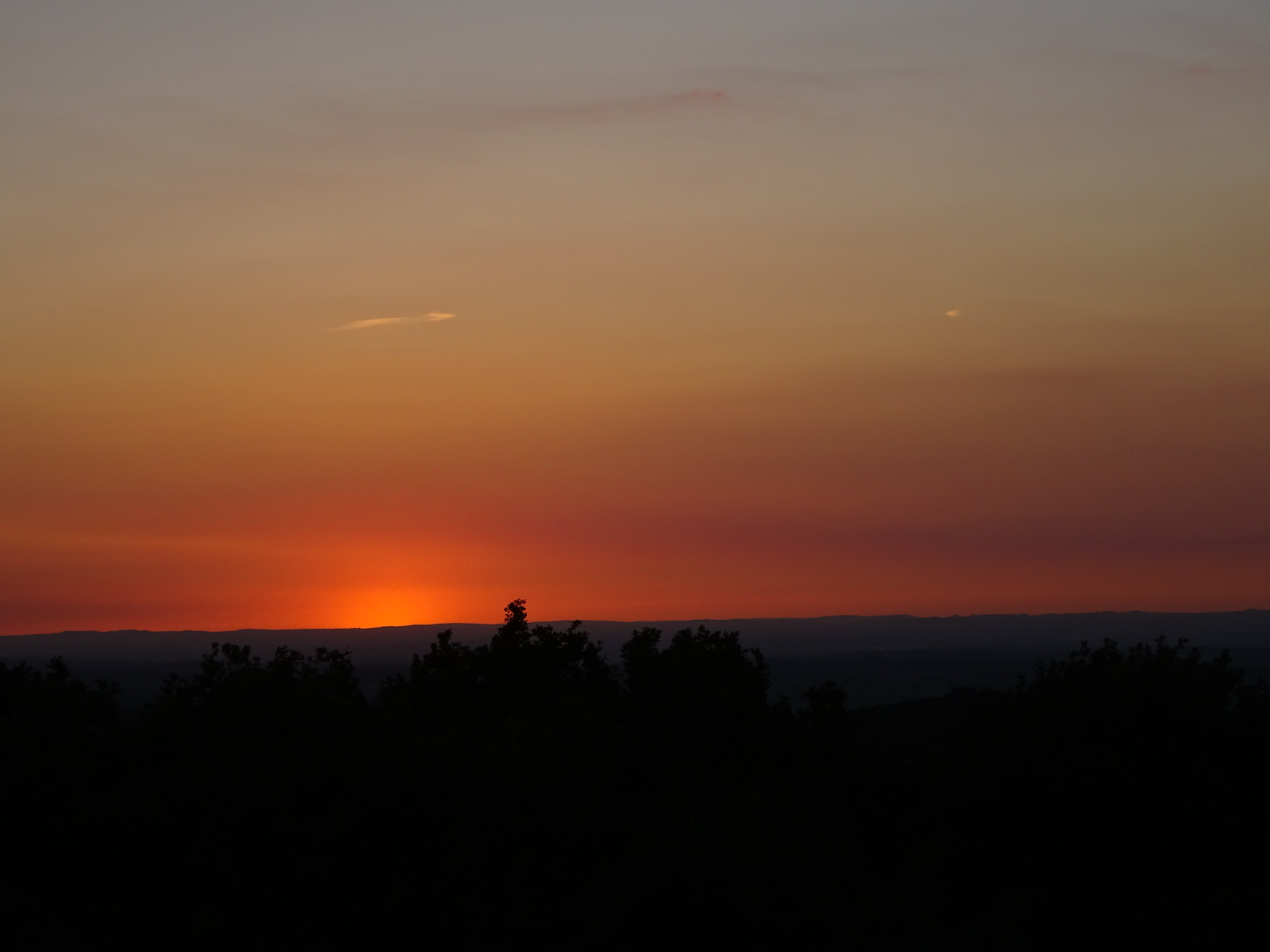
Sunset on Beacon Hill

It seems I have developed a habit of climbing Beacon Hill on the occasion of the Summer Solstice! Here are a few pictures from my visit on the evening of 21 June 2022, when the sun was going down.




You are welcome to quote passages from any of my posts, with appropriate credit. The correct citation for this looks as follows:

Dyer, Lynne (2022). Sunset on Beacon Hill. Available from: https://lynneaboutloughborough.blogspot.com/2022/06/sunset-on-beacon-hill.html [Accessed 22 June 2022]

Take down policy:
I post no pictures that are not my own, unless I have express permission so to do. All text is my own, and not copied from any other information sources, printed or electronic, unless identified and credited as such. If you find I have posted something in contravention of these statements, or if there are photographs of you which you would prefer not to be here, please contact me at the address listed on the About Me page, and I will remove these.
Thank you for reading this blog. 

Lynne                 

Sunday, 21 January 2018

Anniversaries and names

I was off on a hunt for some information the other day, when I happened upon some dates, which I thought I'd share with you. Not sure how many we'll get through today, but here goes!

The year is: 878
King Alfred (known as Alfred the Great, a name given him by writers from the 16th century), was King of Wessex from 871-899, and during his reign he defended against invasion from the Vikings. So, during the year 878, after winning the Battle of Edington, King Alfred apparently made a deal with the Vikings, and Danelaw (a set of legal terms and definitions) was created in the North of England. Interestingly, King Alfred ceded Loughborough and the area around it to the Danes as part of this Danelaw. Is this why people from the South like to think that we are in the North of the country?! How wrong they are: we're in the Midlands!! In reality, however, the part of the country ruled by Danelaw stretched from Windsor in the South, almost as far as Durham in the North, from half-way between Lichfield and Leicester in the West to the Norfolk coast in the East.

The Vikings brought their language with them, and many of these have been absorbed into English. There's a great list over at Babbel, and the BL website also indicates those place names ending in -by, a word of Viking origin, initially meaning a farmstead, some of which grew into larger villages and towns, but kept the name. There are many villages and towns ending in -by in our area, like Sileby, Ashby, Kirby Muxloe, Asfordby etc..

Then, there's also all those words ending in, or containing -thorpe, a word meaning a secondary settlement, or small hamlet. Places around Loughborough that come to mind are Thorpe Acre, Shelthorpe, Woodthorpe, but should I mention Barkby Thorpe here or under -by!

-toft, again, meaning a small farmstead, however, is not much used in Leicestershire: I can only think of Scraptoft and Knaptoft.

-wick may be Viking, meaning creek, or bay, but might also be an Anglo-Saxon word for port. The only one I can think of locally is Whitwick.

-kirk is a Viking word for church, and indeed, is most often found these days as church - so, Church Langton, Church Greasley. 

-gata, meaning way, or street, is found locally in the form -gate, usually as a suffix in street names, like Baxter Gate, Pinfold Gate etc.. So, Church Gate combines Kirk with Gata and was once known as Kirk Gate.

-borough, finally, King Alfred fortified some of the towns to become defence centres in case the Vikings attacked again. -borough means a fortified place, and is sometimes found as -burgh, -brough, -bury. However, the Anglo-Saxons also used the word -borough in relation to Iron Age and Roman forts they found in Britain when they invaded. There are many -boroughs in our area, not least our own town. Latest thinking is that Loughborough is the fortified place belonging to Lehedes.     

The year is: 918
In 918, Leicestershire, which included Loughborough, was recaptured by the British from the Danes.

I don't know about you, but I think that's enough dates for one day!

Thanks for reading!


Parish boundary marker at Woodthorpe


Church Gate during inner relief roadworks, May 2013


Informative street sign in Heanor, Derbyshire

You are welcome to quote passages from any of my posts, with appropriate credit. The correct citation for this looks as follow:

Dyer, Lynne (2018). Anniversaries and names. Available fromhttps://lynneaboutloughborough.blogspot.com/2018/01/anniversaries-and-names.html [Accessed 21 January 2018]

Take down policy:
I post no pictures that are not my own, unless I have express permission so to do. All text is my own, and not copied from any other information sources, printed or electronic, unless identified and credited as such. If you find I have posted something in contravention of these statements, or if there are photographs of you which you would prefer not to be here, please contact me at the address listed on the About Me page, and I will remove these.
Thank you for reading this blog. 

Lynne  
  

Sunday, 21 May 2017

Loughborough local history rooted in Charnwood

So, lynneaboutloughborough has been out and about and a bit busy again this week! Let me tell you about it!

During the week there was a meeting about the Old Rectory Museum: don't forget, they are open most Saturdays from now until the end of October, and the new display is about the Civil War at Cotes. Check out their facebook group to keep up with the latest news!

Pop-up cinema at the Charnwood Roots Festival


Cinema is big on my list of interests, so I was really enthralled to listen to Brian Johnson talk about the village cinemas of Leicestershire and Rutland. Ok, so this didn't cover any of the cinemas in Loughborough, but it was fascinating to learn about all the little cinemas in the surrounding villages, the ways they were run, and the antics that both people running them and people visiting them got up to! 


The Roman mosaics in Leicester with GCR behind


Saturday we ventured further afield and had a tour of the excavations taking place in Leicester under what was the Stibbe building (the one in town, opposite the Highcross, not the one near De Montfort University that was demolished about 10 years ago). Yes, on one side was the Highcross shopping centre, but on the other side was the former Great Central Station. According to our guide, the company responsible for building the new premises will also be renovating the station, so that's something to look forward to. Anyway, we saw some stunning Roman mosaic floors, some surviving Roman wall, layers and layers of road surfaces, including the Roman one, and glimpses of the hypocaust. All this will be eventually displayed in the Jewry Wall Museum.  

 
Today, I was lucky enough to be able to go to the Charnwood Roots Festival, and gosh, did I have a great time!!! Charnwood Roots is a lottery-funded project to delve into the history of the towns and villages in Charnwood - so that includes Loughborough - uncover the facts and the stories, which will eventually be written up as part of the Victoria County Histories. These VCHs were originally created in the early 1900s and were a comprehensive guide to each parish in the country. However, although other counties have published updated versions of their histories, Leicestershire's, which was originally published in 1907, was briefly updated by W G Hoskins in the 1950s, but has not revised recently.

According to Professor Chris Dyer, Emeritus Professor of History in the Centre for English Local History at Leicester University, the idea to revise the Leicestershire VCH was re-born around 2007, and after applying for Heritage Lottery Funding, the Charnwood Roots project took off in about 2013. This project has seen hundreds of volunteers from across Charnwood get involved in researching the history of the area, from religion to work, from archaeology to education, from crime and punishment to health, from the land-owning gentry to the lowly peasant. 

In his lecture, Professor Dyer stressed that every place has a history, but that that history is more than just the infamous little Civil War skirmish, or the famous person who hails from the place. History is more than this. History exists partly because of the people who lived, worked and died in a place, so it's a combination of the experience of hundreds of people over thousands of years. People's experiences make history, and if we care to look around us we can find information about our hamlet / village / town history by simply looking - think of buildings and their architecture, place, street and field names, the village plan, the archaeology, the landscape etc.. When this is added to interpretation of the wealth of written records that exist - parish registers, wills, census returns, newspapers, memoirs etc. - the history can be extensive.   

The Charnwood Roots Festival was staged to present some of the research that has been done, this presentation being achieved through lectures, films (on laptops and in the pop-up cinema - pic above), storyboards, displays and interactive opportunities. Alongside this "story of the stone wood", local history societies and local heritage sites, local researchers and other organisations showcased their own work, information being presented in banners, artefacts, leaflets, books, noticeboards, and some very passionate people!

I spent most of the day talking: talking to people I know and love, and to people I've never met before; talking to people about things I was also passionate about, and I talked to people about things for which I only had a passing interest. I found out who some of blog readers are, and I promised to include some posts from new angles, so do look out for those over the coming months! I even managed to talk to some people about the #delaytheonsetofdementia initiative I run as part of my role as a DMU Dementia Ambassador!

So, enough writing, let's get to the pics!! Some didn't come out too well, as Beaumanor Hall can be quite dark downstairs and I didn't like to put my flash on, and some of my angles were a bit odd, so here's the best selection!


You are welcome to quote passages from any of my posts, with appropriate credit. The correct citation for this looks as follow:

Dyer, Lynne (2017). Loughborough local history rooted in Charnwood. Available from: http://lynneaboutloughborough.blogspot.com/2017/05/loughborough-local-history-rooted-in.html [Accessed 21 May 2017]

Take down policy:
I post no pictures that are not my own, unless I have express permission so to do. All text is my own, and not copied from any other information sources, printed or electronic, unless identified and credited as such. If you find I have posted something in contravention of these statements, or if there are photographs of you which you would prefer not to be here, please contact me at the address listed on the About Me page, and I will remove these.
Thank you for reading this blog. 


Lynne