Showing posts with label Tuckers. Show all posts

Friday, 23 April 2021

Loughborough Variety

This was the headline that appeared in a newspaper in 1931, but it doesn't refer to the Victorian and Edwardian popularity of music hall events, but rather to the variety of manufacturing activity in Loughborough at the time. 

In my latest book, I mention a banquet that was held on 4th October 1938, in celebration of the 50th anniversary of the Incorporation of the Borough of Loughborough. Lieutenant-Colonel R.E.Martin, who was the chairman of Leicestershire County Council, raised a toast to the town, and mentioned its various industries - hosiery, perfumes, chemicals, bells, and lifting tackle - and the reputation of Loughborough's College, which, he said, extended far outside the county boundaries.     

The Mayor, Alderman Arthur Lacey, replied to Lieut.-Col. Martin's comments, adding:

"... the inhabitants of the town were the citizens of no mean city and, after all was said and done, took a rightful second place in the county [after the county town of Leicester]. A London man had once told him that one could not go into any town or city in the country which did not contain a product of Loughborough."

This certainly seemed to be the case in 1931, when the 'Loughborough Variety' headline appeared in the Nottingham Journal of 1st January 1931. The subtitle appeared:

"Big contracts for buses, bells, bricks (1), generators, cranes."

and further highlighted:

"The extension of Messrs. Herbert Morris's North Works and development of brick-making are two outstanding features of the year"

The substance of the article that follows that headline is essentially a review of manufacturing in 1930, in which the author of the article goes on to say that goods manufactured in Loughborough are of high quality, are of a wide variety, and many are world-known. He also suggests that although Loughborough did suffer during the depression of 1930, in comparison to other industrial towns, whose manufacturing output centred on one or two industries, or one or two companies, Loughborough, whose manufacturing industry was somewhat more diverse, suffered only very slightly. 

In the review, we learn that engineering, hosiery manufacture and bellfounding are Loughborough's three principal industries, and while the first two were affected a little by the general depression, demand for bells had not diminished! 

The Brush completed contracts both in the UK and abroad, the latter most notably in Jamaica, South Africa, Malay States, and Malta, as well as providing bus bodies and tramcars across the UK.

The Brush in 2014


Herbert Morris, as well as extending their factory, produced a new, versatile crane, and provided cranes for British power stations, and the Russian government, as well as some other overseas customers. A leading British car manufacturer placed large orders for Morris' conveyor systems. 

Herbert Morris on Empress Road

During 1930, Taylors the bellfounders recast and rehung the bells of Penzance parish church; recast the heavy bells in Worcester and Lincoln cathedrals and in York Minster; erected a carillon in St Helen's church in Lancashire; installed a service bell in Addiscombe; carried out restoration work on many belltowers across the UK, as well as having many other projects on the go!

Taylors bellfoundry

A leading hosiery manufacturer in the town had made a conscious decision to maintain their manufacturing, rather than to increase it, which appears to be down to some indecision - presumably by the government - around silk duties. It seems that during the year, cheap, artificial silk hosiery had replaced the cashmere versions. One firm, Morley, reported they had made over one million pairs of hose and half hose during 1930!
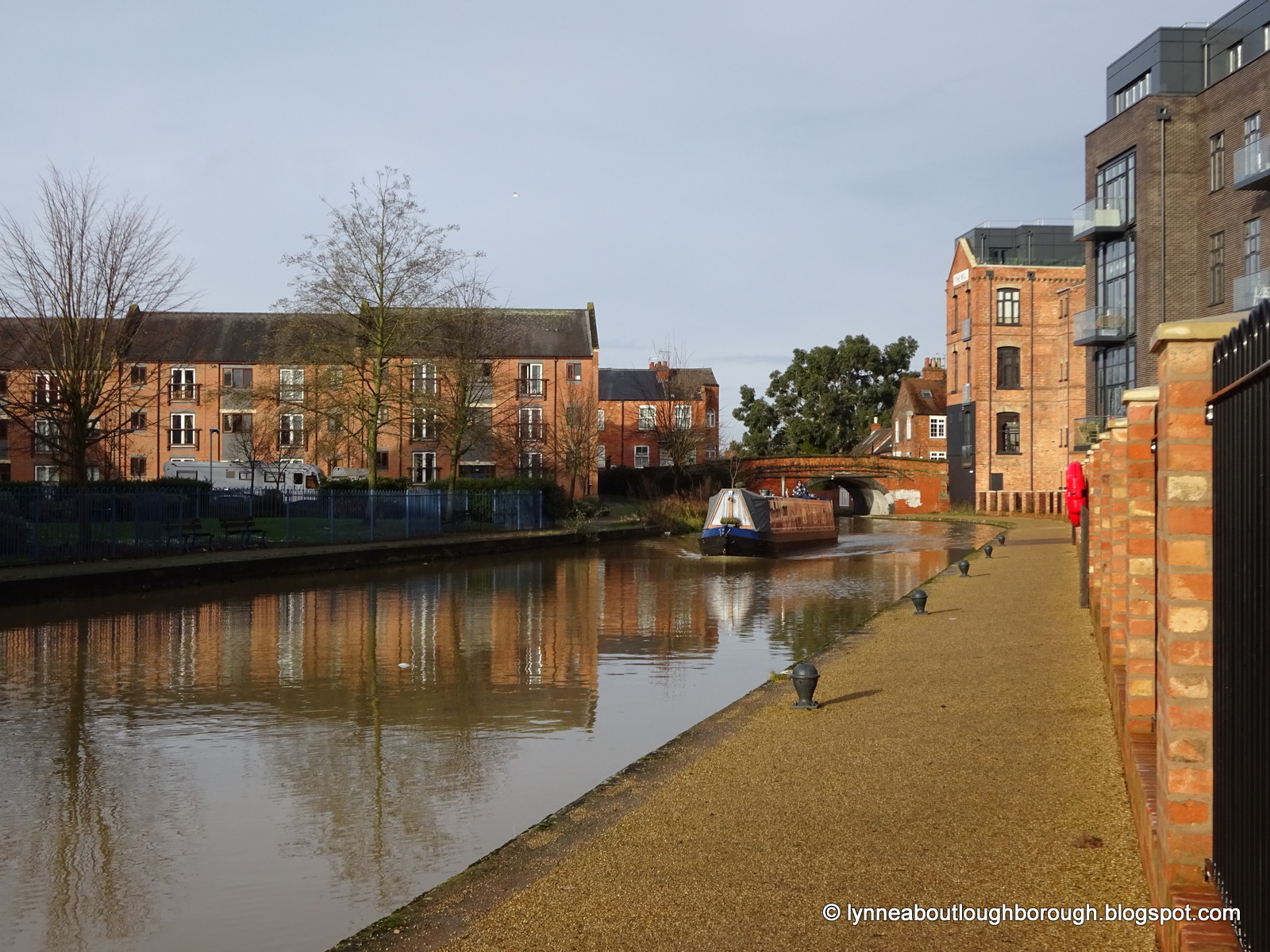
I&R Morley in the distance on the right

Zenobia, who were the manufacturers of toiletries, reported that heavy oriental scents had been overtaken in popularity by English floral perfumes. Zenobia products had been exported not only to the Colonies, the Dominions, and to Europe, but also to France!

So, despite the depression and the economic climate of the 1930s, Loughborough appears to have maintained a relatively stable position, and this, in part, explains the development of the town centre, and why there are so many 1930s buildings.

(1) The other industry that this article focussed on was brick-making. I've covered Tuckers quite extensively in recent posts so have chosen not to repeat myself in this post. For information about the brick-making firm see:

Tuckers Part 1; Tuckers Part 2; Tuckers Part 3 and Tuckers Part 4 

Posted by lynneaboutloughborough 25 April 2021

You are welcome to quote passages from any of my posts, with appropriate credit. The correct citation for this looks as follow:

Dyer, Lynne (2021). Loughborough variety. Available fromhttps://lynneaboutloughborough.blogspot.com/2021/03/loughborough-variety.html  [Accessed 25 April 2021]

Take down policy:
I post no pictures that are not my own, unless I have express permission so to do. All text is my own, and not copied from any other information sources, printed or electronic, unless identified and credited as such. If you find I have posted something in contravention of these statements, or if there are photographs of you which you would prefer not to be here, please contact me at the address listed on the About Me page, and I will remove these.

You can leave comments below, but do check back as my reply will appear here, below your comment.

Thank you for reading this blog. 

Lynne                  

Sunday, 4 April 2021

Tuckers Bricks Part 3

Over the past two weeks, we’ve been looking at buildings built using products from Tuckers, the brickmakers from Loughborough - Part 1, Part 2. This week we continue looking into some of the buildings constructed post-1934.

Advert from 1957


According to an article in the Nottingham Journal in 1935, the new St Cyprian’s church in Nottingham had many remarkable features, one of which was the use of a tasteful variety of bricks, rather than stone. The Portland cement, produced at Barnstone in the Vale of Belvoir, was used to complement the many thousands of handmade bricks, especially made to the architect’s particular design. The company who produced these bricks was G. Tucker and Son of Loughborough, who made their ‘tudorstyl’ facing bricks in a variety of colours, and these were used exclusively on both the exterior and interior. 

As well as the facing bricks, Tuckers also supplied the ‘Loughborough’ handmade sand-faced roofing tile. This new church building, costing around £8,500 to build, was designed by local architect C. E. Howitt of the firm of John Howitt and Sons, and was in a modern gothic design, able to seat around 400 people. The new church complemented an earlier building of 1913 which had become too small for the burgeoning population of the Sneinton area of Nottingham, the latter now being used as the church hall.  There is a small bell hung in an external bell frame on the north wall of the church, which is used for swing chiming. Coming in at 20 inches, the bell is dated 1913, and originally hung in the old church, being moved in 1935. It was created by Taylors bellfoundry.

St Cyprian's Church, Sneinton

The following year, all the facing bricks used in the construction of St Margaret’s church in Aspley were supplied by Tuckers. According to the Nottingham Journal  “ ‘Multiruf’ facing bricks were a registered speciality of Messrs. Tuckers.” St Margaret’s church has an entry in the 1979 edition of Pevsner’s ‘Buildings of England: Nottinghamshire’, which reads: “St Margaret, Aspley Lane, Aspley. 1934-6 by E. H. Heazell, Brick, typical reduced Gothic of the period.”

St Margaret's church, Aspley


In 1937, following much controversy over the need for another cinema to join the three existing cinemas in the town, the Odeon in Rhyl was built, using Tuckers products. Even in its construction, the building was problematic, not least because it was built in an area that was subject to tidal flooding!

According to the Story of Leicester, in the 1930s there were over 25 cinemas in Leicester: the Odeon opened in 1938, and was, apparently, the grandest. Like Loughborough’s Odeon on Baxter Gate, Leicester’s was designed by architects from the Harry Weedon partnership, Leicester’s probably by Harry Weedon, and Loughborough’s by Arthur J. Price. The cinema is situated in the area now known as the Leicester Cultural Quarter, close to The Curve theatre, and what is now the Serbian Orthodox Church of St George (incidentally, chancel added by Blomfield in 1879), although it was converted to a catering venue around 2005 after the building closed as a cinema in 1997.  The opening in July 1938, which was attended by Harry Weedon himself, was reported in the Leicester Evening Mail: “the whole of the facing bricks for the new Odeon cinema are two-inch hand-made ‘tudorstyl’ facings, manufactured by G. Tucker & Son, Ltd., Loughborough.”


Former Odeon in Leicester

Up to and including 1939, Tuckers appear to have been extremely busy providing roofing tiles and facing bricks, the latter particularly in lighter colours, but also in a great increase in the range of colours available, across the country. This included materials for many housing estates; the swimming baths at Hitchen and Willesden; cinemas at Lutterworth, and Birkenhead; various hospitals; a number of libraries; a selection of police stations, and some hotels, including the Test Match Hotel in West Bridgford and the Cocked Hat Hotel in Aspley. Like the Bull’s Head in Shelthorpe, the Cocked Hat was built to serve the new housing that had grown up in the area, and apparently in the late 1950s it was run by landlord Bill Frame, who was an ex-Leicester City football player. Unlike our Bull’s Head, which is now a McDonalds, the Cocked Hat at Aspley was demolished in 2004 and replaced with new housing. Other buildings of this time include offices for Evans Lifts, on Abbey Lane in Leicester.

Evans Lifts, Abbey Lane, Leicester

Over in Peterborough, head offices were built at The Lawns Eye, for Derek Crouch, contractors involved in mining. The offices replaced a large house called The Lawns, and were “faced externally on the east and west elevations in Tuckers Tudorstyl facing bricks”. This office building looks very similar to John Storer House, in Loughborough.

Some of the many houses built with Tucker’s products include the following:

An ‘architect-designed’ house in Woodhouse Eaves, built in 1957 using Tuckers bricks was for sale in 1959.

A 4-bedroomed property in Breaston, construction date not known, was ‘built to a high standard with Tucker hand-made facing bricks … and matching brick and tile double garage’

The appeal of easy access to travel was espoused when in 1965 properties in Long Whatton were for sale – “Two detached bungalows with easy access to M1 and East Midlands Airport, built in Tuckers bricks …”. While, over in Draycot, Derbyshire, in 1966, an ultra-modern 4-year old dwelling in 7 acres of land was for sale, and described as being “Built in local cut stone and Tickers facing bricks.”

But, Tucker’s bricks weren’t just used for the exterior of properties. In 1967 a house came up for sale in Sawley, which had a “Through lounge/dining area, feature chimney breast in Tuckers facing bricks.”

Over on Deans Drive, in Borrowash, no.59 was up for sale in 1974 and was described as being constructed with “Tucker’s hand-made bricks” although the year of construction is not known. In 1977 a house on Briargate, Long Eaton was available for purchase, and according to the Long Eaton Advertiser, it was “built in 1954 to a high standard with Tucker’s facing bricks to all elevations”.

There are still more buildings to look at that use material from Tuckers. Hopefully, next time there’ll be more of a focus on local buildings.

Posted by lynneaboutloughborough 4 April 2021

You are welcome to quote passages from any of my posts, with appropriate credit. The correct citation for this looks as follow:

Dyer, Lynne (2021). Tuckers Bricks Part 3. Available fromhttps://lynneaboutloughborough.blogspot.com/2021/04/tuckers-bricks-part-3.html [Accessed 4 April 2021]

Take down policy:
I post no pictures that are not my own, unless I have express permission so to do. All text is my own, and not copied from any other information sources, printed or electronic, unless identified and credited as such. If you find I have posted something in contravention of these statements, or if there are photographs of you which you would prefer not to be here, please contact me at the address listed on the About Me page, and I will remove these.

You can leave comments below, but do check back as my reply will appear here, below your comment.

Thank you for reading this blog. 

Lynne                              

Saturday, 31 December 2016

Review of 2016 Loughborough blogposts

I'm sure you have much more interesting things to do on New Year's Eve than visit my Loughborough blog, but I'm having a look through my posts for 2016, and seeing which ones you seemed to like the most!!

I didn't manage to blog weekly - there are distinct gaps in my postings when I was on holiday and when we went off to celebrate our first year of marriage, or when I was under-the-weather - but nonetheless, there are 43 posts to sift through!!

Here are the most popular ones:


In 1st place, with 1103 views, making it the most popular post of 2016, is:
From 54 Baxter Gate to 1 Old Hospital Way


2nd place, with 1014 views is:
Red and green houses abandoned in favour of a picnic

3rd place, with 965 views, goes to:
Loughborough Union workhouse

Coming in at 4th place, with 947 views, is:
Red white or green maybe

5th place, with 920 views, is:
Coffee houses to coffee shops

In 6th place, with 910 views, is:
Loughborough and the holiday connections

Coming in at 7th place, with 875 views, is:

Bradgate Park

8th place, with 822 views, goes to:
Birthday celebrations

In 9th place, with 797 views, is:
From Loughborough to Melbourne and back again via

10th place, with 779 views, is:
Investigating the Victorians leads to Messengers

The 11th most popular post, with 77 views, is:
George Hodson and the Loughborough Union workhouse

In 12th place, with 742 views, we find:
Leicestershire County Council green plaque scheme

And in 13th place, with 739 views, is:
Obelisks everywhere

Sadly, Victorian House Plaques, Tucker's, and William Railton's Bavarian Gates, are languishing at the bottom of the popularity table!

If I had to choose my favourite blog post, I think I'd probably go for one of the posts about connections from other places, to Loughborough - maybe Tiverton - or some of those coincidences that seem to happen on a regular basis - like obelisks - or any of the posts on cinemas or pubs!!

I've also posted a few virtual walks - hoping to do more next year. Here's the popularity chart:

1st - Loughborough, Luddites and lace walking trail (1000 views)
2nd - Loughborough sculpture, art and architecture trail (973 views)
3rd - Loughborough Zeppelin trail (784 views)

Anyway, must away and celebrate the start of a new year! Enjoy your own celebrations, and see you next year!

You are welcome to quote passages from any of my posts, with appropriate credit. The correct citation for this looks as follow:

Dyer, Lynne (2016). Review of 2016 Loughborough blogposts. [Online] Available from: http://lynneaboutloughborough.blogspot.com/2016/12/review-of-2016-loughborough-blogposts.html [Accessed 31 December 2016]

Sunday, 11 December 2016

Swithland slate

I've been wanting to tell you about Swithland slate for a very long time: it's been on my "to do" list almost since I started my training as a Leicestershire Tour guide in 2012, and since I started this blog way back in 2013, but it's one of those that I so wanted to do lots of research on and give you lots and lots of interesting snippets of information. Sadly, time rarely seems to be on my side, so here's a brief post which has been prompted by a talk on Swithland slate headstones, and the publication of a recent website on the same. But first, roofs!!

Swithland slate was quarried around Swithland, Woodhouse Eaves and Groby, and there were a number of quarries on land that belonged to the Martin family, who lived at The Brand in Woodhouse Eaves. In an article published in 1944, Albert Herbert (1) wrote that there were millions of roofing slates produced at these quarries in the preceding three centuries (although a certain online encyclopedia suggests the popularity of these roofing slates began as late as 1750 (2)). As was common in days of yore, building materials used in the area were usually locally made products, like bricks, made by Tuckers, or Hathern Station Brick Company, or were made of materials that were mined or quarried locally (like Swithland slate and Mountsorrel granite), partly because it was a good deal cheaper and easier to transport things only a short distance. 

A Swithland slate roof is quite distinctive. Unlike Welsh slate, Swithland slate is not easy to split, and in fact, blocks of slate were sawn with a hand saw, and smoothed with a mix of sand and water, so the slates are very thick and look quite rough. Also, whilst Welsh roofing slates are a uniform size on each roof (although different roofs have different sized slates (with differing names, like Duchess, Countess, Queen etc.)), Swithland slate roofs are distinctive because each row of slates is a different size from the others, so you get small tiles laid nearest the ridge, gradually getting bigger in size, until the largest row, at the base of the roof.

I'll show you some examples of Swithland slate roofs at various places, so you can see how distinctive they really are:
Outbuildings at Stoneywell Cottage

Outbuilding in the grounds of Stoneywell Cottage

Part of the roof of Stoneywell Cottage

Another part of the roof of Stoneywell Cottage

A Swithland slate roof at Ulverscroft Grange


Building at the University of Leicester Botanical gardens

Building at the University of Leicester Botanical gardens

Building at the University of Leicester Botanical gardens

Building at the University of Leicester Botanical gardens
The example from Ulverscroft above is quite fascinating, because the roof is at head height when approached from the road, so it's possible to get a really good look, and if you're tall enough it's possible to touch the tiles. 

There are many, many buildings in Loughborough town centre which have Swithland slate roofs. Here are just a few examples:


Lowe's shop on Church Gate

Caravelli's Italian restaurant on Sparrow Hill
The other part of Lowe's on Church Gate
12 Degrees West, formerly the Mundy Arms
Next time you're in town, have a look at the roofs and see which others you can spot. 

Apart from roofs, Swithland slate is also used for a whole variety of other things, like plinths, window sills, milestones, gateposts, animal troughs and many more things. Here are a few examples from Stoneywell:
Swithaland slate door frame (inscribed with G 1899)

Siwthland slate coat hanger inside Stoneywell Cottage
I have a feeling some of the fireplaces and window sills in Stoneywell were also made of Swithland slate, but my photographs are not clear enough for me to be sure.

My internet connection is not playing ball today and it keeps switching off, so I am going to post about the use of Swithland slate for gravestones another time. In the meantime, here's a photograph of some from our very own parish churchyard (All Saints with Holy Trinity) to keep you going:
Swithland slate gravestones in the churchyard of All Saints with Holy Trinity
I'll let you know when the post about Swithland slate gravestones is ready, so do pop back again!

PS I have now blogged about Swithland slate gravestones, although there will be a further post concentrating on photographs. 


You are welcome to quote passages from any of my posts, with appropriate credit. The correct citation for this looks as follow:


Dyer, Lynne (2016). Swithland slate. [Online] Available from: http://lynneaboutloughborough.blogspot.com/2016/12/swithland-slate.html [Accessed 11 December 2016]

References:
(1) Herbert, Albert (1944). Swithland slate headstones. Transactions of the Leicestershire Archaeological Society, Vol. XXII, Part III, 1943-44
(2) https://en.wikipedia.org/wiki/Swithland_Wood 


Sunday, 12 July 2015

Red about Loughborough Part 1!


These last few weeks have been hectic, so all I've managed to do is go out and about taking a few snaps about town, of all things red! Enjoy! And for more pics of red about Loughborough, check out Part 2!

Pillings Lock

On the water

On the water, 2

At the GCR

Inside Towles, now SOFA

The Charnwood Forest Line

Beside the water!

So RIII did visit Lowes, like Henry, after all!

A day at the museum!

Traditionally known as red brick, but are they Tucker's?

At the GCR station

In the GCR worksheds 1

In the GCR worksheds 2

Around the GCR 1

Around the GCR 2

The signals


On the GCR platform 1

On the GCR platform 2

At the Carillon Tower and War Memorial Museum

On the GCR line

At the GCR museum

On the GCR platform 3

On the GCR platform 4

Celebrating a 21st birthday at The Plough, Normanton!

Cattle Market 1

Cattle Market 2

At the Midland Mainline station

At the new Baxter Gate cinema/restaurant complex