Showing posts with label LLLSV. Show all posts

Wednesday, 16 August 2023

My Lockdown Project: Paget Street, Loughborough


House name plaque bearing the words 'Paget Cottages 1884'
Paget Cottages - some of the earliest to be built on Paget Street

The lockdown periods of 2020-21-22 (depending on where you lived!) were probably the most shocking thing to have happened to us all, for a very long time, and so are still in our memory. During that time, while some people were getting to grips with working from home, and all the trials and tribulations that brought with it, others found themselves with more free time, stuck at home, unable to do the things they usually did, so might have embarked on some kind of project.

Sharon is one such person who took up a project. This involved researching a very interesting part of Loughborough and its history, and provided so much information that she wrote up her research in a book [1]! In the article below, Sharon tells us how she went about doing her research, and shares some of her discoveries with us …

My Lockdown Project

Paget Street, Loughborough 1891. A Glimpse into History

Sharon Gray

Lockdown came as a bit of a shock to me. As a Volunteer, I had been on duty in Loughborough Library Local Studies two days a week. I had also been working on projects for exhibitions and spending many hours researching family history for customers both in the library and at home. With Lockdown, these activities all came to an abrupt halt. I needed something to keep my mind active.

About two years previously I had begun investigating the Loughborough street where I grew up – Paget Street in the “Golden Triangle”. Paget Street is in the centre of a set of streets including Station Street and Storer Road. They were built in the late 1800s to house workers in the local factories, mainly Messengers, hence it was known as “Messenger’s Village”. [2]

View along part of Paget Street to Derby Road

View along part of Paget Street to Storer Road and St Peter's Church

Knowing that construction for all the houses on Paget Street would have been completed by 1891, I began by looking in the Census for that year. The Census would provide me with a complete record of the terraced houses and their occupants. The land had been donated by local landowners such as Mr. Paget and Mr. Storer. The site was then divided into plots, allowing spaces for three or four houses, all to be built as a terrace. These plots were then sold off to private landlords and builders.

Row of cottages called Albany Terrace, likely built by one builder, the roof levels being different only because of the slope of the street

As the houses were completed in blocks of three and four, all of them followed a similar but not exact design to the houses on adjacent plots. For example, some would have had different windowsills or roof heights, some were given builder’s plaques with house names such as “Nelson Houses 1890”. As the landlords and builders began to offer the houses for rent, it emerged that in most instances they were too expensive for low-paid factory workers. Consequently, skilled workers such as plasterers and bricklayers, bakers, clerks and teachers moved in. It turned out that Messenger’s workers were not among the first occupants of these houses in the numbers that had been predicted.

Houses called 'Nelson Houses' on Paget Street
Nelson Houses on Paget Street

Nelson House plaque, showing construction date of 1890

My mind was kept active and occupied by working through the 1891 Census house by house, numbers 1 to 150. Finding out what happened to these families in the years after they moved into Paget Street appealed to my family historian curiosity. Most of the tenants were transient, staying for only a few years until they moved on to another house or another town.

My research then expanded into the occupations of the people who lived there in 1891, and how this contributed to Loughborough’s industrial scene. They worked for Morris’s, Cotton’s, Cartwright and Warner to name but a few. There was a plethora of small businesses such as grocers and tailors. I also looked at how the war impacted the families and found stories about soldiers and their exploits.

A shop on the corner of Oxford Street and Paget Street now converted to housing

The estate pub, the Paget Arms

In 1956 my father, who had been a German POW, was offered work at William Hammond’s needle factory. The chance to buy no. 119 Paget Street with a council mortgage, was too good an opportunity to miss. My parents, my brother and I, packed up our goods and moved from rural Lincolnshire to Loughborough. My parents were both very proud when 25 years later they owned their house on Paget Street. My mother described it to me as a palace, compared with the prefab they lived in before they moved to Loughborough. Today an outside toilet and coalhouse would not be regarded as ideal. I have memories of an idyllic childhood, playing football in streets with no traffic, bike rides in the countryside and going to the “rec” with friends. I wonder what the children in 1891 thought of Paget Street?

The house I lived in for 23 years has now been refurbished and modernised and is home to new people. They will no doubt have completely different memories to mine of living in Paget Street – hopefully happy ones.

Red brick terraced houses
No. 119 Paget Street, left


Sharon Gray

Loughborough Library Local Studies Volunteer Group

____________________________________

Biography

Sharon is a volunteer with the Loughborough Library Local Studies Volunteer Group, where her skills and experience in genealogy are put to good use, helping visitors to unlock some of their family history. Along with other volunteers, Sharon also gets involved in – and indeed organises – other research activity into various aspects of Loughborough’s history, is involved with preparation and hosting of the varied displays in the local history part of the library, looks after the books for the group (financial books, that is!), and is often seen promoting the work of the group at various heritage events. Before becoming a volunteer, Sharon, along with her husband, ran a hosiery company in the town.

____________________________________

Notes

[1] The book is available to purchase from the Loughborough and Family History Centre, which can be found towards the rear of the older part of the Loughborough Public Library on Granby Street.

A selection of books published by the Loughborough Library Local Studies Volunteers
A selection of publications by the Loughborough Library Local Studies Volunteers

[2] A complementary article about this area appears in my post about Fearon Street and there is a similar, shorter study of Middleton Place

____________________________________

Posted by lynneaboutloughborough

With apologies for typos which are all mine!

_______________________________________________

Thank you for reading this blog.

Copyright:

The copyright © of all content on this blog rests with me, or in the case of guest blogposts, with the named Guest Blogger. However, you are welcome to quote passages from any of my posts, with appropriate credit. The correct citation for this looks as follows:

Gray, Sharon (2023). My Lockdown Project: Paget Street, Loughborough. Available from:  https://lynneaboutloughborough.blogspot.com/2023/07/my-lockdown-project-paget-street.html [Accessed 16 August 2023]

Take down policy:

I post no pictures that are not my own, unless I have express permission so to do. All text is my own, and not copied from any other information sources, printed or electronic, unless identified and credited as such. If you find I have posted something in contravention of these statements, or if there are photographs of you which you would prefer not to be here, please contact me at the address listed on the About Me page, and I will remove these.

Blog archive and tags:

If you are viewing this blog in mobile format, you will not be able to easily access the blog archive, or the clickable links to various topics. These can be accessed if you scroll to the bottom of the page, and click 'View Web Version'. Alternatively, there is also a complete list of posts, which when clicked will take you to the page you are interested in.

Searching the blog:

You can search the blog using the dedicated search box that appears near the top of the blog when viewed in the web version. Alternatively, you can search using your usual search engine (e.g. Bing, Google, DuckDuckGo etc.) by following this example:

site: https://lynneaboutloughborough.blogspot.com/ “Radmoor House”

NOTE – the words you’re actually looking for must be in “” and the first of these must be preceded by a space

Thank you for reading this blog.

Lynne                               

Sunday, 4 June 2023

Researching Family History

A little while ago I was lucky enough to meet some folk who were researching their family history. They were sure their ancestors had come from Loughborough, because their family name was – Loofbourrow!

Some of the Loofbourrow family at the parish church!

Before I met them, I did a quick search of the 'The Oxford Dictionary of Family Names in Britain and Ireland' …

I found that Loughborough existed as a surname, ‘Loughborough’, and currently there are around 80 people with the surname in Great Britain, compared to 53 at the time of the 1881 census. The dictionary told me that Loughborough is a locative surname, so a name based on a place (unlike Fletcher, for example, which is based on the occupation of arrow-making). Having said that, the examples of people with the surname who were quoted in the dictionary didn’t actually seem to be registered as living in Loughborough (the recording dates were between 1336 and 1788)!


I searched for other variants of the name and found ‘Loughbrough’ – but all the entry said was ‘see Loughborough’! I looked also for 'Loofbourrow', but there was nothing listed in between 'Looby' and 'Look', so no Loofbourrow.


Interestingly, an internet search revealed that the surname Loofbourrow was prevalent in the US, except that there appeared to be no record of it using the exact spelling! 


So, it transpired that the family named Loofbourrow who were researching their ancestors were actually from the US, and had come over to the UK to see if they could track down their ancestors who they believed had emigrated from the UK around 1685. Well, we had a good rummage around the parish records, the poll books, and everything else we could think of that might be helpful, but could not find any Loofbourrows. The conclusion we came to was that possibly when the ancestors alighted in the US, their place of origin in the UK might have been used as their surname, and would probably have been recorded in the records exactly the way it would have sounded when being said.

Anyway, some very helpful information was eventually found, and the visitors, who were staying in a lovely local B&B called 'Holywell House', enjoyed their whistlestop tour of Loughborough, where they visited Taylors bellfoundry and saw bells being cast, and the parish church, where they saw the Burton book. They also spent some time with the very knowledgeable volunteers down at the Local and Family History Centre in the public library, who were able to help them, before they went off to continue their tour around the UK.


So, if you ever need help with tracing your own family tree, the Loughborough Library Local Studies Volunteers at the Local and Family History Centre in the public library come very highly recommended by me! Do pop in and see how they can help you, or if you can’t go into the library, drop them an email, or you can find them on Twitter @Loughlibvol and Instagram, too - https://www.instagram.com/lllsvgroup_loughborough/#

_______________________________________________

posted by lynneaboutloughborough 

With apologies for typos which are all mine!

_______________________________________________

Thank you for reading this blog.

Copyright:

The copyright © of all content on this blog rests with me, however, you are welcome to quote passages from any of my posts, with appropriate credit. The correct citation for this looks as follows:

Dyer, Lynne (2023). Researching Family History. Available from: https://lynneaboutloughborough.blogspot.com/2023/06/researching-family-history.html [Accessed 4 June 2023]

Take down policy:

I post no pictures that are not my own, unless I have express permission so to do. All text is my own, and not copied from any other information sources, printed or electronic, unless identified and credited as such. If you find I have posted something in contravention of these statements, or if there are photographs of you which you would prefer not to be here, please contact me at the address listed on the About Me page, and I will remove these.

Blog archive and tags:

If you are viewing this blog in mobile format, you will not be able to easily access the blog archive, or the clickable links to various topics. These can be accessed if you scroll to the bottom of the page, and click 'View Web Version'. Alternatively, there is also a complete list of posts, which when clicked will take you to the page you are interested in.

Searching the blog:

You can search the blog using the dedicated search box that appears near the top of the blog when viewed in the web version. Alternatively, you can search using your usual search engine (e.g. Bing, Google, DuckDuckGo etc.) by following this example:

site: https://lynneaboutloughborough.blogspot.com/ “Radmoor House”

NOTE – the words you’re actually looking for must be in “” and the first of these must be preceded by a space 

Thank you for reading this blog.

Lynne                                      

Sunday, 8 March 2020

Singing exhibitions and films

Been a really busy week this week! I've been taking part in an interesting project over the last couple of weeks - singing in a scratch choir and recording the results, and popping along to the launch event. Oh, and recording a very short piece about the event for BBC Radio Leicester. 


Inspirational women #1
Lovely Spread, Heaven on a Plate!


More inspirational women!

And more inspirational women!


During the week I went along to the opening of a fabulous exhibition on the Forest Canal at the public library, an exhibition put together to coincide with the publication of the 3rd edition of a book on the same topic by Brian Williams - available to purchase from the Local and Family History Centre in the public library.


Library Exhibition opening


And today I've been to the lovely art deco cinema that is our current Odeon (the original Odeon now being a bingo hall) to see the Military Wives, which was excellent.

Our Art Deco cinema


Our former Odeon


Here's a link to the singing: https://www.youtube.com/watch?v=DrX7Ub2-NKA

And a link to the BBC Radio Leicester piece, only available until 6 April 2020 (starts around 2 hours 13 minutes, and 2 hours 38 minutes: https://www.bbc.co.uk/programmes/p082z85b       

You are welcome to quote passages from any of my posts, with appropriate credit. The correct citation for this looks as follow:

Dyer, Lynne (2020). Singing exhibitions and films. Available fromhttps://lynneaboutloughborough.blogspot.com/2020/03/singing-exhibitions-and-films.html  [Accessed 8 March 2020]

Take down policy:
I post no pictures that are not my own, unless I have express permission so to do. All text is my own, and not copied from any other information sources, printed or electronic, unless identified and credited as such. If you find I have posted something in contravention of these statements, or if there are photographs of you which you would prefer not to be here, please contact me at the address listed on the About Me page, and I will remove these.
Thank you for reading this blog. 

Lynne 

Sunday, 17 November 2019

Loughborough firms in the spotlight

This week has been one of revelations, discoveries and fun, fun, fun!

As we surely must all know by now, Taylors Bellfoundry is the last remaining dedicated bellfoundry in the UK. I say 'last remaining dedicated' because although the Whitechapel Bellfoundry closed in 2017, and plans to convert it into a boutique hotel have very recently been passed by the local council and associated organisations, the Whitechapel name is continued in the making of bells at the 200-year old metal foundry in Newcastle-Under-Lyme, called the Westley Group.


But, back to Taylors. We probably all know that although the buildings occupied by the local bellfoundry are still used in the making of bells, they could do with a bit of upgrading. To this end, the Bellfoundry Trust* has been set up specifically to secure a Heritage Lottery Fund grant to not only improve the site, but also to share, expand and improve the special and unique experience that is a visit to the working factory during a bellcasting, and a visit to the museum. As part of the grant application, the Bellfoundry Trust have reached out to the local community, and engaged them in a discussion of what the bellfoundry might offer the local and distant visitor, and how this could be achieved.

The vision for the future was presented by Caro Architects, the company which describes itself as conservation and heritage architects. The firm has been brought in to help devise a plan for the conservation of the buildings, and the creation of a sympathetic visitor attraction that would allow the public to experience the craft of bellfounding as it happens at the foundry, as well as learn the history of bellfounding and of Taylors.   

What a fabulous initiative this is, to keep one of Loughborough's most iconic firms viable and visitable! Having arrived in Loughborough from Oxford to re-cast the bells of All Saints in 1839, John Taylor set up a temporary foundry at the back of the Pack Horse Inn, before a more permanent site was bought and developed in 1858. The site was extended by local architects Barrowcliffe and Allcock** in 1898. 

Other bells created by the firm include the Great Paul bell for St Paul's Cathedral in London, the cast of which is now in Queen's Park; Great George (the 6th largest bell in the UK) housed in the Wills Memorial Building  at the University of Bristol; Great Peter for York Minster, and so the list goes on and on ...

As does the list of books produced by another iconic Loughborough company, Ladybird Books, once an integral part of the town's heritage, but since 1999 part of Penguin. The Being Human Festival is now in its 6th year, and is a festival that specifically celebrates the humanities. The theme of this year's festival was discoveries and secrets, and aimed to present research on a huge range of humanities topics in an accessible way, showing how such research is relevant to our everyday life. 

The event I attended was about Ladybird Books and was held in Charnwood Museum. Volunteers from Loughborough Local and Family History Centre (based in the Local Studies area of Loughborough public library) brought along books from their own Ladybird collections, as well as their extensive knowledge of Ladybird Books. 


Representatives from The MERL*** (Museum of Rural Life), who brought along various ladybird merchandise, were in attendance too, because the Ladybird archive is lodged with Reading University. Leicestershire Museums Services brought along some items from their collection and along with expert and collector Helen Day they were collecting Ladybird stories from Loughborough people - people who may have worked at the factory, or knew someone who did. Oh, and not forgetting the archivist from Penguin who was also present. Charnwood Museum had a display in their changing exhibition area, and the Ladybird benches were still in Queen's Park, inviting people to sit and rest awhile. Despite the very heavy rain, and despite the fair being in town, lots of people popped down to be involved in this event, although the guided walk didn't take place, so instead, we were treated to the surprising story of Ladybird Books from inside in the dry from a Ladybird expert at the university!


All in all, a great week for Loughborough, and all topped off with the last travelling fair of the season! 


*The Bellfoundry Trust can be found on Twitter and on Facebook

**Ironically, the architectural firm which has grown from the original practice created by Edward T. Allcock when he left the joint practice he had with Barrowcliffe is now known as A+G Architects (formerly Allcock and Grieves), and as well as having an office on Leicester Road, Loughborough, they also have an office in Oxford.

***The MERL also have an extensive collection of material related to Robert Bakewell.

You are welcome to quote passages from any of my posts, with appropriate credit. The correct citation for this looks as follow:

Dyer, Lynne (2019). Loughborough firms in the spotlight. Available from: https://lynneaboutloughborough.blogspot.com/2019/11/loughborough-firms-in-spotlight.html  [Accessed 17 November 2019]

Take down policy:
 post no pictures that are not my own, unless I have express permission so to do. All text is my own, and not copied from any other information sources, printed or electronic, unless identified and credited as such. If you find I have posted something in contravention of these statements, or if there are photographs of you which you would prefer not to be here, please contact me at the address listed on the About Me page, and I will remove these.
Thank you for reading this blog. 

Lynne
        

Sunday, 19 May 2019

A week of local history

I have been very fortunate this week to have spent my spare time engaging in history and heritage-related activities, with quite a number of like-minded people, some of whom I already knew, and some of whom were new to me.

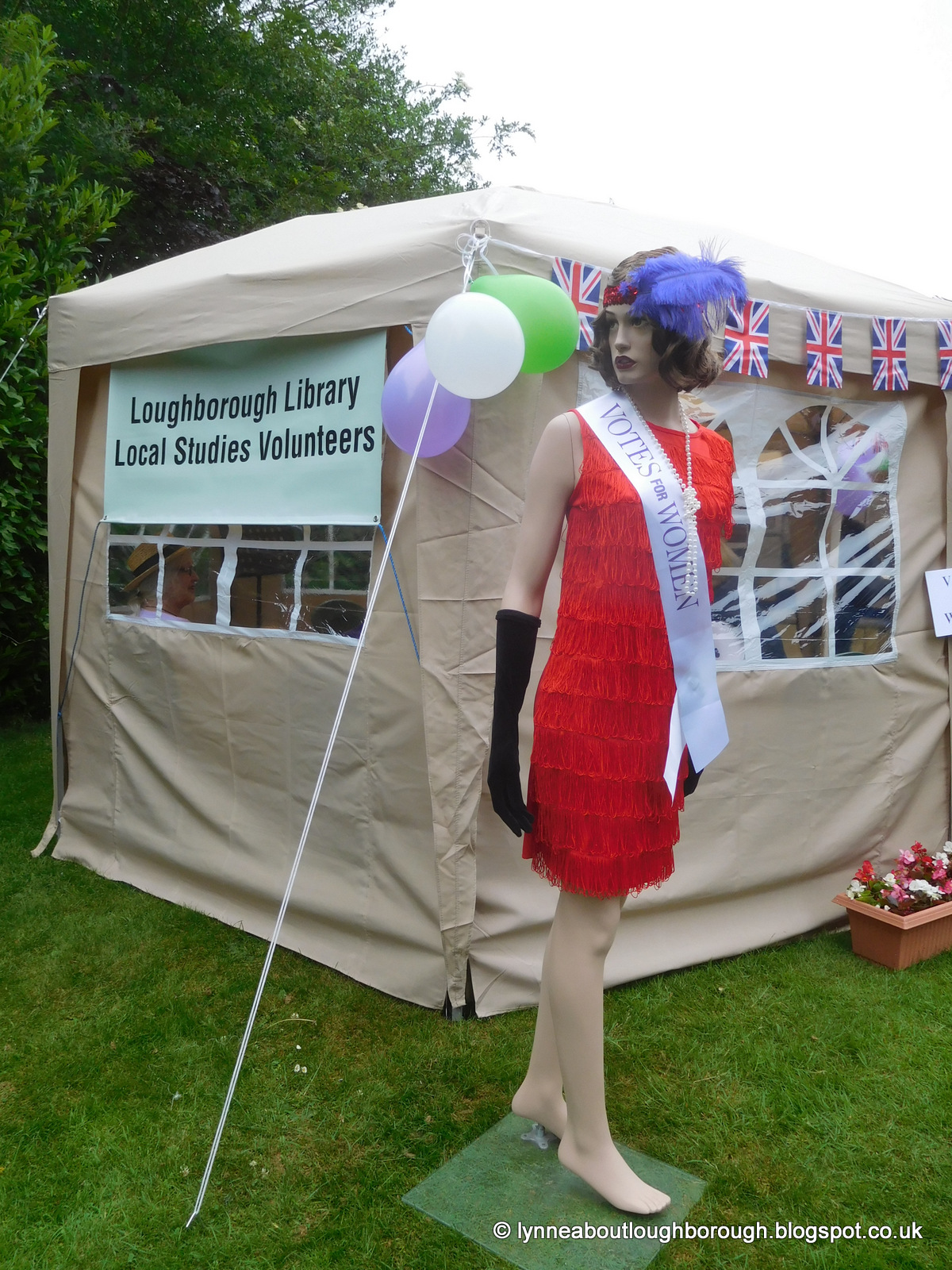
The week started with a meeting with a large group of folk, all engaged with activities and projects related to Loughborough. There seems to be a lot of big anniversaries coming up in the next couple of years and there are some exciting plans afoot. The next upcoming event to look out for is Picnic in the Park on June 8th, arranged by the folk at Charnwood Arts. Staff from the Local and Family History Centre, aka the Loughborough Library Local Studies Volunteers, will be hosting a stall celebrating the 200th birthday of both Queen Victoria and Prince Albert. Victoria and Albert will be in attendance - well, actors will be portraying them!

Picnic in the Park 2018

Talking of the Local and Family History Centre, the current display is a great one - the Midland Main Line then and now - and well worth a visit if you can.


I spent an evening talking with loads of people about what about Loughborough we'd like to see in the Victoria County History volume on the town. This is a national project that's been going since 1899, with the aim of writing a history of every single parish in the country. Progress was initially quite swift, but has since slowed down, and there are still many areas of the country to be written about. We had so many ideas Loughborough's history, it just reinforced to me how fantastic our little town is, and oh so interesting! We thought there was so much to include that we could fill lots of volumes!

I missed a trip to Nottingham with a dear friend due to illness. I was so looking forward to being shown around some of the more interesting parts, especially as I rarely venture off the beaten track that is the Broadmarsh Centre route through to the Victoria Centre, although I did once have a guided tour of the areas associated with D H Lawrence, which was fascinating, I have been to Green's windmill, and I recently had a look at the Alfreton Road area.


Green's windmill


Back in Loughborough, and at the Local and Family History Centre I did a bit of research and met some very interesting people, with whom I seemed to have much in common, not least an interest in milestones!!

After many years of not being available for training, I finally made it to the Old Rectory Museum for some training to be a guide during the open season! Wow! What an exciting opportunity to be able to show people around the building and explain its history, as well as learning something about the artefacts upstairs. There were three of us being trained, which should help towards keeping the ORM open, but there's always a warm welcome for anyone else to be trained up as a guide - just get in touch with the ORM if you're interested!


At the weekend I had a front row seat at a concert in the Trinity Methodist church on Royland Road, given by the Loughborough Male Voice Choir and Hathern Band. Sadly, the youngest wasn't playing due to revision for exams, but it was a great concert, with some lovely singing and some superb playing.

Well, better go now, books don't write themselves!

You are welcome to quote passages from any of my posts, with appropriate credit. The correct citation for this looks as follow:

Dyer, Lynne (2019). Garendon Estate water mill. Available from: https://lynneaboutloughborough.blogspot.com/2019/05/a-week-of-local-history.html [Accessed 19 May 2019]

Take down policy:
I post no pictures that are not my own, unless I have express permission so to do. All text is my own, and not copied from any other information sources, printed or electronic, unless identified and credited as such. If you find I have posted something in contravention of these statements, or if there are photographs of you which you would prefer not to be here, please contact me at the address listed on the About Me page, and I will remove these.
Thank you for reading this blog. 

Lynne 


Sunday, 10 February 2019

Museums libraries books talks and archives!

Apologies for not blogging last week. Well, I say apologies, but I did blog, only not here!!! I was lucky enough to attend the Leicestershire and Rutland Heritage Conference, run by Museums Development East Midlands for people who work or volunteer in the heritage sector. It was held in the National Space Centre, and you can read my account of the event over on the Old Rectory Museum blog.  


On Tuesday I popped into our public library because they were having an ancestor hunt day, where people came along and had a bit of help tracing their elusive ancestors. The library has access to Ancestry and Find My Past, as well as to a lot of other resources that can really help with family history. Having said that, I was in the library on Thursday too, for the launch of the renamed Local Studies Library which is now called the Local and Family History Centre, and the latest exhibition. The new name really describes succinctly the kind of information that can be found in their resources. 


The launch was well-attended, with about 30 people enjoying the talks and the exhibition - oh, and the tea and cakes too!! We were told about many of the things the Loughborough Library Local Studies Volunteers (LLLSVs for short) have done over the past 5 years, and heard about their plans for the future. Their latest book is a faithful transcription of a book by Herbert W. Cook entitled Robert Bakewell of Dishley: the pioneer of English stockbreeding, which was originally published in 1942. The 2019 reprint is now available to purchase from the Local and Family History Centre for a minimum donation of £7. Do try and get along to the exhibition if you can - it's about William Railton, the architect behind Nelson's Column, and his work in Leicestershire.


Later that same evening I went to the Loughborough Archaeological and Historical Society talk on Elizabethan and Stuart turbulence in Leicestershire, given by Richard Bullock of Nottingham Trent University. Before I went along, I admit I knew very little about the Elizabethan age, or the age of the Stuarts, and really couldn't imagine what turbulence there might have been in the peaceful county of Leicestershire, although given what I knew about the Luddite attacks, the Chartists Uprising of the early-mid 1800s etc. it was always likely that Leicestershire had never been peaceful!

Anyways, it was great to learn about the arguments and disputes, the trials and tribulations and relationships between the local landowning and influential families - the Hastings, the Greys, the Shirleys and the Faunts. What a complicated set of circumstances, what a complex web of relationships, but I certainly came away knowing more than I had before.

So these busy few days were then followed by a visit to a fascinating archive, like most fledgling archives, kept in a tiny room and a basement, but housing some truly fascinating documents and resources. I was also lucky enough this day to happen upon some Tuckers bricks, with the header end facing forward and embossed with "Tuckers Newstyle". What a treat!!! Sadly, no photos though. I also tried to find out if the radiators were from Messengers, but there was nothing obvious, so perhaps on my next visit I should take my plumbing kit with me and disconnect one so I can get round the back and find the evidence!!!!!


This weekend I've spent a great couple of days walking the length and breadth of Loughborough looking for suitable photo opportunities for my forthcoming book, and trying to hunt down more blue enamel street signs (I've only found 4 so far, but I'm pretty sure there are more out there)!

Anyway, must go and prepare for another week at work!


You are welcome to quote passages from any of my posts, with appropriate credit. The correct citation for this looks as follow:


Dyer, Lynne (2019). Museums, libraries, books, talks and archiveshttps://lynneaboutloughborough.blogspot.com/2019/02/museums-libraries-books-talks-and.html [Accessed 10 February 2019]

Take down policy:
I post no pictures that are not my own, unless I have express permission so to do. All text is my own, and not copied from any other information sources, printed or electronic, unless identified and credited as such. If you find I have posted something in contravention of these statements, or if there are photographs of you which you would prefer not to be here, please contact me at the address listed on the About Me page, and I will remove these.
Thank you for reading this blog. 

Lynne