Showing posts with label Rosebery St Peter's Community Centre. Show all posts

Sunday, 12 July 2020

St Peter's church and community centre

Timeline for St Peter’s Mission Church, St Peter’s Sunday School 
(latterly Rosebery Arts Centre) and St Peter’s Church


This post was prompted by a recent article in the local newspaper concerning the closure of the Rosebery St Peter's community centre. 

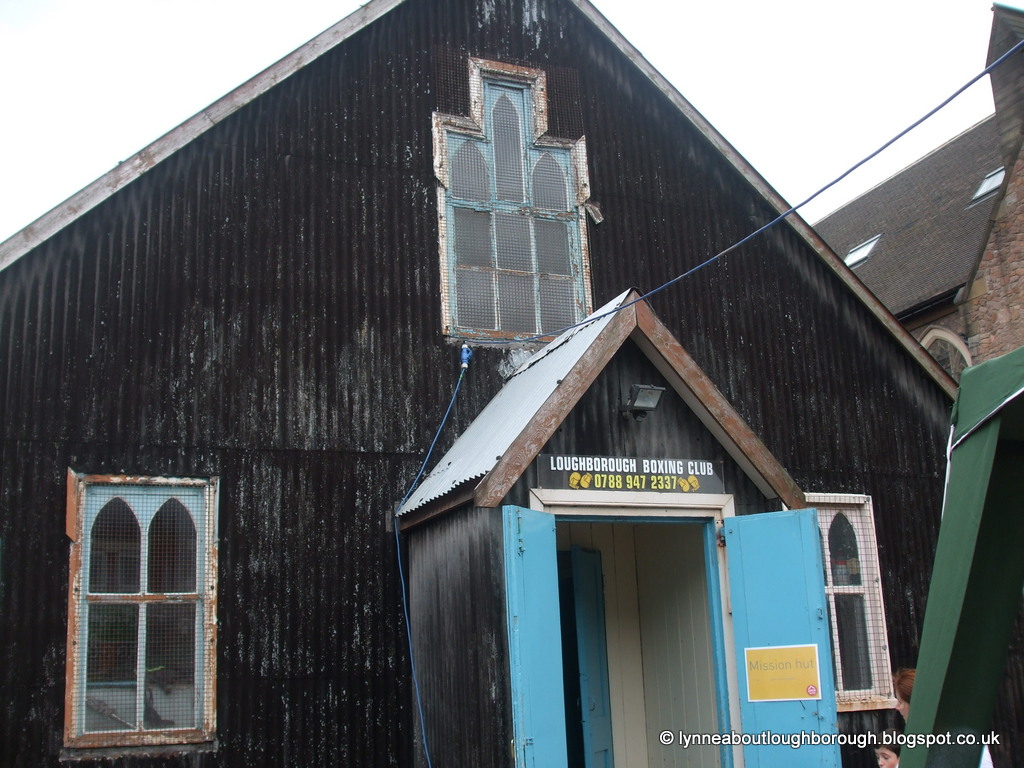
April 1889 – the iron mission church was built, and a Sunday School established. The iron mission church (1), which is on the Paget Estate, was dedicated by the Bishop of Leicester. It was expected to be temporary and was built to serve the rapidly expanding local community. The site on which it stood was big enough for additional, permanent buildings to house the church, a Sunday School, and a vicarage. The iron church itself was built by Mr Lee of Manchester. Gas fittings within were provided by Mr C Fisher, seating by Messrs Watson and Lovett, brickwork by Messrs A and S Main, and Mr Walter Chapman Burder presented a prayer book and bible.  


The iron mission church
 

The iron mission church adjacent to St Peter's church

1892 – Reverend W Irwin became curate at Loughborough parish church, and curate-in-charge in respect of the mission church at St Peter’s.


March 1892 – the iron mission church was enlarged to double its original size. At the same time it was dedicated. The new part was at right angles to the original: a chancel of 25ft by 17ft 6in, a classroom 25ft square on the left, which also had a gallery for infants, and on the right were two rooms, each 15ft by 12 ft 4in., one of which acting as a vestry. The exterior of the church was corrugated iron, whilst the inside was of stained and varnished wood. Foundations for the extensions were laid by W Ludlam, the interior woodwork by W F Harding, and the heating system by Messengers. George Hodson was the superintendent of the building works, the cost of which was £300, all raised by donation. Gifts for the interior included an oak communion table, altar linen and altar vases, and a brass cross.

The iron mission church from the rear
 

Inside the iron mission church

Inside the iron mission church

1895 – at a public meeting at Fearon Hall it was agreed to appeal for funds to build a permanent church and school rooms.


28 December 1895 – Tenders were received for the building of the new St Peter’s school rooms. These were submitted by W Corah, W F Harding, T Barker & Son, W Moss & Son, and the contract was awarded to A Faulks, a master builder of Sparrow Hill, at a cost of £2,330. George H Barrowcliff was the architect.


February 12 1896 – the foundation stone for the Sunday School building, comprising a Sunday school and church hall, to accommodate 800 scholars was laid by Mayoress of Loughborough, Mrs Walter Chapman Burder. The central hall measured 61ft by 30ft, the infant room 54ft by 19ft, and the six classrooms were 13ft by 12ft each. There was also a committee room, cloakrooms and a general out-office.

The foundation stone of the Sunday School building
 

The Sunday School building from Storer Road


The Sunday School building from the rear

July 1898 – after an illness lasting several months, Reverend Irwin died.


1900 – a committee, charged with arranging for the erection of a permanent church building, met with the ecclesiastical architect, Mr William Samuel Weatherley, to discuss plans. The proposed design was large and handsome, but the committee decided now was not the right time to build it, so decided to build a nave only, with the chancel, vestries and tower to be added later. The estimated cost of the complete new church were £8,000.


February 1907 – plans to build around the current nucleus of the church were developing and local people were pledging money towards the cost.


June 1907 – the need for a permanent church, and the creation of a separate parish was now urgent, and it was proposed that an application be sent to the Ecclesiastical Commissioners.


1909-1913 – the plans for the new church were drawn up by the joint architects, Mr William Samuel Weatherley, of London, who during 1867-72 had been a pupil of Sir George Gilbert Scott, and George H, Barrowcliff of Loughborough, who had already designed the Memorial Baths in Queen’s Park, the Carnegie library on Granby Street and had just designed the United Reformed church building on Frederick Street.  

A drawing of St Peter's church
 

November 1910 - the foundation stone is laid


April 1912 - the new church is consecrated by the Bishop of Peterborough.


March 1913 – St Peter’s becomes a fully instituted parish, both in legal and ecclesiastical terms.


Skip forward in time to:


1962 - the lady chapel was added to the church.


1966 – the Sunday School was converted to become a community centre. As the heart of the community, over the years it was used by groups as varied as the Chrysanthemum Club, the Mother’s Union, folk clubs, keep fit clubs, bridge clubs, drama groups, for weddings and religious celebrations for members of the local Asian community, offering help to Vietnamese refugees, morris dancing clubs, boxing and judo clubs. This is not meant to be an exhaustive list - just a selection to give a flavour of how the community centre was used.

The Sunday School building from the front
 

1989 – a time capsule was buried at the edge of the centre’s car park, under a sculpture by Rosebery Arts.

The time capsule buried underneath a sculpture in 1989
 

2004 – the church of St Peter’s officially became redundant and in 2005 churches were invited to propose future use of the building.


2007 – the joint use proposal submitted by Elim Pentecostal Church and Open Heaven was successful, and detailed plans were submitted to the planning department, with permission being granted in 2009, and renovations taking place between 2012 and 2013.


2009 - the St Peter's Community Centre, formerly the Sunday school building, became the Rosebery St Peter's Centre.  

The Sunday School building from the side

2013 – following extensive renovation and redesign an open event, opened by the Mayor, to celebrate this and the start of a new chapter in the history of St Peter’s church, was held in August 2013. The community festival event included an historical display at which was shown the 102-year-old time capsule that had been found during the renovations.

Record of the laying of the foundation stone of the church

Time capsules inspired by the one found

The uncovered time capsule from 1911
 

2016 – St Peter’s community centre celebrated its 50th anniversary.


September 2019 –Becca Byrers from BBC Radio Leicester, and I walked around Loughborough looking for its hidden past. This included a trip to the former St Peter’s church where we were treated to a viewing of the time capsule and a number of relevant documents. We also went along to Beaumanor Hall, and the whole event is available as a podcast, called Multi-Story


June 2020 – it is announced that the Rosebery Community Centre will close permanently. The community centre hired out its space for a variety of events, including art exhibitions, but income during the coronavirus pandemic ceased as community groups have not been able to meet: As such, the community centre could no longer continue due to lack of finance.

(1) The mission church does not have the full status of a parish church, but is rather a church supporting an area within the parish of the main church, the latter being the one with the full-time minister, and the mission church supported by a curate from the main church. 
          
You are welcome to quote passages from any of my posts, with appropriate credit. The correct citation for this looks as follow:

Dyer, Lynne (2020). So who were the Woodwards of Loughborough? Available fromhttps://lynneaboutloughborough.blogspot.com/2020/07/st-peters-church-and-community-centre.html    [Accessed: 12 July 2020]

Take down policy:
I post no pictures that are not my own, unless I have express permission so to do. All text is my own, and not copied from any other information sources, printed or electronic, unless identified and credited as such. If you find I have posted something in contravention of these statements, or if there are photographs of you which you would prefer not to be here, please contact me at the address listed on the About Me page, and I will remove these.

If you wish to leave a comment, please do so in the comments box that appears below this blogpost. Alternatively, you can contact me via lynneaboutloughborough[at]gmail[dot]com.

Thank you for reading this blog. 

Lynne     

Sunday, 17 February 2019

If you like this you might also like that

This week, thanks to those lovely people at the Carillon Tower and War Memorial Museum, I was at an event that reminded me of why I started this blog, over 5 years ago now. In an attempt to ensure that Loughborough didn't make it into a book called 'Crap towns' (it appeared in the top 100 so was in danger of, but luckily only the worst 50 made the book) I began to think about what Loughborough had to offer its residents, its students and its visitors. 

Shops, of course, were - and still are - very important to the town's economy, as are the pubs, the cafes and the restaurants. The huge variety of markets, along with the November fair are also a big part of the town's heritage and help to attract visitors. Alongside this, we also have a rich variety of museums, huge signs of our industrial heritage and a wide variety of cultural venues and events. But ...

Loughborough is not a traditional tourist destination, and is surrounded by three cities with a bigger offering than we have, and these probably also have more investment in resources. With access to those resources (I'm talking both money and people here) marketing and promotion of the attractions in these cities is likely to be more intense, more prolific and will reach a wider audience, and is therefore bound to result in more visitors.

So, we're a relatively small market town, with quite a big heritage offering, all of which is within quite a small geographical area. I suppose one disadvantage of this is there is no suitable bus service between the different locations, but for many people the distance might be walkable, and certainly there are plenty of available car parks. 

I'm sure I've probably blogged about all Loughborough's museums before, but maybe in different posts, not all in the same one (hmmm, on having a look I did actually blog about four of them in one post). And, I've shared some of Loughborough's cultural heritage in some of my walks - like the Loughborough Sculpture, Art and Architecture Trail. Of course, there's more: as a trained Loughborough tour guide, I've taken people on walks around the themes of Hidden Loughborough, and Loughborough's Links with War and Remembrance, as well as walks of a general nature.

When I first came to Loughborough, we used to have a Tourist Information Centre, located inside John Storer House. The TIC was part of the, can't quite remember what it was called, but something like the English Tourist Board (honestly, you'd think I'd remember since I actually worked there for a short while) and most towns had one. They used to be the keepers and sharers of local information - places to visit, groups to join etc. - leaflets galore, holiday brochures for other parts of the country (and operated a booking system), and a whole host of other useful stuff. 

I'm not sure what happened to these TICs, but many closed down (including the one in Leicester which I think was in St Margaret's bus station) and Loughborough's was one of these. I think I'm beginning to ramble a bit now, and I can't quite remember what the point of this post was ...

Oh, yes, it might have been something to do with publicising places to visit. The Charnwood Museum has lots of leaflets about local places and things to do locally, as does the public library, so if you're looking for somewhere to visit or something to do, these are good places to look. Maybe places could advertise other complementary places, you know, like on online when you buy something and they say "If you like this ... then you'll like that." or "Other people who bought X also bought Y." Worth a try!

So, if you like the Charnwood Museum, you might like the Carillon Tower and War Memorial Museum. If you like the Carillon Museum who might like the Great Central Railway Museum. If you like the Great Central Railway Museum you might like Taylors Bellfoundry Museum. If you like Taylors Bellfoundry Museum you might like the Old Rectory Museum.

Similarly, if you like the temporary exhibitions in Charnwood Museum, you might like the temporary exhibitions in the Local and Family History Centre in the public library. If you like the temporary exhibitions in the public library, you might like the temporary exhibitions in the Town Hall. If you like the temporary exhibitions in the Town Hall, you might like the temporary exhibitions at the Old Rectory Museum.

If you like the temporary art exhibitions in the Town Hall, you might watch out for the Art This Way annual exhibition which is held in a variety of artists' houses during June. If you like Art This Way, you might watch out for the Art and Craft Fair at Rosebery St Peter's Community Centre in October. If you like the Rosebery St Peter's Art and Craft Fair, you might watch out for an Open House art event in April.

I could go on and on ... but I won't! I think you get the idea!!

See you next week.

You are welcome to quote passages from any of my posts, with appropriate credit. The correct citation for this looks as follow:

Dyer, Lynne (2019). Museums, libraries, books, talks and archives. Available fromhttps://lynneaboutloughborough.blogspot.com/2019/02/museums-libraries-books-talks-and.html [Accessed 17 February 2019]

Take down policy:
I post no pictures that are not my own, unless I have express permission so to do. All text is my own, and not copied from any other information sources, printed or electronic, unless identified and credited as such. If you find I have posted something in contravention of these statements, or if there are photographs of you which you would prefer not to be here, please contact me at the address listed on the About Me page, and I will remove these.
Thank you for reading this blog. 

Lynne