Showing posts with label bricks. Show all posts

Sunday, 3 March 2024

Bricks, brickyards, and grocers!

Over the past few months I’ve been thinking a lot about Loughborough’s industry, some of its companies, and the families behind them. Trying to get my head around 19th and early 20th century Loughborough has at times been quite puzzling, while at other times quite exciting! My research has seen me journey out of Loughborough, but always brings me back safely to our lovely town.

Here's an example of something I found really quite amazing! This article from the Hinckley News, 28 February 1880 - to do with bricks …


So, who was J.S. Brown, Jun.?

I tracked him down as one Joseph Stanely Brown, son of Joseph Stanley Brown, snr., if you will, born in 1849, in Leicester!

Joseph Stanley Brown snr. had been born around 1817 in Sileby, and around the time of his son’s birth he was the innkeeper at the Pelican Inn on Gallowtree Gate, Leicester. He had married Mary Mee, the daughter of William and his wife Ann (nee Sharpe) on 1st May 1837, and Joseph was their 6th child. By 1861, the family had moved to Belgrave Gate, where Joseph Stanley snr. was the licensed victualler of the Crown and Anchor pub. I haven’t managed to find Joseph Stanley jnr. on the 1871 census return, but his father, mother and some of his siblings are still living at the Crown and Anchor, but as well as being the licensed victualler, Joseph Stanley snr. is also a cattle dealer.

By 1874, Joseph Stanley Brown jnr. is in the grocery business on Loughborough High Street, along with William Wright Jarratt, son of Jabez Jarratt, and brother of … Jabez Jarratt. On 25th May 1874, Joseph jnr. marries William Jarratt’s older sister, Sarah Ann. Sadly, Sarah died in 1878, and in 1880 widower Joseph marries another of William’s older sisters, Harriett Elizabeth.

Now, quite where the brickworks come into all this I haven’t quite worked out! Suffice to say that once they were offloaded, Joseph and wife Harriett move to Leicester, where Joseph is listed on the 1881 census return as a provisions dealer at 36 Belgrave Gate. Meanwhile, father, Joseph has moved to Stanely Villas on Humberstone Gate, and he is listed on the census return as being a farmer of 174 acres, and employing 4 men and 2 boys, and 10 years later, he is still on Humberstone Gate, but is living on his own means, and it is here that he dies in 1894.

I don’t know how long Joseph jnr. stayed at Belgrave Gate, but by the time of the 1891 census he has moved to 109 Overton Road, Leicester, but is still a provisions dealer. He seemingly can’t settle anywhere, so the 1901 census return shows that he has moved to Victoria Road East in Leicester, but he is still a provisions dealer. Continuing to live at Victoria Road East, and continuing in the trade of provision dealer, in 1921 Joseph Stanley, living with his wife and a couple of visitors, appears to be now calling himself Stanley. He remains at this address until at least 1924, but then the trail runs cold. I’ve been unable to trace the death of Joseph Stanley Brown, jnr., also his wife, Harriett Elizabeth Brown (nee Jarratt).

As this post started on the topic of bricks and brickyards, we should perhaps finish where we began. As I hope I’ve shown, Joseph Stanley Brown jnr., of Leicester, son of a licensed victualler, turned farmer, Joseph Stanley Bronw snr., went into partnership with William Wright Jarratt of Loughborough and together they had a grocer’s shop on Loughborough High Street. In 1874, Brown married Jarratt’s older sister, Sarah Ann, who sadly died in 1878, and in 1880 Brown married Jarratt’s other older sister, Harriett – at which point, Brown’s interest in the Far Park Lane brickmaking business is wound up, hence the sale.

Brown moves to Leicester and seems to have a successful grocery business for the remainder of his life. Meanwhile, Jarratt continues in the grocery business until his death in 1905, but curiously, his brother’s son, Edwin Arthur Jarratt (clerk to the School Board, and Registrar of Births and Deaths) is in 1901 living next door to William Trueman Tucker, eponymous brick manufacturer and employer, at Southernhay on Charnwood Road!    
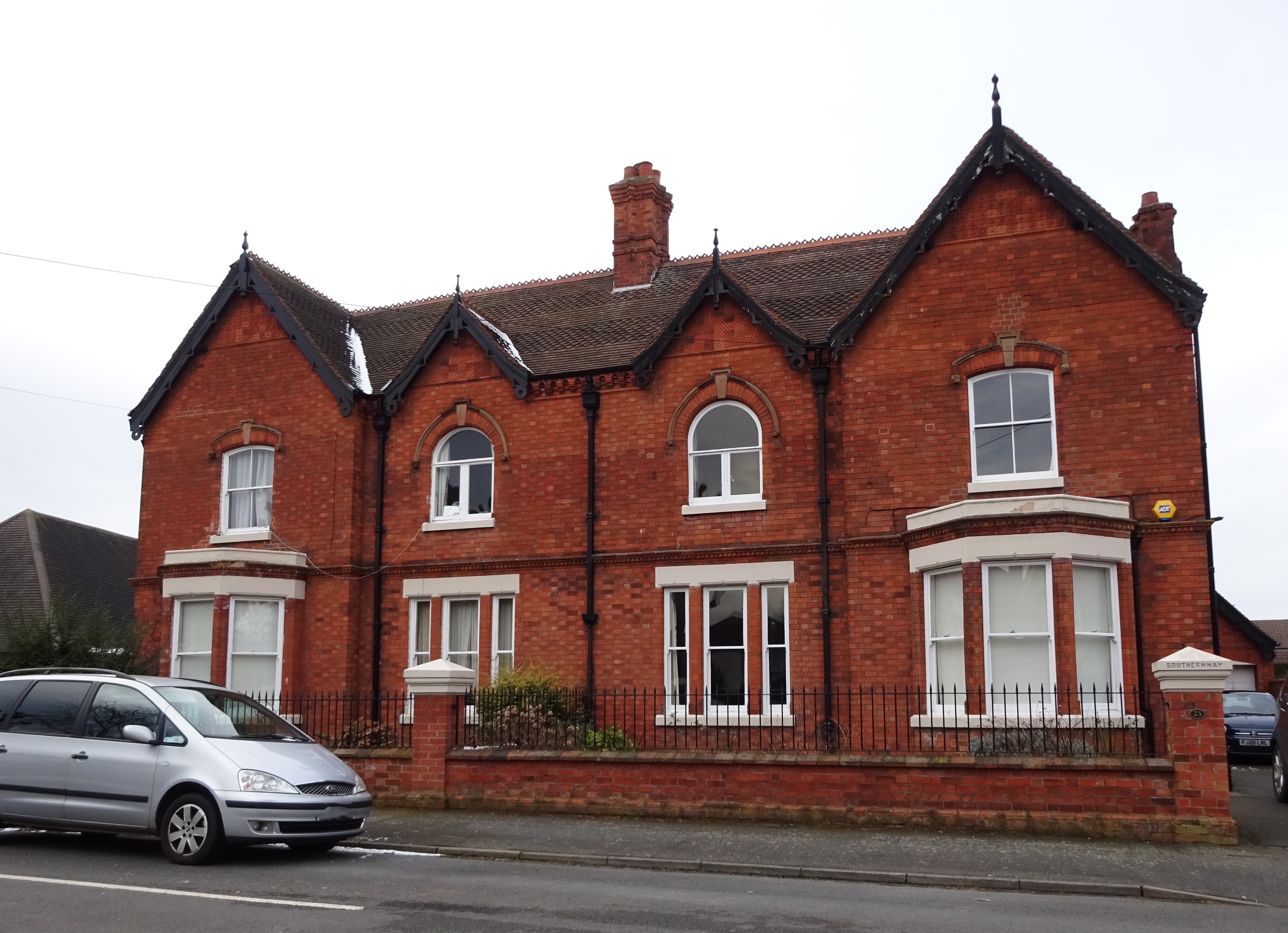
 

Parkside, home of William Trueman Tucker (left) Southernhay, home of Edwin Arthur Jarratt (right)

 
____________________________________

Posted by lynneaboutloughborough

With apologies for typos which are all mine!

_______________________________________________

Thank you for reading this blog.

Copyright:

The copyright © of all content on this blog rests with me, however, you are welcome to quote passages from any of my posts, with appropriate credit. The correct citation for this looks as follows:

Dyer, Lynne (2024). Bricks, brickyards, and grocers. Available from: https://lynneaboutloughborough.blogspot.com/2024/03/bricks-brickyards-and-grocers.html [Accessed 4 March 2024]

Take down policy:

I post no pictures that are not my own, unless I have express permission so to do. All text is my own, and not copied from any other information sources, printed or electronic, unless identified and credited as such. If you find I have posted something in contravention of these statements, or if there are photographs of you which you would prefer not to be here, please contact me at the address listed on the About Me page, and I will remove these.

External Links:

By including links to external sources I am not endorsing the websites, the authors, nor the information contained therein, and will not check back to update out-of-date links. Using these links to access external information is entirely the responsibility of the reader of the blog.

Blog archive and tags:

If you are viewing this blog in mobile format, you will not be able to easily access the blog archive, or the clickable links to various topics. These can be accessed if you scroll to the bottom of the page, and click 'View Web Version'. Alternatively, there is also a complete list of posts, which when clicked will take you to the page you are interested in.

Searching the blog:

You can search the blog using the dedicated search box that appears near the top of the blog when viewed in the web version. Alternatively, you can search using your usual search engine (e.g. Bing, Google, DuckDuckGo etc.) by following this example:

site: https://lynneaboutloughborough.blogspot.com/ “Radmoor House”

NOTE – the words you’re actually looking for must be in “” and the first of these must be preceded by a space

Thank you for reading this blog.

Lynne

Sunday, 28 August 2022

Walls around Loughborough

Yes! You did read that right! It does say 'walls about Loughborough' even though one might have expected it to read 'walks around Loughborough', given that I'm a tour guide!

The term brick wall could refer to a number of things! For example, it could be used in the phrase 'like banging your head against a brick wall' which means that despite repeatedly asking something, doing something, or saying something, a situation can't be changed. A similar usage is when you are doing your family tree and you 'hit a brick wall', which just means you can't find some vital piece of information - as basic as a date of birth, or marriage date, or date of death - so you can't trace any more information about that part of your family.

In the case of this blog, I'm actually talking about walls made of brick, so house walls, garage walls, garden walls etc.. I've written extensively about local brickmakers in previous posts (1), but I don't think I've shared pictures of brick walls before! We have quite a variety in Loughborough, which use many different kinds of bond, and which are quite different in style. 

So, we've got walls with what look like an inset panel, which seem to have been popular around the late-nineteenth, early twentieth century, like those close to the Great Central Railway, by Herbert Morris, and on Park Road. We've got what look like reconstructed walls that have the imprint of the brick type showing. We've got red brick walls, practically everywhere you look, and we've got blue brick walls, especially on some of the GCR bridges. We've got houses constructed of red bricks, white bricks, and a mixture of the two!

We've got walls made with English Garden Wall Bond; Flemish Garden Wall, or Sussex Bond; English Bond; English Cross Bond; Common, or American Bond and Flemish Bond (either single or double). There's probably a whole load of others, too!

Anyway, here's some photos to show what I mean:

English Garden Wall Bond, Middleton Place

Not a wall, but a bridge. Other GCR bridge walls are also of blue brick

Tuckers, English Cross Bond on the former Prudential Building, Market Place

English Bond on the former Victoria Street School

Flemish Garden Wall, or Sussex Bond, Gray Street

Stretcher Bond, Gray Street. There's also a name for that little inserted row, but it escapes me!

The hidden door, Burton Street

Insert panels with hidden door, in Stretcher Bond, Park Road

Inserts on Mayfield Drive

Inserts, Stretcher Bond, Park Road

English Cross Bond

Flemish Bond at the Great Central Railway, with GR post box

New housing estate boundary Wall in Flemish Bond on Great Central Road

There's a name for this bond, but I don't know what it is! Corner of Wharncliffe Ave and GCRoad

Then we have walls with OS marks - Convent on Park Road


Close-up of the OS mark

We have doors that are now walls

We have bricks of red clay and white clay, used together

We have buildings made completely from white clay bricks

We have brick walls, painted, with sentiment

We have houses of Flemish Bond, mixing white clay and red clay bricks

We have patterns of white clay bricks in red clay bricks

And there we must leave it as it is now dark outside, and my photos are becoming grainy!!

Notes

(1) Posts on the Tucker family; Part 1 about Tucker's bricks; Part 2, and Part 3 . Buildings constructed with Tucker's brick.     

____________________________________

posted by lynneaboutloughborough

With apologies for typos which are all mine!

_______________________________________________

Thank you for reading this blog. You are welcome to quote passages from any of my posts, with appropriate credit. The correct citation for this looks as follows:

Dyer, Lynne (2022). Walls around Loughborough. Available from: https://lynneaboutloughborough.blogspot.com/2022/08/walls-around-loughborough.html [Accessed 28 August 2022]

Take down policy:
I post no pictures that are not my own, unless I have express permission so to do. All text is my own, and not copied from any other information sources, printed or electronic, unless identified and credited as such. If you find I have posted something in contravention of these statements, or if there are photographs of you which you would prefer not to be here, please contact me at the address listed on the About Me page, and I will remove these.

Blog archive and tags:
If you are viewing this blog in mobile format, you will not be able to easily access the blog archive, or the clickable links to various topics. These can be accessed if you scroll to the bottom of the page, and click 'View Web Version'. Alternatively, there is also a complete list of posts, which when clicked will take you to the page you are interested in.  
 
Thank you for reading this blog. 

Lynne            

Saturday, 20 March 2021

Tuckers Bricks Part 1

It's been a long time since I blogged about the Tucker family - 2016 - who were involved in brickmaking in Loughborough. Recent blog posts have been a bit wordy, so this week let's have a look at some pictures of the buildings that have used Tucker's bricks in their construction. This week we'll concentrate on buildings across the country, before looking at the more local buildings next time.

One of the earliest, and one of the most well-known buildings that made use of bricks made by Tuckers of Loughborough is St Pancras station and hotel. 

"In 1868 a new London railway station opened, showcasing the best of construction materials from the Midlands. Engineered by William Henry Barlow and Roland Marsh Ordish, St Pancras station was built by the Midland Railway Company to connect London to many major English cities. The Victorian Gothic design for the hotel and station accommodation was by the renowned Sir George Gilbert Scott.  The ironwork was made by the Derbyshire firm Butterley Iron Company, the majority of the 60 million bricks used in the building were manufactured by Nottingham firm, Edward Gripper, and the mortar was also produced in the Midlands. Such was the demand for brick that Edward Gripper’s firm were unable to keep up, and while disappointing for the Nottingham company, this proved to be the perfect opportunity for the Loughborough firm of Tucker who were able to provide the additional bricks. Butterley Iron Company also made bricks, and it was they who acquired Tucker of Loughborough in 1964, keeping the firm open until 1967, but liquidating it in 1979." (1)

St Pancras, summer 2018

The first school to be opened in Leicester by the Leicester School Board, in January 1874, was the Syston Street Board School, and Tuckers supplied the bricks. The following year, they supplied the bricks for the Everard's Brewery building on Southgates Leicester. I don't have any photos of either the school or the brewery, but the Everards webpage has a timeline that includes a photo of the latter.

Red-brick churches seem quite unusual, as I'm used to stone-built ones, but Tuckers supplied the red bricks for St Saviour's church in Leicester, which was built 1875-6.

St Saviour's church, Leicester

The barracks at Glen Parva, which is very close to South Wigston, was constructed in 1881 and used bricks from Tuckers. There are numerous photos on the web, as well as a history of the barracks.

Apparently, the town hall at Aberavon was also constructed with Tucker's bricks, but the 'old town hall' was built sometime between 1826 and 1840, which is possibly a bit early for the Loughborough firm, and since the reference is in a volume published in 1891 (2), then the re-building of the Aberavon town hall in 1915 is most certainly not the one referred to. However, Gilbert Tucker (snr. born 1803) was listed as a brickmaker on the entry in the birth register for his son, Gilbert (jnr.) in 1838, so perhaps Gilbert snr. was involved with the building of Aberavon's old town hall.  

In the same volume, mention of the Bull's Head in Leicester is also proving difficult to locate, but was on Market Place, Leicester. 

An article in the 'Newcastle Daily Chronicle' of 1900 states that Messrs G Tucker and Sons would provide the chimney pots for the whole of the convalescent homes and homes of rest for discharged soldiers, but doesn't actually say where they are. The newspaper is most definitely based in Newcastle-Upon-Tyne, nor Newcastle-Under-Lyme, so perhaps these homes were in Newcastle-Upon-Tyne?

The Central Board School was erected by the Chesterfield School Board in 1901. Again, this/these has/have been difficult to locate, but could be the schools on Durrant Road and Hipper Street. Interestingly, Loughborough firms had quite a lot of input to the construction of these schools: the masonry work was done by Moss and Co. of Loughborough. ‘The schools are faced with Ellistown red-dressed bricks with buff terra cotta dressings (manufactured by Messrs G Tucker & son, of Loughborough).’ ‘The schools are provided with a loud-toned bell cast by Messrs John Taylor of Loughborough’ (3) Much later, in 1927, Tuckers would also be involved in the building of Chesterfield Technical College. 

Chesterfield Technical College, now just Chesterfield College


And finally for today, in 1906, ‘Messrs. G. Tucker and Sons, provided pressed sewer and wire cut bricks’ (4) for the Brent sewage works. Again, a location that I'm not 100% convinced about, but could possibly be the sewage works in Brent Cross (which isn't just a shopping centre, and convenient car park for people driving to the outskirts of London from the Midlands, to catch a train to the centre!!)

Did Tuckers contribute to this construction work?


So, that covers some of the contributions Tuckers made to buildings across the country - up to 1906!!! Pop back later for more Tuckers building works: some of the best are yet to come!!

References

(1) Dyer, Lynne (2019) 'Secret Loughborough'. Stroud: Amberley

(2) 'Loughborough: History, manufactures, trade. London: Robinson, Son & Pike, 1892.

(3) 'Derbyshire Courier', 1 June 1901, pg 5. The reason for the involvement of Tuckers in Chesterfield buildings would be that Gilbert Tucker (jnr.) was born in Holmgate in the parish of North Wingfield, which is about 5.5 miles from Chesterfield, and his second wife, Annie Jane Evan Boden, was born in Chesterfield. 

(4) 'Kilburn Times' 16 February 1906, pg 8

Posted by lynneaboutloughborough 21 March 2021

You are welcome to quote passages from any of my posts, with appropriate credit. The correct citation for this looks as follow:

Dyer, Lynne (2021). Tuckers Bricks Part 1. Available fromhttps://lynneaboutloughborough.blogspot.com/2021/03/tuckers-bricks-part-1.html [Accessed 21 March 2021]

Take down policy:
I post no pictures that are not my own, unless I have express permission so to do. All text is my own, and not copied from any other information sources, printed or electronic, unless identified and credited as such. If you find I have posted something in contravention of these statements, or if there are photographs of you which you would prefer not to be here, please contact me at the address listed on the About Me page, and I will remove these.

You can leave comments below, but do check back as my reply will appear here, below your comment.

Thank you for reading this blog. 

Lynne                   


Saturday, 22 July 2017

Loughborough holiday connections 2017 Part 1

Well, just returned from the annual summer holiday, which this year took a bit of a different turn.

A week booked into a cottage in St Ives, Cornwall, turned into only 5 full days, as we travelled across to Southampton for the graduation of the eldest son, and then spent 2 days discovering Dorset before returning home and discovering more about Derby and other local areas.

As ever, wherever I am, Loughborough is never far form my mind, and the less I look for, the more I find things that connect my holiday destinations with Loughborough. I've probably got enough to write a book, but I shall restrain myself and go with a short blog post! Some of the content here has already been covered in brief detail over on my #100wordsaboutloughborough page - do pop over and have a look! I'm about a third of the way through the initiative now, so need a bit of encouragement to keep going!

Setting off at just before 5am, we arrived in Penzance just before 11am. We parked in the large car park by the harbour and walked to Marazion and St Michaels Mount. Nothing to connect this to Loughborough, apart from walking next to the train line, passing a signal box, and spotting a train wash! However, when we came back towards the town centre, we spotted the lovely dome of the Lloyds Bank at the top of the street called Market Place. In reality, Lloyds of Penzance only takes up half of Market House, and is distinctive because of its lead covered dome with octagonal lantern. A quick bit of research reveals that this was a Grade I listed building when it was originally registered in 1950. Here's a snippet from the original listing description:
"1837. Architect Harris of Bristol. Large building of granite ashlar. 2 storeys. Crowned by lead-covered dome and octagonal lantern, the drum with alternating twin Tuscan columns and semi-circular headed windows, and entablature with heavy cornice. North and south elevations 9 windows, ground floor semi-circular heads, flat pilasters, 3 bay beneath dome pedimented. East end, tall Ionic tetrastyle facade. West end, central pedimented entrance, curved corner bays set back with giant engaged columns, entablature, raised pediment at centre with clock."
By contrast, our own Lloyds Bank, 37-38 High Street, is only locally listed. To my mind, it's a stunning building (I would say that, wouldn't I - leading a group of folk around our town the other day, I realised my focus is very much on banks and pubs!!)

Our Lloyds Bank is of red brick, and terracotta, the latter possibly by the Hathern Station Brick and Tile Co.. The parapet is decorated with elaborately sculpted fish, and an allegorical figure, holding in the left hand a money bag, and in the right a rolled up deed or bond. It is possible that the work is by A.E. King, a sculptor who was active between the years of 1899 and 1928. I've seen a picture of the figure from 2008, and all was well, but when I took a photograph in 2014, the left forearm and the money bag had been lost.  
Here's an extract from the local listing for our Lloyds:
"Bank & Offices Late C19/Early C20. Neoclassical/Baroque Revival. Red brick on stone plinth with expressed piers and stone string courses. Richly modelled stone embellishments include GF fascia, arched window heads with feature keystones , engaged pilasters, decorated panels between 1st and 2nd floor, cornice and upstanding parapet crowning rounded corner elevation. Pitched slate roof. 3 storeys. Generally, casement windows to GF, vertical sliding sash windows on 1st and 2nd floor. Only 2nd floor windows appear original." 
So, there were at least 60 years between the building of the Penzance bank and the Loughborough bank. A quick bit of research into Penzance reveals that the brick used in their buildings was probably of Dutch origin, as because they were a port, it was actually cheaper to buy brick in. Also, Cornish granite was not often used to build with. And, because it was a seaside resort, many of the buildings were stuccoed anyway, and apparently there was some lamenting the loss of this stucco in the 1970-1980s.

On the opposite side of the road to Lloyds Bank, at no.3 Market Place, there stands another Grade II listed building. This one was originally for the Devon and Cornwall Bank, and this can be seen on an engraved panel "D and CB" and "Est. 1832": this reminds me of our HSBC which has similar engraving on its two pillars, "1829" on one and "1893" on the other, indicating the date the original bank on this site (Middleton and Cradock) was built and the date the new bank was built.

Back to Penzance - the polished pink granite colonettes on the former Devon and Cornwall Bank are most likely to be Scottish, rather like those on the Fearon Fountain in Market Place, Loughborough.

Goodness me, so much to write, and only the end of day 1 of the holiday! This could go on for a week!

Lloyds Bank in Loughborough

You are welcome to quote passages from any of my posts, with appropriate credit. The correct citation for this looks as follow:

Dyer, Lynne (2017). Loughborough holiday connections. Available from: https://lynneaboutloughborough.blogspot.com/2017/07/loughborough-holiday-connections-2017.html [Accessed 22 July 2017]

Take down policy:
I post no pictures that are not my own, unless I have express permission so to do. All text is my own, and not copied from any other information sources, printed or electronic, unless identified and credited as such. If you find I have posted something in contravention of these statements, or if there are photographs of you which you would prefer not to be here, please contact me at the address listed on the About Me page, and I will remove these.
Thank you for reading this blog. 


Lynne 


References:


Monday, 4 April 2016

Tuckers

A few weeks ago I was leafing through the local paper (The Loughborough Echo, Wednesday 23 March, 2016, p31) and my attention was caught by a headline in the Looking Back section, From The Archives, 50 years ago ... Beacon Rd brickworks ...


Apparently, the brickworks on Beacon Road, belonging to Tuckers, was scheduled to close after Easter. That would have been around April 1966, which was only a couple of years since Tuckers had been taken over by Butterley Bricks. 

I think my interest in the brick-making firm of Tuckers started when I looked into the development of Middleton Place, and discovered that one member of the brick-making family was living at number 81. I've also seen a number of adverts for Tuckers Bricks in some of my books, including in "Loughborough 1951":


The Gilbert Tuckers

The story of this brick-making family goes back many years. Gilbert Tucker (born Smisby, 1806) was married to a lady called Hannah Orgill, who was born in 1811. In 1841 Gilbert was a publican and maltster, running what was then called the Malt Shovel (which I believe is now called the Tap House and is on the corner of Annwell Lane and Ashby Road, and was previously known as the Annwell Inn, and Mother Hubbard's). Also in 1841 Gilbert and Hannah had at least 3 children: Gilbert (jnr) born Clay Cross, 1838; William, born 1833; Emma, born 1839; and Nathan, born 1841. 

By the time of the 1851 census, Gilbert snr was now a brick maker and, and Gilbert jnr was a brick maker's assistant, and they were living on Far Park Lane, Loughborough. When the next census took place, in 1861, Gilbert snr was living with his wife Hannah and their son Nathan in Brickyard Cottage, in Loughborough Parks (in between the listings for Pocket Gate and Sydney Terrace). Gilbert snr was a brick maker/master employing 2 men and 6 boys, and Nathan was also a brick maker. They were also living with James something-or-other, who seems to have been a partner in the brick making business.

Meanwhile, by 1861, Gilbert jnr had branched out and moved away from his parents, having married Eliza. They, with their 8 month old son, William Trueman, were living on Bedford Street (the next census entry is for Albert Street), and Gilbert was a brick maker/master, and a Primitive Methodist local preacher. 

By 1871, Gilbert and Eliza were living at number 2 Park Street, with 6 of their children (William Trueman, Annie, Lucy Emma, John Edward, Ellen and Arthur. Gilbert was by now a brick maker/master employing 11 men and 6 boys. Father Gilbert, brick maker, and his wife Hannah were at this time living on Park Lane, with their invalid son, Nathan, formerly a brick maker, and Nathan's wife, Eliza.

In 1876, Gilbert snr died, and in 1881 his widow, Hannah can be found living in Park Lane with Kate, aged 7, listed as Hannah's daughter (???). At the same time, Gilbert jnr was living with his wife, Eliza, the same 6 children as in 1871, but were joined by 2 further children, Florence Louisa, and Alfred Gilbert. Gilbert was a master brick maker and farmer, John Edward was an assistant brick maker, and William Trueman was a book keeper. They were all living on Forest Road, at number 12, which I believe is the house on the corner of Park Road and Forest Road, opposite the side of the Trinity Methodist Church.

In 1886 Eliza Tucker died, and in 1887 Gilbert jnr married Annie Jane Evans Boden (daughter of Charles Boden of Walsall), from Chesterfield, and in 1889 their son, Charles Henry Boden Tucker was born. At the time of the 1891 census, Gilbert is living with his new wife Annie, his children from his first marriage - Annie, Ellen, Florence, Kate, and Alfred - and their son Charles. Gilbert is listed as a brick manufacturer, Alfred is a joiner's apprentice and they are still living at number 12 Forest Road.

Hannah Tucker died in 1893. In 1901 son Gilbert, his wife Annie, their son, Charles, and Annie's father Charles, were living at Brick Yard, which I believe is number 1 Granville Street. Gilbert was listed as a brick and terra cotta manufacturer. His father-in-law Charles was a retired Primitive Methodist Minister.

1911 and Gilbert, his wife and their son Charles were living at Burleigh Cottage on William Street, which appears to be next to number 14. Gilbert was listed as a brick and tile manufacturer (employer) and Charles listed as a tile maker (worker). Gilbert died in February 1920 and left the sum of £2,596 5s. 6d. Probate was granted to his widow Annie, and his son Arthur, a brick manufacturer.

Arthur Tucker

Gilbert jnr's son Arthur, born in 1869, was living with his parents on the night of the 1871 and 1881 census, but I can't find a listing for him in 1891. By 1901 he was listed as a brick makers manager, and on the night of the census was at the house of his sister, Annie, and her husband, Wallis Adcock, at 134 Herrick Road. It was in the summer of 1901 that Arthur married Mary Ellen Hand, in Shardlow, and their daughter Ida Mary was born in 1903, and their son Arthur Leslie born in 1907. In 1911 the family were living at 81 Middleton Place, and Arthur was listed as a brick and tile manufacturer. 

At the time of his death, on 29 May 1936, Arthur was living at "Gyseburne" on Ashby Road. Probate was granted to Mary Ellen, his widow, and Arthur Leslie, his son, a brick manufacturer. He left the sum of £44,579 6s. 6d.

William Trueman Tucker

William Trueman Tucker, the eldest son of Gilbert jnr and his wife Eliza, was born in 1861 and was living with his parents and siblings at the time on the 1871 and the 1881 census, and in the latter he was listed as a book keeper. In 1883 he married Martha Philips Jones, the daughter of John Jones, the iron founder of Britannia House, and their son, William Jones was born in 1885. In 1891 William and his wife Martha were living at 12 Charnwood Road (although I'm not sure the house numbering is still the same today - see later census returns) with their children, William Jones, Charles Gilbert, born 1886, and Elsie Mary, born 1890. William Trueman was listed as a brick manufacturer.

by 1901 the family had been joined by another child, Dorothy Martha, born 1893, and were living at "Parkside" on Charnwood Road (which today is a nursery school, and is numbered 25). William Trueman is listed as a brick manufacturer (employer) but there was no occupation listed for the two sons who were now 16 and 14; nor were they listed as scholars.

Still living at "Parkside" in 1911, William Trueman and Martha now lived William Jones and Dorothy Martha, and Violet Ruth who was born in 1902. William Trueman was listed as the Managing Director of a Brick and Tile Works, whilst William Jones was now a brick maker.

William Trueman Tucker died on 17 November 1925. The family were still living at "Parkside" and probate was granted to Martha Phillips, William Jones Tucker, Manager, and Charles Gilbert Tucker, squadron leader, RAF. He left £11,985 19s. 7d.     

Charles Gilbert Tucker

Charles died in an unfortunate flying boat accident in 1931 in Plymouth. The Blackburn Iris No N238 was a British three-engined biplane (unlike the Sunderlands which were British flying boat patrol bombers).  

William Jones Tucker

William married Hannah Marion Stephenson in January 1912, and I believe they went to live in Canada, but returned to England in about 1918. Their son, Robert, was born in Vernon, British Columbia in 1913, but sadly died in 1918 in Loughborough. William died on 7 September 1946. He had been living at "Stapenhill" (number 156) Leicester Road, in Loughborough. Probate was granted to Hannah, his widow, and David William, an architectural student at the time, who was their son and he left £6,054 14s. 6d.. 

David William Tucker 

There may well have been other children, but David William was born in 1925, and after his studies he went on to design golf courses, like Lingdale, Beedles Lake, amongst others. His daughter, Lindsay Jelley (wife of the MD of Jelsons) has been going through the papers he left when he died in 2006, and there is an interesting discussion of this in Golf Course Architecture: the global journal of golf design and development (2014).
          
Bricks today

The identification and collecting of bricks is a particularly popular hobby today, and there are a number of useful and interesting websites where you can see pictures of the actual bricks that were used.  

Houses on the local Shelthorpe estate, which were built around 1926-1928, were made of bricks and tiles made locally by Tuckers.

When the Nottingham Patent Brick Company couldn't supply enough bricks to finish building St Pancras railway station, Tuckers provided more (along with a number of other brick makers, including Wains of Heather, and the Butterley Brick Company.

I don't know why, but I have a feeling Tuckers bricks were used in the construction of the former central control tower at Heathrow airport. 

Of course, there were many local buildings in Loughborough that used Tuckers bricks, not least the Carillon, which, as well as using mostly these local bricks, used steel made by Herbert Morris's, bells that were cast and hung by Taylors, and the tower being built by Moss the builders.     

If you happened to want to own some Tuckers bricks or roof tiles, they are, apparently, available to buy!

I believe the clay pits that were used by Tuckers have now been reused, one being part of the site occupied by Tesco's Park Road store and William Davis Construction, the other having been filled with water and which has become Charnwood Water, formerly known as Tucker's Pond.

So, I'd better stop now! As ever, this research could go on for so much longer ...