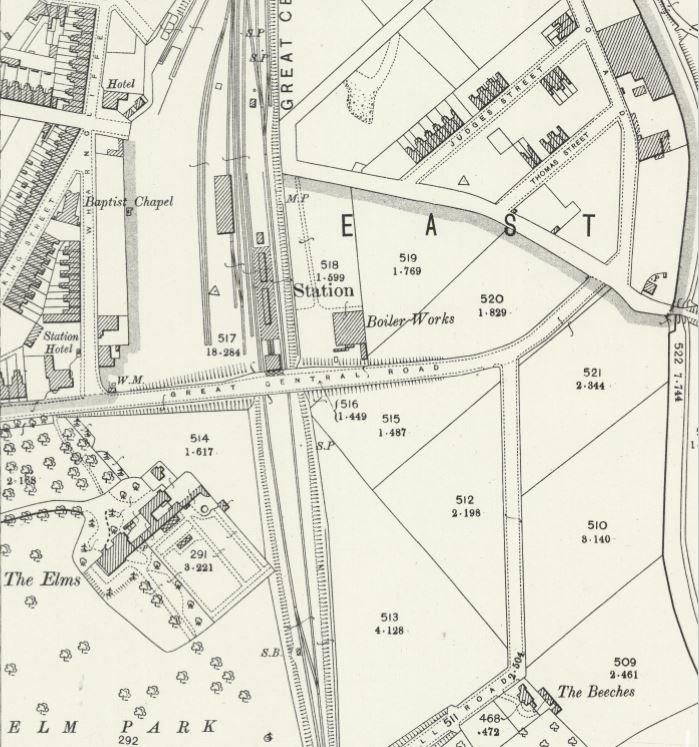
Showing posts with label Coltman family. Show all posts

Sunday, 23 February 2025

Where the Coltmans and Burleigh Hall Collide. Pt 2

In this week’s blog post, following on from last week, we continue the story of Howard Coltman as he settles into life at Burleigh Hall.

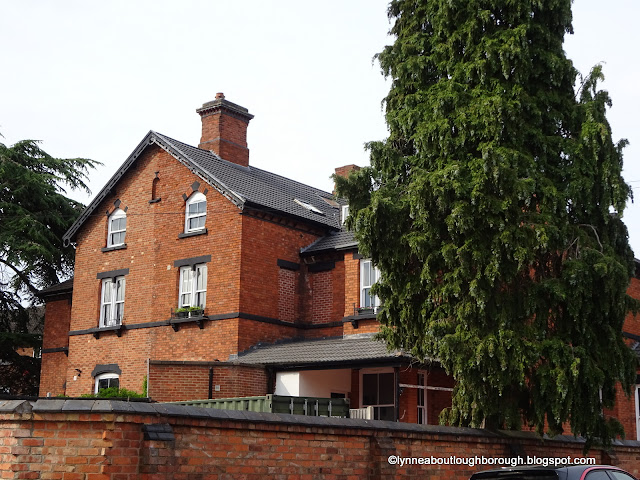
Circa 1958

Later in 1922, Howard Coltman is listed in a telephone directory as living at Burleigh Hall, and this information also appears in a 1925 directory, which also lists Thomas Mayo at Burleigh Farm. The telephone number for Burleigh Hall was Loughborough 591. By 1949, as Loughborough was growing quickly, and more telephones were being installed, this had changed to 2591.

In 1923, Howard hosted the MP, Brigadier General E. L. Spears, and his wife, who gave a talk to the Loughborough Women’s Liberal Association. And later in 1923, Howard was advocating that a ‘living wage’ be paid to people who worked on a short-term, or seasonal basis for the council, and that steps should be taken to provide housing for these workers. One of Howard’s own workers was paid 37s. a week. In the following year, Howard was elected as a joint honorary secretary of the Loughborough Liberals. Howard was present at a reunion of the Old Loughburians – old boys from the Loughborough Grammar School - in July 1924, when the group presented a roll of honour listing 400 past pupils who had served during the First World War.

November 1924 saw Howard appointed as Chair of the Loughborough Branch of the National Farmers’ Union, and presiding at the Farmers’ Union dinner the following year. Later that year, Howard was appointed as chair of the rural district council. Although predominantly a dairy farmer, Howard also kept sheep, but must have been disappointed by the price paid for some of his fleeces, in 1925, that were about 40 per cent below what was paid in the previous year. The highest price in 1925 was 17d. per fleece, which was paid for his 57 Oxford Hampshires, and cross-bred ewes, and 16 hogs.

By 1926 Howard’s cows had begun to produce Grade A milk [1], and in May he hosted a visit to his farm from sanitary inspectors who were undertaking a course at the Midland Agricultural and Dairy College. As if that weren’t enough, Howard also won 3rd prize for his sugar beet at the Loughborough Agricultural Show on Southfields Park.

In 1927 Howard was one of a number of people from both Loughborough and beyond who attended a meeting at Dishley Grange to discuss raising funds to erect a suitable memorial to Robert Bakewell, who had been a prominent local agriculturalist.

In the same year that Howard was president of the Leicestershire Farmers’ Union, he and his wife Chrissie had a daughter, Ann Theodora, who was born in December 1930. In September of the same year, Howard Coltman had allowed some of his land to be used to host the Loughborough Show, organised by the Loughborough Agricultural Association. Previous venues had been Southfield Park, and the Corinthian’s football ground, but the grounds of Burleigh Hall, being situated on the edge of the Charnwood Forest, were ideal. As if that wasn’t enough, also in 1930, Howard was Chairman of the Yorks, Leics. and Lancs. Grade A Milk Producers’ Associations and was appointed to a sub-committee. Meanwhile, two women from Radmoor Cottages were fined for stealing potatoes from Burleigh Farm.

In 1932, Howard was the chairman of the Milk Recording Society [2], and in June of that year he accompanied members of the Leicestershire and Rutland branch on their annual visit, which this year was to Cambridge. The group were able to visit the Animal Nutrition Research Station of the university, and a farm in Bottisham, before enjoying tea in Cambridge. By 1936, Howard was a governor of the Loughborough Grammar School, and later (1948) became its chairman.

Boundary changes had recently come into effect and Howard was elected as a representative of Northern Area Guardians Committee in 1935.

In 1936, Howard Coltman, prominent member of the Farmer’s Union, at Burleigh Farm 1936, was proposing to stand for election as an independent member to the town council, in the new Beaumont Ward, at a time when the population of Loughborough was around 30,000. However, I believe he was finally appointed as a Conservative candidate.

During 1937, Howard Coltman was regarded as a leading authority on milk production, and was concerned that the government was proposing to enforce milk quotas and import duties, via the Milk Board.

When the 1939 Register was taken, Howard, dairy farmer and ARP Warden, and Chrissie were living at Burleigh Hall, on Ashby Road. Also listed there were Ada B. Kendrick aged 78, who was Chrissie’s retired mother. Howard and Chrissie’s son, John Coltman, born 12 February 1918, is listed as an articled law clerk, who was working for A. G. Davies in Loughborough, and who had been taking exams of the Law Society during the past 5 or so years. Howard and Chrissie’s daughter, Anne Theodora Coltman born 5 December 1930, was also listed on the Register, and was a scholar, and would later marry a man surnamed Morris. Also listed at the Hall are John Woodford, a farm pupil, and Florence M. Neal, the domestic servant.

Next door to Burleigh hall, in the Gardeners Cottage, was Alfred W. Linton, the head market gardener, born 5 June 1896, and his wife, Annie born 1898, as well as a redacted person, and Bernard Linton, a scholar who was born in 1928. Next door to the Gardener’s Cottage is Burleigh Hill Cottage, which was lived in by poultry farmer (heavy worker) Frederick Richards, born in 1904, and his wife  Frances born in 1900, along with James W. Haughton, born 1916, herdsman (heavy worker), a redacted person, John (Tom) Barrett born 1903 who was the ploughman (heavy worker), and Olive Clarke born 1912 who was the dairymaid.

Listed as being next door to Burleigh Hill Cottage, was Burleigh Hall Lodge, where we find Hedley Gurney, born 1897, the farm horseman and tractor driver, Martha Gurney born 1893, his wife, and a redacted person. Next door to that is Knightthorpe Lodge, followed by Holywell Cottage, then Holywell Farm, then The Priory pub, which had only opened three years earlier.

During the Second World War (1939-1945), Howard was the chairman of the County War Agricultural Committee, and diplomatically encouraged farmers to produce as much as they could, even though this might mean the ploughing of pastureland for the sewing of crops, or even evicting those farmers who were less productive and efficient.

Sadly, in 1942, Howard and Chrissie’s only son, John, a Sergeant Observer, No. 1151281 [3] in the RAF (V.R. 115 Sqdn.), was reported as missing, and presumed to be dead. John had attended the Loughborough Grammar School, as had his father before him, and had passed his intermediate law exams, before signing up for the RAF. John is remembered on the Runnymede Memorial.

1950 saw the establishment of the Thomas Burton Lodge No.7007 of the local Freemasons, and an obituary appearing in The Loughburian of July 1964 suggests that Howard was one of the founding members, however, he is not included on a photograph of the founders back in 1950: perhaps he was away at the time the picture was taken.

In January 1951, Howard and Chrissie’s only daughter, Ann Theodora, became engaged to Mr Herbert John Frank David Morris, who was the son of Mr John Cameron Morris, himself the son of Herbert Morris. The marriage took place later that same year.

In the New Year Honours List of 1952, Alderman Howard Coltman, Deputy Chairman of the Leicestershire Agricultural Executive Committee, was awarded an OBE. Howard had been a member of the Leicestershire County Council for more than 15 years, and at the time of the award was the Chairman of the North Leicestershire Education Executive, and a farmer at Burleigh Hall. In 1958 Howard was awarded an honorary Master of Arts degree from the University of Nottingham in recognition of his contribution to agriculture in Leicestershire, and for his work at the Sutton Bonington campus of the Nottingham University when it was the Kingston [-upon-Soar] Agricultural College, where he had been a governor during the time of transition to the Nottingham University, and also for his work at Brooksby College, near Melton Mowbray.

By 1958, Howard Coltman was living at 258 Forest Road, and this year marked his 26 years of membership of the East Midlands Regional Committee of the Milk Marketing Board, for which he received an inscribed silver salver, at a lunch to celebrate the occasion.

Known to be a proponent of the advancement of both general and agricultural education, in 1961, Howard Coltman was elected to the sub-committee of the Regional Council Advisory Panel for Agricultural Education, which was looking into agricultural education in the region.

On 26th January 1964, Howard Coltman died, and probate was granted on 2nd April 1964, to solicitor Walter William Straw, and chartered accountant John Bernard Sidney Marsh. Effects were £138,679. An extensive obituary appeared in the Loughborough Grammar School magazine, ‘The Loughburian’.

Howard's wife, Chrissie, lived on at 258 Forest Road until her death on 19 January 1972.

____________________________________ 

Notes

[1] According to reports from the House of Commons for 1914, it was proposed to grade milk into three classifications: Grade A, being the best sort of milk that had been drawn from herds guaranteed free from Tuberculosis, and with a low bacterial count, that could safely be given raw to children; Grade B would be safe for adults to drink, but probably less so for children, and which included pasteurised milk, and Grade C would include any milk that didn’t fall into either Grade A or Grade B! 

[2] ‘National Milk Recording’ was established in 1943, and was aimed at encouraging milk producers to record the yield of their cows. However, prior to this Milk Recording Societies existed in each county, and each had its own committee. According to the NMR website, although membership of these societies was small, the members made up for this by being both enthusiastic and progressive!

[3] An air observer in the RAF was mostly concerned with reconnaissance missions.

____________________________________

Posted by lynneaboutloughborough

With apologies for typos which are all mine!

_______________________________________________

Thank you for reading this blog.

Copyright:

The copyright © of all content on this blog rests with me, however, you are welcome to quote passages from any of my posts, with appropriate credit. The correct citation for this looks as follows:

Dyer, Lynne (2025). Where the Coltman's and Burleigh Hall Collide. Pt 2. Available from: https://lynneaboutloughborough.blogspot.com/2025/02/where-coltmans-and-burleigh-hall_01080011251.html  [Accessed 23 March 2025]

Take down policy:

I post no pictures that are not my own, unless I have express permission so to do. All text is my own, and not copied from any other information sources, printed or electronic, unless identified and credited as such. If you find I have posted something in contravention of these statements, or if there are photographs of you which you would prefer not to be here, please contact me at the address listed on the About Me page, and I will remove these.

External Links:

By including links to external sources I am not endorsing the websites, the authors, nor the information contained therein, and will not check back to update out-of-date links. Using these links to access external information is entirely the responsibility of the reader of the blog.

Blog archive and tags:

If you are viewing this blog in mobile format, you will not be able to easily access the blog archive, or the clickable links to various topics. These can be accessed if you scroll to the bottom of the page, and click 'View Web Version'. Alternatively, there is also a complete list of posts, which when clicked will take you to the page you are interested in.

Searching the blog:

You can search the blog using the dedicated search box that appears near the top of the blog when viewed in the web version. Alternatively, you can search using your usual search engine (e.g. Bing, Google, DuckDuckGo etc.) by following this example:

site: https://lynneaboutloughborough.blogspot.com/ “Radmoor House”

NOTE – the words you’re actually looking for must be in “” and the first of these must be preceded by a space

Thank you for reading this blog.

Lynne

Sunday, 16 February 2025

Where the Coltmans and Burleigh Hall Collide! Pt 1

Way back in 2023 I started a series of posts on this blog, about Burleigh Hall, and the people who lived there. I seem to have started at the end of the nineteenth century and into the early twentieth century, following on from a very brief mention of earlier inhabitants, way back in a post from October 2013, and directly following a guest post about Mary Tate. When I stopped posting about the hall, I did, however, promise you at least one more post, about more recent inhabitants! 


Also, way back in June 2023 I started a series of posts about members of the Coltman family. In those posts I concentrated mainly on just one or two family members, and deliberately didn’t go into much detail about Walter as I had (and still have) other plans for sharing that info. The links to all these earlier posts are listed below. 

So, in this post today, I’m going to try and bring the Burleigh House series of posts, and the Coltman family series of posts together, by sharing my research from 2023. And what better way to do this than to share with you the story of Howard Coltman? Here follows the first part of that story …

Howard Coltman’s parents were John Charles Coltman, and Fanny Kate Marshall had married in Loughborough in 1884. John was the son of Huram Coltman and his wife Eliza (née Lovett), Fanny Kate was the daughter of Thomas Whittle Marshall, a bank manager in Loughborough, and his wife Ann (née Baldwin) who had been born in Nottingham.

Howard Coltman was born on 19 September 1885 to John Charles Coltman and his wife Fanny Kate (née Marshall). I believe he was their first child, just as his father, John Charles was the first-born of Huram Coltman and his wife, Eliza.

In 1891, Howard’s grandfather, Huram Coltman, was living at no.135 Meadow Lane, in a house possibly named Lowlands. Huram’s eldest son, John, who was aged 34, an employer, being a steam engine and boiler maker, was at no.133 Meadow Lane, [1] with his wife Fanny Kate, aged 32. Also living at no.133, were John and Fanny Kate’s children, son Howard aged 5, son Charles E. aged 4, and son Claud M. aged 2, and a domestic servant, Annie E. Mitchell aged 14, from Hoton. John and all his family were born in Loughborough.

The family continued to live on Meadow Lane, and in 1901, when Howard was 15, the family included John Charles Coltman aged 43, a mechanical engineer employer, his wife, Fanny Kate, and children Howard (15), Charles E. (14), Claud M. (12) and Philip B. (7). Also living in properties on Meadow Lane were Howard’s uncles, Ernest, aged 33, a mechanical engineer employer, who housekeeper was Kate Mee, Kate Mee, and Charles W. Coltman aged 29, a steam engine fitter (worker), with Elizabeth his wife, and their daughter, Doris aged 1.

Howard had been attending the Loughborough Grammar School since 1896, and in September 1901 he was awarded the Year V prize for science. His interest in science would be later noted in The Loughburian, [2] on the occasion of his death, when it was reported that Howard was “… a pioneer … in the application of modern science to agriculture …”

Soon after leaving school, Howard Coltman spent 4 years at the Agricultural College in Holmes Chapel, Cheshire, where he obtained the National Diploma in Agriculture in 1905. [3]

In 1909 Howard married Chrissie Kendrick, the daughter of Mr and Mrs Kendrick of Lock House, Loughborough, at Loughborough’s Wood Gate Baptist Church, in a ceremony conducted by the Reverend W. H. Spinks. Chrissie was born in 1885 and had spent her early years living on Paget Street, before moving to the Lock House, where her father was the canal manager. It’s possible that she was in charge of the Loughborough branch of the Girl Scouts, who formed in 1911.

It was around the time of their marriage that Howard and Chrissie moved to Vale Farm, Charley, in the heart of the Charnwood Forest, where a near neighbour was Herbert Morris, who lived at Lubcloud [4] with his family. Twenty-year-old Ernest Asa Blyth, who was born in Leamington Spa, was an assistant to farmer Howard, Sarah Jane Upton from Markfield, aged 19, was the maid, and Thomas Bull, aged 52 and born in Aston Upon Trent, was the cowman.

I think it was after this, around 1914, that Howard took over the Model Farm in Nanpantan, which was about 100 acres, 60 of which was ploughland, upon the death of Mr J. F. Sarjeant. In order to support the ‘war effort’, in September 1915, Howard, along with other local people who did the same, placed some of his fields at the disposal of the 3 /5 Battalion of the Leicestershire Regiment for the purpose of undertaking their drills.

A 1916 trade directory lists Howard Coltman as being a farmer in the parish of Nanpantan: prior to the incorporation of the borough in 1888, Nanpantan had been part of the parish of Loughborough, but it was excluded in 1888, and became a separate civil parish. In 1917, Howard was elected to the Rural District Council representing Nanpantan, a vacancy which had come about by the death of the previous incumbent, Mr E. Broad. Howard also took on some women National Service Volunteers to work on his farm, and reported that after only three weeks undertaking the work, although initially they knew nothing about agriculture they were progressing really well. Also, in support of the Loughborough branch of the Red Cross, in 1918, Howard of Model Farm, along with a several other farmers gave a number of sheep, at the Victory Fair which was held in the cattle market.

On 12 February 1918, Howard and Chrissie welcomed the birth of their first child, a son whom they named John, who would go on to train as a lawyer. Meanwhile, work continued for Howard and in 1919 he was appointed as vice-chairman of the Loughborough rural district Council, while his wife, Chrissie was appointed to the Ladies Visiting Committee of the Loughborough Board of Guardians. 

By 1920, Howard Coltman was a JP, and living at Burleigh Hall, where he was occupied as a farmer, being an active member in the local branch of the Farmers’ Union. He came from a prominent local family, and was the representative for Nanpantan on the Loughborough Board of Guardians, and in 1920 was the Chairman of the Loughborough Rural District Council, and as a JP sat on the bench of magistrates for the Loughborough Petty Sessional Division.

The land at Burleigh amounted to about 200 acres, with about 80 acres being ploughland. A contemporary article [5] described Burleigh Hall as standing on the rising ground between Ashby and Forest roads, overlooking Loughborough, and with a charming view of the Charnwood Forest in the distance. The hall itself was very substantially built of brick and stone, with an interior that was furnished throughout in very finely panelled oak. The property had a water supply provided by the Loughborough Corporation, and also had a telephone.

The previous occupier at Burleigh Hall had been the Right Honourable Alan Pennington, until his death in 1913. After Alan’s death, his widow gave up Burleigh Hall, and auctioned off the good quality furniture (like the Chippendale, and the Queen Anne stuff), hunting and horse-riding equipment, coaches, and even greenhouse plants! During the First World War, the Hall was occupied for some of the time by the military, and some 55 acres of the land was broken up, and slag applied. As we read above, the farms connected with Howard (i.e. Burleigh and the Model Farm) were used to train land girls. Coltman was a member of the Local War Agricultural Committee.

When Howard Coltman took over Burleigh Hall, he adapted and changed many of the buildings, from being suitable for use by a country gentleman, such as Alan Pennington had been, to those more fitting for a modern farm. However, whether or not Coltman carried through with his idea of converting the pigeon cote into a corn mill or not, I am not sure.

Coltman was a very successful farmer, and in the summer of 1920, the yield of winter oats in a 10-acre field was about 10 quarters to the acre, despite this being the third successive white straw crop to be grown on the field since the land was broken up in the war, the previous crops being oats, followed by wheat. Coltman applied slag each time he broke up the fields, saying that he considered:

‘… that the turf, in rotting down, supplie[d] ample nitrogen and organic matter, and … the phosphates in the slag just give the necessary constituent for the corn to make the crop a success.’ [6]

Moreover, the crop was not attacked by wireworm, a potential destructor. A further field of 18 acres was used to grow potatoes, and another 25 acres was used to grow clover for hay. Coltman was also raising about 30 calves. It seems that some of his farming methods were new for the time, and quite experimental.

In a follow-up article appearing in the same newspaper the next week, it was reported that Coltman was also trying a crop that consisted of a mixture of hardy greens – giant rape, thousand-headed kale, and rape kale, specifically – in place of swedes, which would be food for the sheep – which included about 40 Oxford/Hampshire cross ewes - during the winter. 

Although Coltman had applied slag to some of his fields, which had been badly grazed for several years, the results were not as expected. So, lime was applied to these fields, and flattened into the ground by a steam roller, which seemed to improve the quality of the grasses grown there. Coltman seems to have kept a herd of cows for the past 10 years, presumably at the Model Farm, before Burleigh, and in 1919, he had the highest average yield per cow per year, and also the cow, Cockhorn, that gave the highest individual yield, and this put him at the top of the Nottingham Milk Recording Society tables, to whom another of his red shorthorn cows, Russell, was also well-known. The farm was also involved in the breeding of large, black pigs, but the breeding of horses had not been successful for Coltman, so he had decided to focus on growing corn. Poultry on the farm were predominantly of three well-known breeds; White Leghorns; White Wyandottes, and Buff Rocks, but some of the young were prone to be eaten by the local magpies.

It comes as no surprise to learn that Coltman, being an experimental farmer, used many innovative farming implements and machinery. One of these was an Albion potato planter, which was actually the first of its kind. Coltman’s two tractors were a Clayton and a Fordson, and he also made use of a hay and straw elevator.

When Coltman took over Burleigh, there was a large garden with glasshouses attached to the hall, so he used these to grow produce associated with a market garden, and was particularly pleased with his tomatoes. He also sold plants to allotment holders and keen gardeners.

On 26th April 1921, at the age of 35, Howard was initiated into the Howe and Charnwood Lodge of the Freemasons.

On the census of 1921, which was taken in June, Howard Coltman and his wife Chrissie were recorded as being at Burleigh Hall, where Howard was a farmer who employed farm workers. Their son, John, does not seem to appear to be with them on the night this census record was taken, and I have yet to locate him. However, three of Howard’s employees were listed on the same census return. They were, Howard’s own brother, Philip, who was aged 28, and the private gardener to Coltman; William Pryce-Jones, who was a 19-year-old farm pupil, and Florence Mal, a general domestic servant. Further employees were listed on a separate page, for Burleigh Farm Cottage - the Woodford family. Thomas Woodford was 55 and a general agricultural labourer on Coltman’s farm at Burleigh Hall, while his wife, Elizabeth, was aged 52, and sons Albert, aged 22, and John aged 19 were both also general agricultural labourers. The Woodford’s two youngest children, Jessie and Cecil were both at school.

The Tinkler family were simply listed as living in Nanpantan, but head of the family, John William Tinkler, aged 42, was a horseman employed by Coltman at Burleigh Hall. Tinkler’s wife, Emma aged 41, and their daughters Ada aged 18, and Isabel aged 15, were all undertaking home or domestic duties, although Isabel was working at Burleigh Hall. Son, John aged 13, and daughters Doris aged 10, and Edna aged 6 were attending school.

Living at Burleigh Lodge in 1921 were William Kearn and his family. William was a 51-year-old gardener at Burleigh Hall, his wife, Annie, was not working, but his daughter, Lilian, aged 19, was a shorthand typist, currently working as a waitress at the Empire Picture Co. (which is today the Odeon). There were two visitors included in the listing – Mabel Peet, aged 21 and a trained lace hand from Long Eaton, although she was also currently working as a waitress at the Empire Picture Co., and 4-year-old Ruby Anthony.

In 1921, living at Burleigh Farm was Thomas Mayo, aged 72, was listed as a farmer and retired provisions merchant living at Burleigh Farm, with housekeeper Harriett Riches, Clara Pitchell (?) the assistant housekeeper, and visitor Molly Fendick. Mayo had come to Loughborough in 1881 to run a grocery business in Market Place, and by 1921 he had actually been mayor of Loughborough no less than nine times! Incidentally, Howard’s own uncle, Walter William Coltman, had also been mayor of Loughborough, but only seven times, although he does hold the accolade of being the youngest mayor when he was first appointed in 1911!

Next week we will conclude the story of Howard Coltman and Burleigh Hall!

____________________________________

Notes

[1] A trade directory for 1891 states that John Charles was living on Stanford Road: at the time it would have been difficult for non-residents to differentiate the far end of Meadow Lane from Stanford Road

[2] The Loughburian, Vol. LXIX No. 196, pp, 3 and 89

[3] Incidentally, the recuperative drink and nutritious food supplement, Bengers, was made in Holmes Chapel, and the manufacturer was later taken over by Fisons, who had plants and offices at both Loughborough and Holmes Chapel. The college, which had been created in 1895, was at Saltersford Hall, and comprised 100 acres of farm and gardens. [I shall be blogging a little about Bengers in a post later this year, in connection with some other research I’ve been doing, so please look out for that!]

[4] Remembered fondly by the author for its fantastic café in the mid-late 2010s!

[5] The ‘Leicester Daily Post’ 21 August 1920, pg 4

[6] ibid.

____________________________________

Links to earlier posts about Burleigh Hall and members of the Coltman family

Rev Wm Henry Cooper (Oct 2023) https://lynneaboutloughborough.blogspot.com/2023/10/the-reverend-william-henry-cooper-of.html

Rt. Hon Alan Pennington pt 1 (Sept 2023) https://lynneaboutloughborough.blogspot.com/2023/09/the-right-honourable-alan-joseph.html

Rt Hon. Alan Pennington Pt 2 (Sept 2023) https://lynneaboutloughborough.blogspot.com/2023/09/the-right-hon-alan-joseph-pennington-of.html

Mary Tate - guest post from Dr Pamela Fisher (August 2023) https://lynneaboutloughborough.blogspot.com/2023/08/mary-tate.html

Baron Muncaster (August 2019) https://lynneaboutloughborough.blogspot.com/2019/08/burleigh-hall.html

Lost Houses (Oct 2013) https://lynneaboutloughborough.blogspot.com/2013/10/lost-houses-found.html

Ernest Coltman (July 2023) - https://lynneaboutloughborough.blogspot.com/2023/06/so-who-was-e-e-coltman.html

Coltman family (July 2023) - https://lynneaboutloughborough.blogspot.com/2023/07/coltman-family-boiler-makers-and.html

Ernest Coltman and some loose ends (July 2023) - https://lynneaboutloughborough.blogspot.com/2023/07/ernest-edwin-coltmans-loose-ends.html

Ernest and Ernest Huram Marsh (July 2023) - https://lynneaboutloughborough.blogspot.com/2023/07/ernest-edwin-coltman-and-ernest-huram.html

____________________________________

Posted by lynneaboutloughborough

With apologies for typos which are all mine!

_______________________________________________

Thank you for reading this blog.

Copyright:

The copyright © of all content on this blog rests with me, however, you are welcome to quote passages from any of my posts, with appropriate credit. The correct citation for this looks as follows:

Dyer, Lynne (2025). Where the Coltmans and Burleigh Hall Collide! Pt 1. Available from: https://lynneaboutloughborough.blogspot.com/2025/02/where-coltmans-and-burleigh-hall.html [Accessed 16 February 2025]

Take down policy:

I post no pictures that are not my own, unless I have express permission so to do. All text is my own, and not copied from any other information sources, printed or electronic, unless identified and credited as such. If you find I have posted something in contravention of these statements, or if there are photographs of you which you would prefer not to be here, please contact me at the address listed on the About Me page, and I will remove these.

External Links:

By including links to external sources I am not endorsing the websites, the authors, nor the information contained therein, and will not check back to update out-of-date links. Using these links to access external information is entirely the responsibility of the reader of the blog.

Blog archive and tags:

If you are viewing this blog in mobile format, you will not be able to easily access the blog archive, or the clickable links to various topics. These can be accessed if you scroll to the bottom of the page, and click 'View Web Version'. Alternatively, there is also a complete list of posts, which when clicked will take you to the page you are interested in.

Searching the blog:

You can search the blog using the dedicated search box that appears near the top of the blog when viewed in the web version. Alternatively, you can search using your usual search engine (e.g. Bing, Google, DuckDuckGo etc.) by following this example:

site: https://lynneaboutloughborough.blogspot.com/ “Radmoor House”

NOTE – the words you’re actually looking for must be in “” and the first of these must be preceded by a space

Thank you for reading this blog.

Lynne

Sunday, 2 July 2023

Coltman Family Boiler Makers and Engineers

Coltman Engineers and Boiler Makers

Huram Coltman was the creator of the company H. Coltman and Sons, engineers, and boiler makers. Huram was born in Broughton Astley, or Wigston, in 1832, to Charles Coltman, a framesmith, and his wife, Hannah, (sometimes recorded as Ann or Anna). By the time he was 19, Huram, still living at home with his parents and siblings, was, like his father and younger brother, Zina, a framesmith. It’s possible, that after his marriage in 1854, Huram and wife Eliza lived in Loughborough, as their first son, John Charles was born in Loughborough. Certainly, by the time of the 1861 census, the family, which now included a daughter, Eliza Ann, was living on Derby Road, and Huram was an engine smith.

A further son, Huram, was born in 1861, but sadly died, shortly after the birth of daughter Henrietta, in 1863, when Huram was a foreman for Henry Hughes, at the Falcon Works. Three more children were born to Huram and Eliza: Florence Mary (1865), Ernest Edwin (1867) and Walter William (1869). In 1867 the family was living on Regent Street, but by 1871 had moved to Falcon House on Nottingham Road, and Huram is recorded on the census return as a master railway builder, and in 1873, daughter Clara was born here.

At some point, Huram had gone into partnership with Henry Hughes, and in 1875, a patent for 6 months was granted to Henry Hughes (Leicester) and Huram Coltman for an invention relating to improvements for trams. However, the partnership was dissolved in 1877, and was reported in the 'London Gazette' on 3 August:

… the Partnership in the trade of business of Locomotive Builders and Mechanical Engineers, heretofore carried on by the undersigned, Henry Hughes and Huram Coltman at Loughborough, in the county of Leicester, under the style of Henry Hughes and Co., was dissolved…

Trade directories for the next couple of years variously list Huram as working from Cambridge Street and Charles Street in Loughborough. By 1881, the family is living at Island House on Granby Street, and Huram is a mechanical engineer employing 13 men and one boy. His eldest son, John Charles is an assistant engineer, and is probably the ‘& Son’ in the company name, ‘H. Coltman & Son’. Between 1885 and 1890, Huram’s son, Walter William served a five-year apprenticeship with the company, now also known as the Midland Ironworks, and became a partner from 1890-1899, joining (I think), brothers John Charles and Ernest Edwin.

By 1882, the company had had new, large premises built next to the Midland railway station on Meadow Lane. The works were fitted out with modern tools, and the workers had experience of making and repairing locomotive tank engines, stationary and portable steam engines, vertical, portable and flue boilers, etc. etc..


In the 1880s the company put out adverts for their products in newspapers across the country. The photo below is of a boiler mounted horizontally on the wall in the servant’s area of Brodsworth House, near Doncaster. I don’t think it’s a Coltman boiler (it was mounted too high to be able to see any identifying marks) as a Coltman boiler would have been mounted vertically, but the overall object might have been similar in some respects.


Here’s an advert that the firm placed in the ‘Runcorn Examiner’ in 1883, advertising vertical and Cornish boilers and vertical, horizontal, and portable engines, and one in the ‘Widnes Advertiser’ of 1886, advertising vertical boilers of between 1 and 14 horsepower:


By 1891, the firm is known for being an engineering company, making steam boilers, as well as being an iron foundry. An 1892 publication [1] contains, amongst many other things, a description of Messrs. Coltman and Sons, Engineers and Boiler Makers of Meadow Lane Loughborough at that time:

The engineering and boiler-making works of Messrs. Coltman and Sons have long held a foremost position amongst the industrial features of Loughborough …

The premises are situated on the northern outskirts of Loughborough and close to the main line of the Midland Railway Company, with which they are connected by sidings. They consist of five main shops or sheds, solidly built and well equipped for the purposes of the heavy iron trade. Considerable extensions have been made to the rear of these shops, with the result that the establishment may be fairly regarded as one of the largest boiler works in the Midlands.

The firm’s great speciality is the manufacture of the larger classes of vertical boilers for stationary engines. They also build locomotives, vertical engines and boilers combined, and flue boilers. The space, appliances, and machinery which Messrs. Coltman have at command enable them to conduct these departments most efficiently.

All the work is carried out on the premises and under the immediate supervision of the partners, who are practical engineers of great experience. It is to this fact, no doubt, that the continued progress and prosperity of the business may be traced. We believe we are correct in saying that it was commenced in a comparatively small way, but, ‘great oaks from little acorns grow’, and at present Messrs. Coltman’s foundry is one of the industrial mainstays of the district in which it is situated. It already finds employment for about 150 hands, and it will no doubt continue to keep pace with the commercial growth of Loughborough and neighbourhood.

In conclusion we may mention that the senior partner of the firm is serving on the Aldermanic bench of his native town, and has always been to the fore in endeavouring to promote the interests and advancement of his fellow-townsmen”.

The partnership of the firm, which was known as H. Coltman and Sons, was dissolved in 1894, when Huram retired, leaving his sons John Charles, Ernest Edwin, and Walter William at the helm.

In 1895, the company applied for a patent for a refuse destructor and steam generator combined, an invention which was attributed to Ernest. The machinery was first used in connection with the Loughborough sewerage works, which was built in late 1895.

In March 1899, a patent was sealed for improvements to vertical boilers, which was submitted by Huram, John Charles, and Ernest Coltman, shortly before the partnership of the company changed. Later in 1899, Walter William Coltman left the partnership of John Charles and Ernest E. Coltman, trading as H. Coltman and Sons, to become a manufacturing engineer on his own account, taking on the role of the proprietor of the company Central Boiler and Engineering Works, often referred to as Walter W. Coltman and Co., based on Great Central Road.


The company H. Coltman and Sons, as well as advertising as repairers to all kinds of engines and boilers, and having a large stock of circular and straight firebars, boiler mountings and fittings at the lowest prices, then went on to diversify somewhat. Between 1907 and 1920 we find the company producing 20hp cars, albeit in small numbers. In February 1920, a note appeared in the ‘London and China Express’ that the Loughborough firm of Herbert Morris Ltd. had acquired the business of H. Coltman and Sons, Midland Ironworks.


Meanwhile, the Central Boiler Works of Walter William Coltman continued to trade, and adverts for staff often appeared in the press, whether that were for a smith (angle-iron), skilled rivetters, electric welders, or young people to learn the trade. In the 1930s, a member of the local Onions family was the secretary and director of the Central Boiler Works.


Walter William Coltman, who created the Central Boiler Works died in 1958, but the company kept trading until the early 1980s, when in 1982 they were taken over by Loughborough-based Trentside Investments Ltd., and finally closing down in June 1982, there being many employees who had been with the 80-year-old company for over 20 years. The closure was put down to the decline in demand for coal-fired boilers, which had in part been caused by the lower price of oil.

____________________________________

Notes

[1] ‘Loughborough: its history, manufactures, trade'. Brighton: London: Robinson, Son & Pike, 1892

[2] Huram Coltman went on to serve two terms as mayor of Loughborough, firstly in 1896-97, following Walter Chapman Burder, and then in 1898-9, following William Tidd. He was succeeded in the role by Thomas Mayo. 

____________________________________

posted by lynneaboutloughborough

With apologies for typos which are all mine!

_______________________________________________

Thank you for reading this blog.

Copyright:

The copyright © of all content on this blog rests with me, however, you are welcome to quote passages from any of my posts, with appropriate credit. The correct citation for this looks as follows:

Dyer, Lynne (2023). Coltman family, boiler makers and engineers. Available from: https://lynneaboutloughborough.blogspot.com/2023/06/coltman-family-boiler-makers-and.html [Accessed 2 July 2023]

Take down policy:

I post no pictures that are not my own, unless I have express permission so to do. All text is my own, and not copied from any other information sources, printed or electronic, unless identified and credited as such. If you find I have posted something in contravention of these statements, or if there are photographs of you which you would prefer not to be here, please contact me at the address listed on the About Me page, and I will remove these.

Blog archive and tags:

If you are viewing this blog in mobile format, you will not be able to easily access the blog archive, or the clickable links to various topics. These can be accessed if you scroll to the bottom of the page, and click 'View Web Version'. Alternatively, there is also a complete list of posts, which when clicked will take you to the page you are interested in.

Searching the blog:

You can search the blog using the dedicated search box that appears near the top of the blog when viewed in the web version. Alternatively, you can search using your usual search engine (e.g. Bing, Google, DuckDuckGo etc.) by following this example:

site: https://lynneaboutloughborough.blogspot.com/ “Radmoor House”

NOTE – the words you’re actually looking for must be in “” and the first of these must be preceded by a space

Thank you for reading this blog.

Lynne

Friday, 23 June 2023

So Who Was E. E. Coltman?

Many years ago, not long after I started my local history journey I remember being absolutely bowled over by seeing a trunk belonging to Charles Knight Deeming in an antique shop, over Bosworth way! A tangible piece of family history, but also of Loughborough’s social history, but I couldn’t justify the cost at the time, so I’ve no idea what happened to that fabulous item. I did, however, write a piece for the Loughborough Archaeological and Historical Society newsletter about the wonderful find, as part of a bigger article about finding social history everywhere! The article was a summary of a slide presentation which I believe is still available. 

So, imagine my utter surprise and delight to come across another piece of Loughborough’s late-nineteenth-early-twentieth-century family and local history! This time, I spotted the item locally, and raided every jam jar, old purse, and cupboard, and managed to scrabble together enough pennies to buy it!

What I had seen was actually a deed box belonging to E. E. Coltman.


Way back in 2014 I had written a blogpost about Radmoor House, a lovely building I used to regularly walk past, and this building also featured in my book, ‘Loughborough in 50 Buildings’. Although I covered most of the house’s history, I probably focussed on the time when Arthur Paget lived there, rather than the time it was home to E. E. Coltman.

Anyway, over the past year I have been researching another Coltman – Walter William – with a view to writing a book. There, I’ve just written this in black and white, so I am now duty-bound to write said book! There was a specific reason for researching W.W. and not any other member of the family, that is, until I found the deed box, which I believe had been kept in the strong room of the offices of Woolley and Beardsley, on Rectory Place. Sadly, there were no documents lurking at the bottom of the box, the only paper attached being what I can only assume was a number (160) used for storage and filing purposes.


So, who was E. E. Coltman?

According to the ‘Oxford Dictionary of Family Names in Britain and Ireland’ there are currently (2016) 1,066 families bearing the name Coltman, while in 1881 there were 840 families, the majority of whom were living in Durham, Leicestershire, and Middlesex. Coltman is an occupational name from the Middle English word for a young horse or ass – Co[w]lt – and the ‘man’ added at the end, probably indicates the person looks after the colts.


In reality, I haven’t been able to find out very much about E. E. Coltman, but here is what I do know. He was born Ernest Edwin Coltman, in 1867, to parents Huram Coltman and Eliza Lovett.

Huram Coltman was born in the Broughton Astley area to Charles Coltman, a framesmith, and his wife, Hannah (sometimes known as Anna or Ann), in 1832. By the age of 19, Huram, and one of his brothers, Zina, were working as framesmiths. Huram continued to live with his parents in the Broughton Astley area probably until 1854, when he married Eliza Lovett.

Eliza was possibly [there were several possible Eliza Lovetts - I hope I've got the right one] born in 1831, in Sutton-in-the-Elms, near Broughton Astley, the daughter of John Lovett, an agricultural labourer, and his wife Mary. In 1841 the family, which included older sister, Caroline, were living in Sutton, and in 1851, Eliza was a servant at Auburn School for boys in Narborough.    

Huram and Eliza were married in the last quarter of 1854, and the event was registered at Leicester, although by 1855, and the birth of their first child, John Charles Coltman, they were living in Loughborough. Another child, Eliza Ann, was born in October 1857, followed by the birth of another child, Huram, in 1861, when the family were living on Derby Road. Huram snr was an engine smith, and was probably working as a foreman for Henry Hughes at the Falcon Works, but at one time went into partnership with Hughes.

The family moved to Regent Street, and the birth of another daughter followed, Henrietta being born in 1863, but sadly, later that year, on 24th December, two-year-old Huram died. Daughter Florence Mary was born in 1865, and son Ernest Edwin was born in 1867, followed by Walter William in 1869.

By 1871, the family had moved to Falcon House on Nottingham Road, where the census return records Huram as a master railway builder, and daughter Clara was born in 1873. In 1877, the partnership between Huram Coltman and Henry Hughes was dissolved, and trade directories over the next few years variously list Huram as being an engineer on Cambridge Street, and on Charles Street, and the firm is H. Coltman, engineers and machinists. The 1881 census records Huram’s occupation as a mechanical engineer employing 13 men and 1 boy, and reveals that Huram and his family are now living at Island House on Granby Street. Ernest Edwin is listed as a 13-year-old scholar, and I believe he went to the Hickling School, of which James Upton was the schoolmaster.

A couple of family weddings happened in the next few years, when in 1882 Eliza Ann married John William Marsh from Woodthorpe, in Loughborough, and in 1884 John Charles married Fanny Kate Marshall, also in Loughborough. A trade directory of 1883 lists Huram as living at Island House on Granby Street, while son John Charles is at Meadow Lane, and Huram’s brother, Zina at 18A Church Gate. Huram’s company is listed as H. Coltman & Son, and was on Meadow Lane.

So, it seems that the siblings of Ernest Edwin are:

John Charles
Eliza Ann
Henrietta
Florence Mary
Walter William
Clara

A few more family events included the birth of Frances E. Marsh, daughter of Eliza and John William Marshall, in 1885, the marriage of Florence Mary Coltman, to Charles Herbert Gadsby, in Loughborough in 1886, and the birth of another daughter, Mabel E. Marsh, to Eliza and John William. On the company front, from 1885-1890 Walter William served a five-year apprenticeship with H. Coltman & Sons, and became a partner from 1890-1899.

Meanwhile, Ernest had become proficient at football and was part of the Loughborough Town Football Club in 1886-7, their first season since the merger between Loughborough Victoria and the Loughburians, who had been two of the town’s most successful clubs [1]. He continued to play for the team, as did Charles  Gadsby, his brother-in-law, often in the position of halfback, until late 1890, when he was injured, the ‘Leicester Daily Post’ commenting that he missed the match against Sheffield United which was the final qualifying round for the English Cup Competition. His place was taken by Kelham, and Sheffield won, 6-1. His ankle injury meant that he also missed the return match later in December, when his place was taken by Kidger.  

By February 1891, Ernest had joined the Loughborough rugby club. ‘Forward’, reporting in the ‘Leicester Daily Mercury’, said he wasn’t sure if Coltman had left football for rugby (but thought he might have done as the football team were short of halfbacks at their Saturday match), and also said:

“Coltman got an encouraging start in his rugby career, as he scored a capital try – a feat which few can claim to accomplish in their first game.”

By this time, Ernest was aged 23, and living with parents Huram and Eliza, and siblings Henrietta, now 27, Walter William, now aged 21, and Clara aged 18, along with a 19-year-old servant, in Meadow Lane. Huram, Ernest, and Walter are listed as being engineers, steam boiler makers, and ironfounders.

Sadly, September 1892 saw the sudden death in Loughborough, of Huram’s wife, and Ernest’s mother, Eliza, aged 62. This sad event was followed by a couple of happy occasions notably the birth of Eliza and John Marsh’s son, in 1893, who they named Ernest Huram Marsh, perhaps a tribute to Ernest and his father Huram, especially given the career path chosen by Ernest the grandson and nephew, which we will read about later!

Another happy occasion was in late 1894, when Huram himself married Mary Agnes Wakerley, who was aged about 33, and was born in Birkenhead in late 1894. It was probably around this time that Huram and Mary moved to 57 Park Road.

Front view of 57 Park Road

Side view of 57 Park Road

Rear view of 57 Park Road

The fortunes of the company, H. Coltman & Son continued to go well, and in 1895 a trade directory lists both Ernest and his brother Walter at Meadow Lane, and brother, John Charles as living at ‘Lowlands’, also on Meadow Lane. In September 1895, Ernest is cited as the inventor, when he, his father Huram, and his brothers John Charles, and Walter William applied for a patent for a refuse destructor and steam generator combined - which would be put to good use in the following month!

So, in October 1895, Ernest attended the opening of Loughborough sewerage works, which was near Swing Bridge Lane, and which had taken more than two years to create, having been approved by the Local Government Board in 1892. Ernest was there partly because the engines used at the site were steamed from a special boiler that had been invented by Coltman Boiler Company, and a patent applied for a month earlier. An early form of recycling, they were fired solely by the use of ashpit refuse from the town (from the days when houses had coal fires, and coal was extensively used in industrial processes). People had been rather skeptical about whether or not there would be enough ash to not need to use coal, but the process was successful. The whole sewerage works cost around £20,000 (representing about £1 per head of population). At the opening ceremony, the mayor (William Ambrose Cartwright) started the engines. Light refreshments for the party were provided in the store-room!

An 1899 trade directory confirms that the company of H.Coltman & Son was based on Meadow Lane, and were engineers, machinists, and iron founders. Also listed as Meadow Lane is John Charles, while Zina Coltman, Huram’s brother, is a sewing machine agent at 18A Church Gate. Ernest and brother John Charles are listed as living on Meadow Lane, brother Walter at Danetree, on Clarence Street, and father Huram is still at 57 Park Road.

On 7th June 1899, Ernest attended the formal opening of Queen’s Park, on a day of brilliant weather. The park was provided as part of Queen Victoria’s Diamond Jubilee celebrations, and had previously been part of Island House Park. Space had also been allocated to the Jubilee Baths, for a new cattle market, and for a Rifle Drill Hall. Originally, the land was bought by the council for a new fire station, but this was subsequently built on The Rushes, and so the Island House land was used to create a park. At the time of the opening of the park, Huram Coltman, Ernest’s father, was mayor, but Lord Belper, who was originally meant to open the park gates, was unable to do so on this occasion, given the recent death of his son. So, the mayor gave the silver gilt key [I wonder if Frederick Stubbs had made it?] to Mr W. B. Paget to unlock the gates. The handle of the key was emblazoned with the borough arms, and was inscribed with the words,

“Presented by the Local Diamond Jubilee Celebration Committee, to W. B. Paget, Esq., J.P., D.L. on the opening of the Queen’s Park, Loughborough, 7th June, 1899.”

After the opening, the Volunteer band played the National Anthem.


A few months after the opening of Queen’s Park, in September 1899, the ‘Nottingham Journal’ reported that the partnership between Charles Coltman [2], Ernest Edwin Coltman, and Walter William Coltman, who had been trading as H. Coltman and Sons, at Loughborough, engineers, boilermakers, and ironfounders was dissolved as Walter William retired. The fact that Huram is not mentioned perhaps means that he is already retired. If he hadn’t he certainly had by 1901 as on the 1901 census return his occupation is recorded as “Mechanical engineer – retired”. Walter is listed on the 1901 census return as a mechanical engineer, and employer, living on Great Central Road.

The 1901 census return also records that Ernest Coltman, a mechanical engineer and employer, aged 33, is living on Meadow Lane, and has a housekeeper, Kate Mee. He’s actually living next door to his brother, John Charles, who is living with his wife Fanny Kate, and children Howard (15), Charles E. (14), Claud M. (12) and Philip B. (7) John Charles is also a Mechanical engineer & steam boiler maker, employer. Also living on Meadow Lane is Charles William Coltman aged 29 (son of Charles Coltman, who was brother to Huram), a steam engine fitter (worker), with Elizabeth his wife, and their daughter, Doris aged 1.

1902 sees a happy event with the birth of John Bernard Sidney Marsh, son of Eliza and John, and nephew to Ernest, but this is sadly followed on 8th June 1904 by the death of Huram Coltman who was living at ‘Longwood’, 57 Park Road. Probate is granted on 22nd August 1904 to his sons, John Charles, Ernest Edwin, and Walter William who were all engineers and boilermakers. He left effects amounting to £53,714 13s. 3d..

However, another happy event followed when in late 1907, Ernest Edwin Coltman married Ada Jane Bennett at Chapel-en-le-Frith. Ada Jane was born in Loughborough in 1874, to parents Samuel Bennett, aged 40, an iron moulder born in Sandel, Yorkshire, and his wife Hannah, aged 37, and who was born in Loughborough. Samuel was himself the son of an iron moulder, George Bennett. Ada Jane had an older brother, William H. who was born in Loughborough in 1861, and by the time he was 20 was a framework knitter working with merino wool; a sister, Harriet, born in 1868 in Nottingham, and Alice born in 1872, also in Nottingham. By the time of the 1881 census, when the family was living on Clarence Street, there was also a younger brother, Alfred, aged 3. Boarding with the family was Isaac Pywell, a 29-year-old iron founder. I’ve had trouble tracking the family down, after 1881, until Ada Jane marries Ernest Coltman in 1907, although a couple of her sisters have married during this time.

Fortunes of the boiler-making company continue to do well, and in February 1908, Ernest and his older brother John Charles are trading as H. Coltman & Sons., and they patent improvements in, and relating to, friction clutches, citing Ernest as the inventor. The patent reads:

“In segmental friction clutches for motor-cars &c., the segments D slide in sockets B secured to a disk A and are guided by flanges a. The clutch is disengaged against the action of springs E by a cone G engaging levers F, which bear in slots c<1> in rods c screwed into segments D.”

The words sound impressive, although I confess, I have no idea what exactly they mean! However, I do know that the company produced 20hp motor cars (well, the chassis for definite, but I’m not sure if they also produced the bodies) for a short period, which began in 1907 until 1920. You can find detailed information here and here, where the vehicle is thus described:

“The Coltman 20 hp is a tourer-bodied automobile with a front positioned engine supplying power to the rear wheels. It is powered by a naturally aspirated engine of 3.7 litre capacity. This unit features 4-cylinder layout, and 2 valves per cylinder. The engine powers the wheels via a 4-speed manual transmission.”

Also in 1908, Ernest is listed in a trade directory as living at Radmoor House, while his brother John Charles lives on Meadow Lane, his brother Walter William at Shelthorpe Cottage (now the Cedars Hotel), and their widowed mother (actually step-mother, Mary Agnes) at 57 Park Road.

Radmoor House


Shelthorpe Cottage

On 21st June that same year, Ernest and Ada welcomed their first-born to the world – she was named Winifred Mary Bennett Coltman, and on the 1911 census the family appear listed at Radmoor House. By this time, Ernest is now aged 43, and his occupation is recorded as a boiler and steam engineer maker, as an employer not an employee. Ada is now 36, and daughter Winifred aged 2. The family also have a servant, Clara Geary (22). Ernest’s brother John Charles, another engineer and boiler-making employer, also has a servant, Annie Partington, and he is living at ‘Sycamores’ on Meadow Lane, Loughborough, with his wife Fanny Kate, and two sons, Claude Marshall Coltman, a student minister, and Philip Bertram Coltman, an apprentice machinist and engineer.

On 6th February 1912, Ernest and Ada again welcomed a new baby into the world, this time William Ernest Bennett Coltman. I would imagine that Clara Geary, who was working with the family in 1911 probably left, as in February 1914, Mrs Coltman was advertising for a general servant, aged between 21 and 26, to work in their home, Radmoor House. I’m also guessing that she was successful in finding someone, as Mrs Ada Coltman begins to go out and about.


In the summer of 1915, we find a Mrs Coltman accompanying members of the Cripples Guild, firstly, in June, to tea with Mrs Eardley Childers at Woodhouse in the village hall, after they had visited the Beaumanor estate. This was followed in July by a visit of Mrs Coltman and the same group, to Grace Dieu to see Mrs Booth [3], the culmination of a tour around the areas, which took in Bradgate Park, Markfield and Coalville. After seeing the gardens and grounds at Grace Dieu, the party returned to Loughborough via Belton.
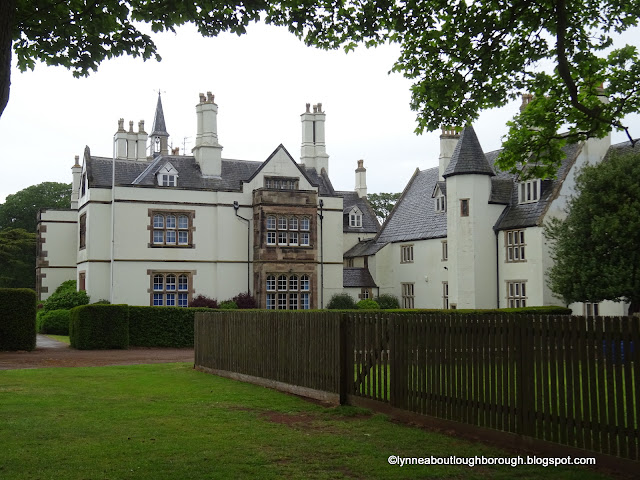
Grace Dieu Manor pictured in 2019

Later that same year, a Mrs Coltman attended the annual meeting of the Young Women’s Christian Association (YWCA), within which she held the position of Honorary Treasurer. I’m imagining that it was hard to keep servants in those early days of the First World War, so we see in February 1916 and December 1916, that Mrs Ada Coltman is again looking for a general servant to help at Radmoor House.

Positions on committees are often, I think, only held for around 3 years, and so it was that in December 1919 a Mrs Coltman retired from her position as Honorary Treasurer of the YWCA, at the time it opened new premises on Pinfold Gate, and held its 20th annual general meeting within. Their meeting place had previously been a room in the YMCA building on Granby Street, and for a short while, a room in the Wood Gate Baptist Chapel.

On 22nd May 1921, Ernest’s brother, John Charles Coltman died. At the time he was living at a house called ‘Burcot’ on Forest Road, which could perhaps be Burleigh Cottage? Probate was granted to his widow, Fanny Kate, and George Joseph Baldwin, chemist, on 28th July 1921, and effects were £10,811 13s.. 

A small snippet of information about Ernest appears, as he represents the Storer Ward between 1922 and 1925, as the nominee of the Civic Association, but a Mrs Coltman is still as busy as ever, and in April 1923, she is the Honorary Secretary of the Liberal Women’s Association, and at its annual meeting in 1923, she was pleased to report that membership of the Association had more than doubled.

On 2nd April 1927, John William Marsh of ‘Brooklands’, Forest Road, brother-in-law of Ernest, died. Probate was granted to his sons Ernest Huram Marsh, who was now a commercial traveller, and John Bernard Sidney Marsh a chartered accountant. Effects were £2,742 16s. 5d..

News of Ernest is difficult to find, as Mr Coltman could be any of the Coltman brothers or uncles, or even nephews, but I believe Ernest might have been on the Board of Guardians around 1929. Mrs Ada Coltman is a little easier to research, especially when she is again looking for an experienced cook/general servant, with a preferable age of between 22 and 25, as well as a girl of 15 years of age to train as a housemaid to help at Radmoor House. All three are expected to provide good references!

The next year, however, Ernest Edwin Coltman dies at his home, Radmoor House. He was 66 years old, and had been ill for a short time previously. Probate was granted on 3 May 1934, and he left an estate worth £30,422 8s. 3d. gross, with a net value of £27,256 10s. 1d.. Probate was granted to his widow, Mrs Ada Jane Coltman, his daughter Winifred Mary Bennett Coltman, his son William Ernest Bennett Coltman, and his nephew John Bernard Sidney Marsh (a chartered accountant), of High Street, Loughborough. Actual sums involved included £500 left to his daughter, £100 to his nephew, and £10 to William Albert Hobden, his gardener, if he was still in post at the time of Ernest’s death. The remainder was in trust to his wife, and upon her death, in trust for their son and daughter.

The following September, 1935, sees the death of Mrs Mary Agnes Coltman, wife of Huram, and step-mother to Ernest. At the time of her death she was living at ‘Longwood’ on Park Road, Loughborough, which was the name given to 57 Park Road, I believe. She left an estate of gross value, £31,665, net £30,759. She left some of her pictures, drawings, prints, engravings, and etchings to her male descendants, including William Ernest Bennett Coltman, the son of Ernest Edwin Coltman.

It was on 28th March 1936, that Mrs Ada Jane Coltman, widow of Ernest, of Radmoor House, died. Probate was granted on 15th July 1936 to William Ernest Bennett Coltman, her son, who at the time was an agricultural student at the Midland Agricultural College [4], and to Winifred Mary Bennett Coltman, her daughter, and John Bernard Sidney Marsh, a chartered accountant and her nephew. The effects were £1,851 3s. 4d. which was resworn to £2,061 12s. 11d..

Happier times followed when in 1938, Ernest and Ada’s 30-year-old daughter, Winifred Mary Bennett Coltman, married Robert Turner, aged 32, in Bakewell. On the 1939 register, they are recorded as living in Matlock, at Lumsdale Farm, where Robert is a dairy farmer. Interestingly, we saw that Ernest and Ada’s son William Ernest Bennett Coltman, was a student at the Midland Agricultural College, so it is no surprise to learn that in 1939, he is an unmarried dairy farmer at Home Farm, Lea in Derbyshire. The Morton family who are listed in the 1939 register, at the same property are a herdsman, his wife, the housekeeper, and their son. I believe that William never married, and I have been unable to trace any children for Winifred and Robert, although this doesn’t mean there aren’t any.

At the time of her death on 30th June 1983, Winifred Turner (nee Coltman) was living at 4 Moorside Close, Cromford. Probate was granted on 25th August 1983, and the effects amounted to £25,698. Almost 10 years later, William Ernest Bennett Coltman died, on 26th April 1993, when he was living at 18 Riggotts Way, Cutthorpe, Chesterfield. Probate was granted on 30th June 1993, and the effects were £188,636..

There are a few other interesting loose ends to be tied up, but I’m sure you’ve read enough for one day, so I will follow those up in a later post!

Thank you for reading!  

____________________________________

Notes

[1] The only photograph I have so far found of Ernest Coltman appears on page 4 in a book by David Kirkby called ‘The ‘Luffs’: the story of the Loughborough Town Football Club, 1886-1900’. Loughborough: Echo Press, 1995.

[2] I am not sure if this is John Charles Coltman, Ernest’s brother, or Charles Coltman, Huram’s brother.

[3] Mrs Mary Booth was born Mary Macaulay, daughter of Charles Zacharay Macaulay and his wife Mary Potter, and niece of Thomas Babington Macaulay of Rothley Temple. She married Charles Booth, who was known for his investigation into poverty in London. The couple lived for a time at Grace Dieu Manor, near Thringstone, a property built for the de Lisle family, and designed by architect William Railton. It became a Catholic school from around 1972, but closed in 2020.

[4] The Midland Agricultural College at the time William Ernest Bennett Coltman attended (the early 1930s) had moved from Kingston-on-Soar, where it had focussed on dairy farming as the Midland Dairy Institute, later becoming the Midland Dairy and Agricultural College, to the new site at Sutton Bonington, which is still there today. Perhaps this is why William became a dairy farmer. I wonder if Robert Turner had also attended the college? 

____________________________________

posted by lynneaboutloughborough

With apologies for typos which are all mine!

_______________________________________________

Thank you for reading this blog.

Copyright:

The copyright © of all content on this blog rests with me, however, you are welcome to quote passages from any of my posts, with appropriate credit. The correct citation for this looks as follows:

Dyer, Lynne (2023). So Who Was E. E. Coltman? Available from: https://lynneaboutloughborough.blogspot.com/2023/06/so-who-was-e-e-coltman.html [Accessed 25 June 2023]

Take down policy:

I post no pictures that are not my own, unless I have express permission so to do. All text is my own, and not copied from any other information sources, printed or electronic, unless identified and credited as such. If you find I have posted something in contravention of these statements, or if there are photographs of you which you would prefer not to be here, please contact me at the address listed on the About Me page, and I will remove these.

Blog archive and tags:

If you are viewing this blog in mobile format, you will not be able to easily access the blog archive, or the clickable links to various topics. These can be accessed if you scroll to the bottom of the page, and click 'View Web Version'. Alternatively, there is also a complete list of posts, which when clicked will take you to the page you are interested in.

Searching the blog:

You can search the blog using the dedicated search box that appears near the top of the blog when viewed in the web version. Alternatively, you can search using your usual search engine (e.g. Bing, Google, DuckDuckGo etc.) by following this example:

site: https://lynneaboutloughborough.blogspot.com/ “Radmoor House”

NOTE – the words you’re actually looking for must be in “” and the first of these must be preceded by a space

Thank you for reading this blog.

Lynne