Showing posts with label Shelthorpe House. Show all posts

Sunday, 15 December 2024

Shelthorpe House, the final years

In Shelthorpe House, the early years, we looked at the history of the house and its inhabitants from its beginnings in 1866, to 1889 when the Beardsley family left the house. Last time we investigated the time when the Taylor family lived at the house, and through the death of William Smith Dodgson who lived there from around 1911 to his death in 1918. 

This week, let’s look at the final years of the house, from about 1921 onwards.

At the time of the 1921 census, Charles Harold Hole (14th November 1876 – 20th January 1958) was living at Shelthorpe House, with his wife, Donna Eva Ida (December 1878 - 26th November 1957), and two daughters, Donna Mary Betty (b.1908), and Donna Joan Gladys (b.1913). The girls also had a brother, Charles Edward Peter, who was born in 1910, who was, perhaps, away at school at the time the 1921 census was taken.  

On the previous census, taken in 1911, the family – Charles, Donna Eva Ida, and their first daughter, Donna Mary Betty aged 2, and son Charles Edward Peter aged just 3 months - were recorded as living in Byfleet.

Charles Harold’s wife, Donna Eva Ida, was the daughter of Henry Rowland Ellison Grey, a commander in the Royal Navy, and his wife Julia Allen. Charles Harold was born and lived with his family in Quorn Lodge. His father was Henry Edward Hole, who was the son of Richard Hole who had had Shelthorpe House built back in 1866, just 10 years before Charles Harold was born.

Quorn Lodge, where the young Charles Harold grew up, lay adjacent to the Leicester Road on the right-hand side as the road headed to Quorn, and just before the house known as One Ash. Quorn Lodge was demolished c.1938, and what is there today is a modern property, with greenhouses, separated from a new housing development (Ploughlands) by the tiny road that used to lead to Woodthorpe, and lying between the Great Central Railway and the Leicester Road, and separated from One Ash by Terry Yardley Way and the One Ash roundabout.

Charles Harold, his wife, Donna Eva Ida, and two daughters continued to live at Shelthorpe House In 1938, when Quorn Lodge was demolished, a plant from the garden – a bird of paradise (Strelitzia Reginae) - was given to Charles Harold Hole for the garden at Shelthorpe House, and in the same year, the family offered a reward for the safe return of the family dog – a grey Schnauzer  - which had gone missing.  

In 1939, Charles Harold, wife Donna Eva Ida, and two daughters, Donna Mary Betty, and Donna Joan Gladys were recorded on the register as living at Shelthorpe House, and it was in this year, that both daughters joined the Women’s Land Army.

Later records are sparse, but one might assume that the family continued to live there, and this is confirmed by the probate records of both Donna Eva Ida, and Charles Harold who were ‘of Shelthorpe House’. Donna Eva Ida died on 26th November 1957, and probate was granted to daughter Donna Joan Gladys Hole on 14th March 1958, effects being £22,666 15s. 4.. Charles Harold died on 20th January 1958 at the General Hospital on Baxter Gate. Probate was granted 30th December 1958 to daughter Donna Joan Gladys, and effects were £102,715 16s. 7d..

Perhaps it was at the time of the death of their father that both daughters moved to the hamlet of Ossemsley, in Dorset, to a house called Ossemsley Fields (currently for sale for £1,800,000).

Both sisters died at Ossemsley Fields. The elder of the two sisters, Donna Mary Betty, died on 29th January 1983 and probate granted 9th June 1983. Effects were £165,289.. Donna Joan Gladys died on 21st March 1995, and probate was granted on 18th May 1995, with effects being £1,628,296 – quite a marked increase on the monetary value associated with the death of her sister. In between times, their brother, Charles Edward Peter had moved to Crockers Cott, Hartgrove, Shaftesbury, Dorset, where he died on 22nd August 1986. Probate was granted on 19th November 1986, and effects were £75,991.

And what of Shelthorpe House?

Part of the housing estate that faces Leicester Road

In their Bulletin No.4 of Autumn 1961, the Loughborough & District Archaeological Society as it then was, (now the Loughborough Archaeological and Historical Society) described Shelthorpe House as follows:

”… a nineteenth-century creation of a well-to-do family set in several park-like fields and given dignity and standing by the lodge and stablings against it.”

At the time of the report, all of Shelthorpe House and its outbuildings had vanished to make room for a housing estate, and the new houses were almost occupied. These new houses include Whaddon Drive, Wheatland Drive, Wilton Avenue, Avon Vale Road, and Croome Close. Shelthorpe House itself was situated in the middle of the Croome Close and Avon Vale Road.
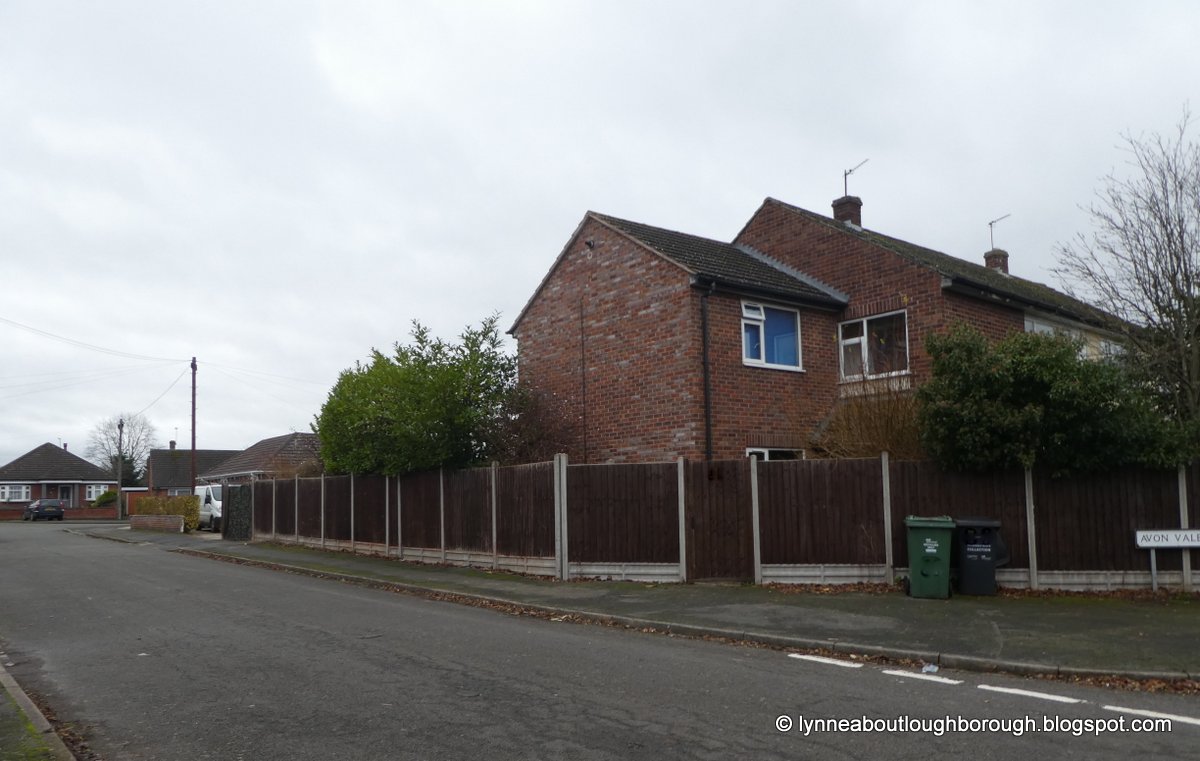


The end of Avon Vale Road, with the end of Croome Close in the distance


The end of Croome Close with Avon Vale Road to the right. Shelthorpe House was in between these two roads 


The gardens of Croome Close and Avon Vale Road, where one would have seen Shelthorpe House


The gardens of Croome Close and Avon Vale Road, looking towards the cemetery chapels

However, that is not the end of the story of Shelthorpe House …   

____________________________________

Posted by lynneaboutloughborough

With apologies for typos which are all mine!

_______________________________________________

Thank you for reading this blog.

Copyright:

The copyright © of all content on this blog rests with me, however, you are welcome to quote passages from any of my posts, with appropriate credit. The correct citation for this looks as follows:

Dyer, Lynne (2024). Shelthorpe House, the final years. Available from:  https://lynneaboutloughborough.blogspot.com/2024/12/shelthorpe-house-final-years.html [Accessed 15 December 2024]

Take down policy:

I post no pictures that are not my own, unless I have express permission so to do. All text is my own, and not copied from any other information sources, printed or electronic, unless identified and credited as such. If you find I have posted something in contravention of these statements, or if there are photographs of you which you would prefer not to be here, please contact me at the address listed on the About Me page, and I will remove these.

External Links:

By including links to external sources I am not endorsing the websites, the authors, nor the information contained therein, and will not check back to update out-of-date links. Using these links to access external information is entirely the responsibility of the reader of the blog.

Blog archive and tags:

If you are viewing this blog in mobile format, you will not be able to easily access the blog archive, or the clickable links to various topics. These can be accessed if you scroll to the bottom of the page, and click 'View Web Version'. Alternatively, there is also a complete list of posts, which when clicked will take you to the page you are interested in.

Searching the blog:

You can search the blog using the dedicated search box that appears near the top of the blog when viewed in the web version. Alternatively, you can search using your usual search engine (e.g. Bing, Google, DuckDuckGo etc.) by following this example:

site: https://lynneaboutloughborough.blogspot.com/ “Radmoor House”

NOTE – the words you’re actually looking for must be in “” and the first of these must be preceded by a space

Thank you for reading this blog.

Lynne

Sunday, 8 December 2024

Shelthorpe house - the middle years

Last time on the blog, we looked at some of the families who had lived at Shelthorpe House from its creation around 1866, when Richard Warner Hole and his wife lived there, through the time of Herbert and Clara Paget, to the time of Charles Lewes Dashwood, who by late 1880 had left the property. So what happened next?

The 1881 census return records William Frederick Beardsley with his wife, Roza Luis (nee Fernandes), who he had married in Wakefield in 1874, living at Shelthorpe House. The size of the property would have been eminently suitable for the Beardsleys who at this time already had five children, whose births had been registered at Barrow-on-Soar. I wonder if the lodge house, where George Thompson, the groom, and his wife, Caroline, and five children lived, was equally suited to a large family?

William and Roza’s family continued to grow whilst they were living at Shelthorpe House, and another son, Arthur was born in 1883, his birth being registered in Loughborough in the third quarter, i.e. July-August-September. Meanwhile, the groom associated with the house was now Joseph Cross and he and his wife Ellen, had a daughter Constance who was born in July 1883.

A puzzling piece of the jigsaw which came to light during this research was a newspaper article from 1884 which reported on a person called Fanny Fearey who lived at Shelthorpe House with her mother, and who accused someone of stealing her umbrella when she was in Sanders’ Vaults. I can only assume she was a servant?

While the Beardslesy were living at Shelthorpe House, Mrs Roza Luis Beardsley was very socially active! In August 1887 she opened the grounds of Shelthorpe House to the gathering of the Loughborough Habitation of the Primrose League of which she was the current Dame President. When the same group had their March 1888 meeting in the Oddfellows Hall on Sparrow Hill, Mrs Beardsley was re-elected to the position of Dame President, and Mr Beardsley was elected as Ruling Councillor.

Six months later, the Beardsleys were on the move! The birth of their daughter, Mabel in August 1888 was probably what prompted the move. And so it was that in March 1889 Shelthorpe House was again offered for sale, this time the auction taking place at the Bell Hotel in Leicester.

The auction details described Shelthorpe House as a freehold residential property, suitable for use as a family home, or a hunting residence. The accompanying cottage was well-built, there were outbuildings, and stables, all situated in gardens with orchards and paddocks, in all about 14 acres. The house itself had a spacious entrance hall, three large reception rooms, eight bedrooms, offices, modern conveniences, and good cellars. Included in the sale were the coach house, washing box, harness room with a loft above, loose horse boxes for about 7 horses, which could be extended to fit 10. The town of Loughborough was a short distance away, the Quorn Kennels were within about 2 miles, the Charnwood Forest was within easy reach, the railway service was excellent – 2 hours and 40 minutes to London, 20 minutes to Leicester, and 25 minutes to Nottingham - and the nearby schools were good.

The sale of Shelthorpe House was successful, and the price paid was £4,000. The new owner was John William Taylor, snr., the bellfounder, who with his extensive family had moved from Bellfoundry House on Freehold Street. In May 1889, the council agreed to extend the water main from Leicester Road to Shelthorpe House, on the proviso that Mr Taylor paid water rates at an annual amount which was equal to 10 % on the outlay. A year later, in April 1890, the building plans committee agreed to Mr Taylor building an entrance lodge to Shelthorpe House, which was described as his ‘new business premises’.

The Bellfoundry on Freehold Street

Like Mrs Roza Luis Beardsley, John William Taylor, snr., was involved in the Primrose League – although not as its Dame President!!! In July 1890, Mr Taylor hosted the annual summer fete of the Loughborough Habitation of the Primrose League and the local Conservative party in the grounds of Shelthorpe house which were profusely decorated, making a particularly pleasing background for photographs. In the evening the grounds were lit by Chinese lanterns.

At the time of the 1891 census returns, John William Taylor snr. was living with his wife, Eliza and both were aged 64. Offspring also living with them at Shelthorpe House were Mary E., aged 36; Charles T. aged 38; Edmund Denison aged 26; Horace Newcombe aged 23, and Owen D. aged 20. The were also 3 servants – Thomas Gent 16, Mary Bowley 28, and Caroline Taylor 24. One of John William and Eliza’s other children, Pryce, who wasn’t living with them, married Helena Gertrude Bardsley of Ivy Cottage, Loughborough, at the parish church, later that same year.

Members of the Taylor family supported good causes, and in 1894, Horace Newcombe donated 10s. to the church voluntary schools fund. Meanwhile, the lodge to Shelthorpe House was occupied by Alfred Rupert West and his wife Mary in 1897. In July 1899, the scholars of the Holy Trinity Sunday School had their annual treat in the grounds of Shelthorpe House and the Borough Band entertained, just 21 years after the consecration of the Holy Trinity Church. A few months later, produce from Shelthorpe House was included in the Harvest Festival decoration at the parish church of All Saints.

Loughborough had held an annual agricultural show since about 1848, and in the 52nd annual show of 1900, John William Taylor’s horse came in as the reserve in the brood mare with foal class. In the summer of 1901, the 10th annual wool sale was held in the Drill Hall, and Horace Newcombe Taylor provided fleece for sale. A few months earlier, at the time of the 1901 census, John William Taylor snr, and his wife Eliza, both according to the census return now aged 63, were living at Shelthorpe House with offspring, Edmund Denison aged 36, Horace Newcombe aged 33, and Owen J. aged 30. The family had three servants – Sarah Bowley aged 29, Rosa Aldridge aged 25, and Ernest Wilson aged 14. Alfred Rupert West, the gardener, was still living at Shelthorpe Lodge, with his wife and two daughters.

The grounds of Shelthorpe House continued to be made available for Primrose League events. However, due to poor weather conditions, the one in August 1905 wasn’t particularly well-attended, but people danced to the music played by the Borough Band, and listened to a concert from a group from Leicester.  

In March 1906, John William Taylor (25th March 1885 – 15th September 1916) came of age, but his 21st birthday wasn’t celebrated at Shelthorpe House, but rather at the bellfoundry, where the yard was covered and decorated with flags, and the tables and platform were decorated with flowers.

Sadly, only eight months after the celebrations of John William Taylor’s 21st birthday, John William Taylor, snr., his grandfather died, aged 79. In April 1907, the will of John William Taylor, snr., of Shelthorpe House was proved, and the estate valued at £47,614 gross.

Memorial headstone to John William Taylor, snr., Eliza his wife, and Edmund Denison Taylor, their son 

Whether or not Shelthorpe House was sold, or offered for let, I am not sure, however, by the time of the 1911 census return, the occupier was William Smith Dodgson, aged 50, a retired farmer and quarry owner from Monk Bretton in Yorkshire. He was living at Shelthorpe House with his wife Annie aged 45, son Rupert aged 6, daughter Olive aged 5, and stepson A. Norman Mullinson aged 23. There were also 5 servants listed.

William Smith Dodgson died on 7th January 1918. His will was proved on 22nd March 1918 by his widow Annie Augusta Dodgson, and Alfred Clegg, a solicitor. Effects were £80,158 17s. 11d. The address on the probate record was mistyped, and appeared as Skelthorpe House, rather than Shelthorpe House.

And here we will leave the history of Shelthorpe House and its occupiers until next time when we will consider the final years in the life of the house. 

____________________________________

Posted by lynneaboutloughborough

With apologies for typos which are all mine!

_______________________________________________

Thank you for reading this blog.

Copyright:

The copyright © of all content on this blog rests with me, however, you are welcome to quote passages from any of my posts, with appropriate credit. The correct citation for this looks as follows:

Dyer, Lynne (2024). Shelthorpe House – the middle years. Available from: https://lynneaboutloughborough.blogspot.com/2024/12/shelthorpe-house-middle-years.html [Accessed 8 December 2024]

Take down policy:

I post no pictures that are not my own, unless I have express permission so to do. All text is my own, and not copied from any other information sources, printed or electronic, unless identified and credited as such. If you find I have posted something in contravention of these statements, or if there are photographs of you which you would prefer not to be here, please contact me at the address listed on the About Me page, and I will remove these.

External Links:

By including links to external sources I am not endorsing the websites, the authors, nor the information contained therein, and will not check back to update out-of-date links. Using these links to access external information is entirely the responsibility of the reader of the blog.

Blog archive and tags:

If you are viewing this blog in mobile format, you will not be able to easily access the blog archive, or the clickable links to various topics. These can be accessed if you scroll to the bottom of the page, and click 'View Web Version'. Alternatively, there is also a complete list of posts, which when clicked will take you to the page you are interested in.

Searching the blog:

You can search the blog using the dedicated search box that appears near the top of the blog when viewed in the web version. Alternatively, you can search using your usual search engine (e.g. Bing, Google, DuckDuckGo etc.) by following this example:

site: https://lynneaboutloughborough.blogspot.com/ “Radmoor House”

NOTE – the words you’re actually looking for must be in “” and the first of these must be preceded by a space

Thank you for reading this blog.

Lynne

Sunday, 1 December 2024

Shelthorpe House – the early years

A newspaper report of July 1871 appearing in the ‘Leicester Journal’ suggests that Shelthorpe House was built for Richard Warner Hole and his family, around 1866. Richard was the son of Richard Hole (1804-1869) a solicitor and his wife Harriett (nee Handley Warner), and he, Richard Warner Hole, married Amelia Ann Brooks, the daughter of the late George William Keats Brooks and his wife Catherine Ann (nee White), stepdaughter of Randal Browne and his wife Catherine Ann (nee White, formerly Brooks) in 1863.

Sadly, before Richard and Amelia had started a family, at midday on 26th November 1868, Richard suddenly died. Although he had been ill for some time, he had spent three months in and around Prussia, and appeared to have improved. However, once home he succumbed to an ‘internal rupture of blood vessels’. According to the ‘Leicester Mail’, Richard Hole was part of the hosiery firm of Cartwright and Warner, and was exceedingly popular and respected in Loughborough.

Richard Warner Hole's will was proved on 22nd May 1869 in Leicester by his widow, Amelia Ann, and William Coleman, gentleman of Loughborough, just a few months before the death of his father, Richard, on 10th July.

The memorial to Richard Warner Hole, and, I believe, his wife Amelia Ann.

And so it was that in August 1870, Shelthorpe House was for sale, being described in an advert as a handsome residence with 13 acres, 2 roods and 14 perches of land and situated within a mile and three-quarters of the famous Quorndon Kennels. There was a splendid entrance hall, a drawing room of 28 ft by 22 ft, a dining room of 27 ft by 22 ft, a billiard room, a library and conservatories, as well as spacious bedrooms, and every modern convenience. The sale included the adjoining lodge, excellent stables, carriage, and harness rooms.

The 1871 census taken on 2nd April, shows that Shelthorpe House was occupied by Herbert Byng Paget and his wife, Clara (nee Fraser Robinson) who were married in February 1869, and had a 10-month-old son, John. However, the house was again put up for sale by auction in July 1871. The description of the house in the 1871 advert was similar to the earlier one:

It was beautifully and pleasantly situated about one mile from the town of Loughborough and adjoining the high road to Leicester. The details suggest that the property was built by Richard Warner Hole for him and his family, only 5 years earlier, which would have been about 1866, and only two years before his death, at quite some expense, and was only for sale because of his death. At the time the house comprised a handsome entrance hall, a drawing room of 29 ft by 22 ft, a dining room of 27 ft by 22 ft, and a library of 16 ft by 16 ft.. The rooms above these, one of which was a billiard room, were the same size. There were also many other rooms including bedrooms, bathroom, and domestic and servants’ quarters and offices, along with a conservatory and vineyard. The grounds amounted to about 14 acres, and the whole was approached by a carriage drive from Leicester Road. Included in the sale were the stables, carriage and harness rooms, and the kitchen garden, all of which adjoined the entrance lodge. The auction details stressed that the house was in one of the most favourite localities of the Midland Counties, in the heart of the Quorn Country. The house was currently being let until next Lady Day, but the furniture could also be included in the sale if required.

Whether Herbert Byng Paget bought the house, or leased it is unclear, but in 1872, when his and Clara’s daughter was born, she was born at Shelthorpe House. Whatever the situation, Mrs Amelia Hole removed her furniture from the house and put it up for sale in 1873. The following year, Mrs Paget was looking for a good cook to cater for a small family, and was paying wages of between 18 and 20s..

In January 1874, and January 1875, Herbert and Clara Paget had another two daughters born at Shelthorpe House. In May 1875 the family were holidaying in Pensarn, Wales, where they stayed at a property on Marine Terrace.  

Records show that Herbert Byng Paget and Clara were still living at Shelthorpe House in 1876, but in May 1877 the house was advertised for let, unfurnished on a yearly tenancy, or for a term of years. There was an option to lease the extra 11 acres too, as well as extra stabling, although the house did come with stables for seven horses, and a cottage for a groom. The house was described as being in the centre of the Quorn and Donnington Hunts, 12 miles from Leicester, 17 miles from Nottingham, and only three hours from London.

It is clear that by July 1877, Herbert Byng and his family were moving away from Leicestershire. As such, he is selling his horses, corn bin, chaff cutter, oat crusher, two sheep troughs, a pig trough, iron standards, and wire fencing. In the words of the auctioneer “The young stock are well grown, show plenty of size and substance, and are in good condition. ‘Epworth’ would make a very valuable country stallion, as he is a sure stock getter and good tempered.” The 12 lots could be viewed at Shelthorpe House, upon application to the groom, and all except lots 10, 11, and 12 were available without a reserve price. 

In 1887, Herbert and Clara Paget were living at Farley House in Matlock with their children John Byng (1 June 1870); Isabel Clara (19 July 1871); Margaret Byng (2 Dec 1872); Georgina Byng (20 Jan 1874); Dorothea Byng (21 Jan 1875 – 4 June 1875); Beatrice Mary (3 July 1877), and Victoria Bertie Innes Byng (9 Feb 1879).

Meanwhile, back at Shelthorpe House, in November 1879, the new occupier was Charles Lewes Dashwood (1833-1891). He was the son of Samuel and Caroline Dashwood of Stanford Hall. Samuel was the rector of Stanford from 1800-1827, and Charles was letting out his farm at Stanford Hill. Charles Dashwood was still occupying Shelthorpe House in 1880, which was also the year that Richard Hole’s widow, Amelia Ann, married Sir Joseph Neale McKenna.

By June of 1883, Charles Dashwood was no longer living at Shelthorpe House, and another family had moved in. 

Do pop back to the blog next week and find out a bit more about who was living at Shelthorpe House.


____________________________________

Posted by lynneaboutloughborough

With apologies for typos which are all mine!

_______________________________________________

Thank you for reading this blog.

Copyright:

The copyright © of all content on this blog rests with me, however, you are welcome to quote passages from any of my posts, with appropriate credit. The correct citation for this looks as follows:

Dyer, Lynne (2024). Shelthorpe House - the early years. Available from: https://lynneaboutloughborough.blogspot.com/2024/12/shelthorpe-house-early-years.html [Accessed 1 December 2024]

Take down policy:

I post no pictures that are not my own, unless I have express permission so to do. All text is my own, and not copied from any other information sources, printed or electronic, unless identified and credited as such. If you find I have posted something in contravention of these statements, or if there are photographs of you which you would prefer not to be here, please contact me at the address listed on the About Me page, and I will remove these.

External Links:

By including links to external sources I am not endorsing the websites, the authors, nor the information contained therein, and will not check back to update out-of-date links. Using these links to access external information is entirely the responsibility of the reader of the blog.

Blog archive and tags:

If you are viewing this blog in mobile format, you will not be able to easily access the blog archive, or the clickable links to various topics. These can be accessed if you scroll to the bottom of the page, and click 'View Web Version'. Alternatively, there is also a complete list of posts, which when clicked will take you to the page you are interested in.

Searching the blog:

You can search the blog using the dedicated search box that appears near the top of the blog when viewed in the web version. Alternatively, you can search using your usual search engine (e.g. Bing, Google, DuckDuckGo etc.) by following this example:

site: https://lynneaboutloughborough.blogspot.com/ “Radmoor House”

NOTE – the words you’re actually looking for must be in “” and the first of these must be preceded by a space

Thank you for reading this blog.

Lynne

Sunday, 6 October 2013

Lost houses ... found!


Carnegie Library

Where else but … in the library!


Read on to find out  more ...!

 
Just one of the display cabinets in the library
If you’ve been reading my blog recently, you’ve probably gathered that I’m quite keen on houses, and had long been planning a blog post on Loughborough’s grand houses that had been demolished, but the display by those wonderful volunteers in the local studies library in town have beaten me to it! However, I think I can still provide some information here on the blog, since I would imagine that not all of you will be able to get to the exhibition in the library. If you do live close enough to visit, I would highly recommend this exhibition which has been put together by the wonderful folk who volunteer in the local studies section of Loughborough public library. I believe the exhibition is on throughout September and October 2013, and possibly through November, so you've still got time to go along.

Books in one of the display cabinets


I’d better warn you that as I neither took any photographs of these houses when they existed, nor do I own the copyright to any old photographs of these old properties, this blog post is a little light on pictures. I did, however, with permission from the library staff, take some photographs of some of the display panels to give you an idea of whats on offer.


Display panels in the library

I would personally like to thank all the volunteers in the local studies library - Brian Williams and Brian Bentley, to name but two -  for putting up this particular display and for all the other displays for which they have been responsible. Without all their hard work in mounting these displays, being there to staff the local studies library and to help people with their enquiries on the local area, this facility would probably cease to exist.


Some of the houses that are covered in the display in the library include the following (underlining indicates a hyperlink to a photograph on the web):

Houses A-J

·        Atherstone House - Ward’s End (built 1780. The Atherstone family were in the dyeing industry and owned Bleach Yard and some land that is now part of Queen’s Park. Dr Bagnall ran a boarding school there, in the late 19th century, and Dr Briggs bought the house in about 1880. It was demolished in January 1938 and was replaced by Atherstone House, which was the Income Tax Offices, next to the Moon and Bell, now the Wetherspoon’s pub.

·        Bell Foundry House - in Freehold Street, was built around 1895 for John William Taylor and his wife Annie Mary. It was designed by Joseph Aloysius Hansom, of Hansom cab fame and designer of the former public lending library in Leicester.

·        Burleigh Fields House - if you’ve been reading this blog regularly, you’ll know that this was the home of Dr Eddowes. Located off Radmoor Road, the house was built about 1890 and it’s a classic 18th century house. Later in its life, Burleigh Feilds House became a hostel for Loughborough College students, and after being left empty for a while was demolished in the early 1980s.

·        Burleigh (Burley) Hall –  In the Civil War, Henry Hastings used it as a Royalist military outpost. By 1711, Henry Tate, High Sheriff of the Country, had made many improvements. The Tate family lived here for 150 years and gave generous sums of money to the building of Emmanuel Church. The last residents were the Coltman family before the Hall was acquired by the university. The garden arbour bearing the arms of the Tate family, once surmounted by two urns and the Tate crest, still survives on the university campus but the main house was demolished in 1961 and the estate now forms part of Loughborough University. Amongst other things, important 18th century delft “ship” tiles were lost during the demolition. The 18th century dovecote with 144 nesting boxes was later used as a small mill, and was demolished at the same time as the hall itself. However, the medieval estate cottage survives and can be found near the site of the former hall.

·        Cotes Park House – only fragments of this house remain. This was a grand Tudor mansion on banks of river Soar at Cotes, the construction of which was probably begun under Sir William Skipworth, who inherited the lordship of Prestwold, Cotes, Hoton and Burton after 1588. His son, Henry, was the County High Sheriff in 1636. On May 28th, 1645, he entertained King Charles I, at Cotes on his way to besiege Leicester (the Royalist army was billeted in Loughborough). Parliament fined him £1,1114. On losing his estates after the Civil War, Sir Christopher Packe, Lord Mayor of London, acquired them [perhaps this explains the naming of the Packe Arms at Hoton]. In about 1770, the great mansion was almost totally demolished by fire, and the family steward was suspected of some involvement. He absconded with the estates rent money. Later tradition spoke of haunted cellars, which the “vulgar” believed still contained immense quantities of the old strong beer.  The ancient tithe barn was also demolished.

·        Forest Road Cottage - this was the home of Thomas Clarke, of Clarkes Dye Works but is now the site of student flats [not sure if this might be Forest Court].

·        Garendon Hall - was built on the site of Garendon Abbey, an Abbey which was founded in 1134, and fragments of it were embodied in Garendon Hall. The building of the Hall began just after 1684 when the estate was bought by Sir Ambrose Phillipps. After 1737 his grandson, also Ambrose Phillipps, made further designs on it and as a gentleman architect is noted for his classical studies and other buildings in the park. The final remodelling was done by E. W. Pugin (1864-1866, son of Augustus Welby Northmore Pugin, architect of Mount Saint Bernard Abbey) for Ambrose Lisle March Phillipps de Lisle. Military occupation during WW2 led to the neglect and eventual demolition of the Hall in 1964, and its building material was used for hardcore for the M1.

·        Head Gardener’s cottage - was situated in Garendon Park. The statues outside were originally in the hall before it was remodelled and given a new Mansard roof in about 1864. The cottage was demolished just after WW2, having been neglected during the military occupation of the estate.

·        Georgian town house - this was opposite the Ramada Hotel (previously known as the King’s Head), on High Street. In the late 19th century it was home to William Grimes Palmer, surgeon, and later to J.W. Storey, dental surgeon. It was demolished in the 1950s.
 
·        Glebe Farm - Meadow Lane. The last inhabitants were Joe Smith and his family. He was the last “Meadow Reeve” for the town’s great meadows, overseeing its usage and branding cattle on it. This was the last farm in the town centre and dated back to the Middle Ages. It was demolished around 1950.

·        Island House – built about 1804 for William Palmer a provisions merchant from Sileby. Alan Moss, one time Mayor of Loughborough, bought it in 1939 for £1,400 and presented it to the town corporation. It was used in WW2 to house refugees and later for library storage. It was demolished in 1965 to make way for an extension to the library.


Houses K-Z
 
·        Knightthorpe Hall and barnthis was an important medieval site whose lordship once belonged to Hugh le Despenser (founder of Loughborough market in 1221), Henry, Lord Beaumont and many others. The hall itself was only a fragment of a much larger building whose foundations were often found in the adjoining orchard. It was said to contain 60 bedrooms! The last inhabitant was Miss M.J. Moseley and despite her wish that it be preserved, the hall was demolished between 1968 and 1970.

·        Knightthorpe Lodge - or Quaker farm, was off the Old Ashby Road. It was demolished in 20th century and replaced in the late 20th century by the de Lisle retirement home and housing estate.

·        Medieval Merchants House – this was on the corner of Church Gate and Lemyngton Street. Reputedly lived in by Thomas Burton, around 1456, and in 19th century converted into the headmaster and caretaker’s house of the once adjacent Church Gate  School. The house was demolished 1964.

·        Minister’s House - on Sparrow Hill/Wood Gate and lived in by the Minister of the United Methodist Free Church. It was built in 1817 originally for the Particular Baptists, and demolished 1962. The site is now retirement bungalows.

·        Moat House - was a medieval hunting lodge on Loughborough Parks.

·        No. 12 Forest Road - was the home of John Trafford Bailey, butcher, of 2 Church Gate – on the site of toady’s Trinity Methodist Church.
 
·        Regent House - was on the corner of Derby Road and Regent Street. In 1880-1907 it was the home of George Hodson, who was, amongst other things, a surveyor to board of health, and responsible for the damning of the Blackbrook reservoir. The house was demolished shortly after the end of WW2. One of the stone lions (National Exhibition Lions) was transferred to no.60 Leicester Road, which was the home of the two Misses Cayless sisters (which was also demolished and now right hand part of Arnolds Motorcycles and ID Signs & Printing stands on the site, Maison Green, the hairdressers being an original building that was next to no.60). The sisters were big RSPCA supporters and were descended from the 19th century cricket bat and sports manufacturers established in the town in 1810.

·        Shelthorpe House - was built around 1850. In 1889 John William Taylor bought the property for £4000 and at one time Mrs Hole lived there. It was demolished in 1959.

·        Southfields (House or Hall) - built by William Paget in 1835. It was a family residence, but was considerably altered and enlarged when under the municipal control of Charnwood Borough Council.

·        Entrance lodge to Southfieldscorner of Leicester Road and Southfields Road, Demolished late 20th century after the estate and the house were purchased by the Town Corporation in 1947.
 
·        Thorpe Cottage - which was off Derby Road, between Alan Moss Road and Knightthorpe Road, dates back to the 18th century. It was last occupied by the Palmer family and demolished in the 1920s.


Loughborough Carnegie Library


     Watch this space over the next week as there may be an unscheduled posting before next Sunday!

      If you have any topics that you'd like me to cover, please comment below! Thanks.

      Bye for now!