Sunday, 3 August 2014

Spotlight on Middleton Place

Mysteries of Middleton Place uncovered

Origins


Much of Loughborough in the latter part of the 19th century was given over to farms and farmland. According to Charnwood Borough Council (2006) the area on which Herrick Road, Park Road, and Middleton Place is built, was originally mostly made up of trees:


Coming up to the entrance to Middleton Place


“The estate consisted of several fields, some 17 acres with fruit trees and hovels (presumably agricultural sheds), lying between Far Park Lane [now Park Road] and Middle Park Lane [now Beacon Road] ... It was divided into 50 plots of about a third of an acre each.”


In 1875 bylaws were introduced that specified room sizes and ventilation standards. This meant that the building of small, plain terraced houses, like those on Albert Street and Victoria Street, and Oxford Street, Paget Street etc., stopped and houses became more flamboyant, with elaborate bay windows and being built in a grid, with, what I would call a side passage, but with what you, coming from Leicestershire, would call a side entry.

Middleton Place is named after Mr Middleton, who died in 1878, who may also have been at one time the landowner. Edward Chatterton Middleton was the joint owner of Loughborough Bank, with one Mr Craddock, and his son, Edward William Craddock Middleton. The Borough Council (2006) suggests that Mr Middleton [snr.] died leaving behind debts of about £10,000: This is an over-simplification of the situation, but as this is not the main subject of my discussion here, I refer you to Day (1986) where the matter is fully investigated, and to newspaper reports of the time (Times 1878, London Gazette 1878 & 1882), which make for interesting reading.  

In 1881 Mr Middleton’s debt was cleared, possibly by the surrender of the aforementioned land, which was then freed up for the building of houses, and by 1889 the first six houses had been built on Middleton Place. According to a 1901 map of Loughborough, Middleton Place was called Middle Park Lane, but people recorded their address on the 1901 census returns as Middleton Place. I suspect that the naming of the street was at least in part in honour of the previous landowner: As well as being a respected banker, he was also a Justice of the Peace, Sheriff of Leicestershire, Paymaster to the Leicestershire Yeomanry Cavalry, and laid the foundation stone of the cemetery chapel.

Build, build, build

Right to left: Nos. 3-13
So, these first houses to be built on the street were built on the shorter arm of Middleton Place:
If you imagine the street to be like a letter r then the houses were on the top line of the r.
There were six of them, and they were numbered 3, 5, 7, 9, 11, and 13. There must have been some reason for this numbering, but I admit, that had it been me, I would have used numbers 1-11! 


At the time of the 1891 census, all the houses except number 3 were occupied: If there were any occupants, perhaps they were away visiting relatives!

Right to left: Nos. 53-59 

Right to left: Nos. 61-67
By 1901 a further 14 houses were constructed, in three blocks of four and one of two. These were on the long arm of the street, the upright of the r. These houses may have been built about the same year, and all were characteristic of the Victorian era, but each group had subtle differences from the others. Some (numbers 53, 55, 57, & 59) were quite distinctive, with elaborate wrought ironwork above the bay windows, and church window-style doors.


Others (61, 63, 65 & 67) all had bay windows, were slightly taller than 53-59, with rounded arches over the doors, and with the house name carved into shaped stone above the door (Sunnydene, Lyndene, Rosedale & Avondale), possibly called epigraphs!


Right to left: Nos. 77 to 83 

Numbers 77, 79, 81, and 83, have very similar doorways to 61-67 and, like 61-67, the house names – Mystrayla, Jesmond, Danesford, and Cresford - were carved into a stone block above the doorway, but these were a more plain rectangular shape. NB There is no number 75.


Right to left: Nos. 85 and 87
Assuming that the final two houses, numbers 85 and 87, have not been modernised, whilst still being Victorian, they appear to have broken away from the mould of the previous builds, being three-storey properties, with rooms in the attic, decorative woodwork slats above the doorways, and ornate ridge tiles and chimney pots. Although the date carved into the stone between the two houses is 1900, the properties do not appear on the census of 1901, not even being listed as unoccupied.


Victorian house-building often followed a pattern, and this might help to explain why the properties on Middleton Place were built in twos or multiples of twos. Apparently, houses were often built in pairs, and were owned by the same person, who lived in one of the pair, and rented out the other one.  

Left to right: Nos. 22-24

It wasn’t until 1925 that more house-building followed, with the construction of two almshouses. Numbers 22 and 24 were two bungalows, built by the Edgar Corah Trust. They were different from previous builds because, as well as being bungalows, with low roofs and pebble-dashed walls, they were built on the opposite side of the road from all the previous properties.


To the right of the lamppost - No. 69

Fill the gaps, please
Rather like today, if there were a gap between properties, it was likely to be filled, and this was indeed the case in 1930 when a single property, number 69, was tacked on to the end of one of the rows of terraces. However, this still left a little bit of space, so, between 1941 and 1945, a pair of semi-detached houses were built to completely fill that gap.

Right to left: Nos. 71 & 73


Right to left: Nos. 45 - 51

There followed a hiatus in house-building on Middleton Place, presumably due to the restrictions imposed after the war which stated that you had to prove a need to build new accommodation, and even then there were serious restrictions on building materials. However, in 1959, after the passing of the Housing Act 1957, two pairs of semi-detached houses were constructed on the corner with Oliver Road. In order to accommodate the corner, one pair was set back, well off the road.
Right to left: 15-23


A row of five dwellings, built in 1977, was attached to the first row of six Victorian terraced houses that were built, on the short arm of the road. The juxtaposition of these relatively modern properties, with their obvious low ceilings and up-and-over garage doors, with the stately redbrick, bay-windowed Victorian buildings is quite telling. 


The newest home

Joining the dwellings on the less well-developed side of the street, in about 1986, was another bungalow. So, similar only in that it was a bungalow, but in other respects quite different, with its brick construction, different roof tiles, and concrete and brick garden wall. This was the last of the new-builds on Middleton Place, at least, for the twentieth century!


No more room?


Over the years, and into this, the twenty-first century, there have been a number of developments on the street, with lots of improvements and extensions.

If you look closely at some of the earlier pictures you can see evidence of late 20th/early 21st- century loft conversions, rebuilt garden walls, and changes to windows.

So who lived on the street?


It is unlikely that the occupants of the new houses built on Middleton Place in the early 1900s were the owners; most would have rented their property. It is interesting to note the types of people who were living here and how these changed as the street grew. According to the 1891 census, when there were only five houses lived in, the inhabitants were not natives of Loughborough, with some coming from as far afield as Mauritius! Amongst the occupations of these folk were a schoolmaster, a teacher of classics, and a Methodist minister.

In 1901 about half the people who lived on the street were from Loughborough, and their jobs reflected the industry of the time: there were people who worked in the hosiery industry, an ironmonger and a blacksmith, as well as a nurse, a dressmaker, a watchmaker, and several apprentices.
  
By the time of the 1911 census, slightly more than two-thirds of the house-dwellers were originally from Loughborough, the rest coming from a whole range of areas, including Ireland, Scotland and Wales, Lincolnshire, Yorkshire, Lancashire, Derbyshire, Norfolk, and Staffordshire. The range of occupations they were involved in represented a cross-section of the community: There were several people living under their own means, and quite a number of the inhabitants had live-in servants. If you were to wander down Middleton Place in 1911 then you’d expect to be sweetened up by the local confectioner, measured up by the local tailor, or photographed as you perambulated! Other occupants of the street were engineers, apprentices, draughtsmen, joiners, and brick/tile manufacturers, as well as The Headmaster of the Art School and The Principal of the Technical Institute!

Today, you will find schoolteachers and university staff, librarians, local government workers, NHS employees, landscape gardeners, and retirees living on the street. Some have been living here for many years, while a few are fairly new to the street. Interestingly, number 51 was inhabited by the same owner from the time the house was built in 1959, to well into the 21st century.

And what of the garages?

Part of the wooden garage block


Apart from the houses, there are also a number of garages on Middleton Place. Some of these are wooden and appear along the street, whilst there is a group of other wooden ones opposite numbers 3-13, which actually look rather spectacular.


One small group of garages on the street


Also, there is a group of 1970s garages with up and over doors, opposite numbers 15-23 and 45-49. Before these garages were built the area housed the school kitchens where they cooked meals for all the local schools. After that, the area was used for a coal merchants depot (possibly called Martins, owned by Edgar Martin's father). Later in the twentieth century, the garage area was the headquarters for a taxi firm, but this was short-lived as house owners in the area complained about the persistent noise, somewhat ironic as now the area seems to be regularly used as a car park by a Loughborough taxi firm!


What does the future hold?
Loft conversion in progress, 2010

We cannot know what changes will be seen on Middleton Place in the future. A recent application to build a pair of semi-detached houses beyond number 85, where there are currently several garages, was refused. The work on a loft conversion at number 49 has been completed, and a loft conversion and extension have recently been added to number 73 and have also been requested for number 71.
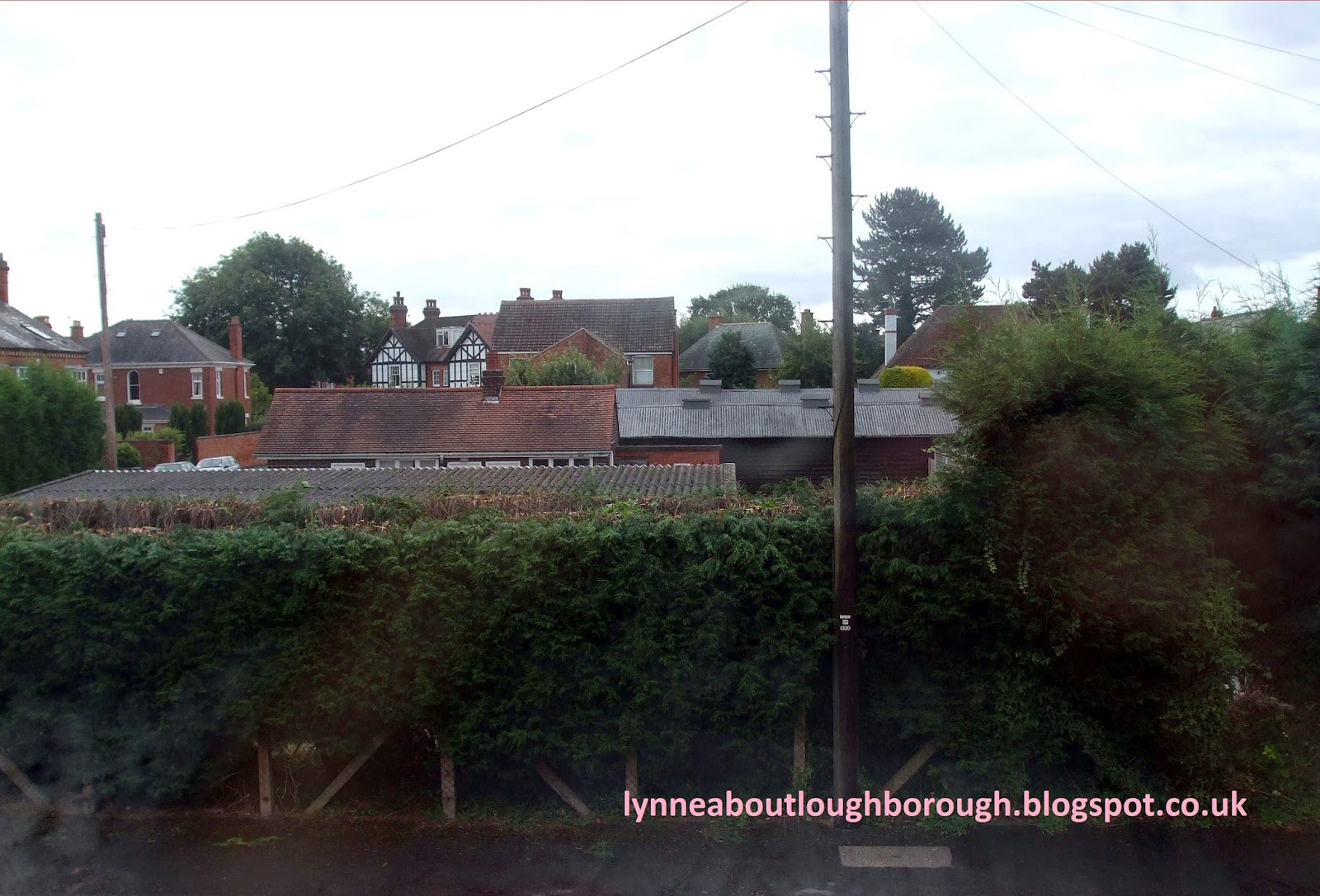


Loft conversion completed


The owner of the land opposite numbers 15-23, which is currently given over to garages died a couple of years ago, and the land passed to his beneficiaries; so one does wonder what may be in store for this land, but so far all that appears to have happened is a general clear-up of the area, a small fire in one of the skips, and the Leylandii trees have been severely cut back!


And in a similar vein, the vista changed with the building of a house on a plot on Herrick Road previously occupied by a bungalow.


But, whatever may happen, the history of this street will be documented, through street directories, census returns, and other sources, like newspaper articles, and this will help to put the present day and the future into context for its inhabitants. Hopefully, it will remain the quiet backwater that it is currently.

Text slightly updated as new information comes to light (2022).

Further posts on Middleton Place are available: on the VE-Day celebrations in 2020 contains information about past residents, and the Woodward family once lived on Middleton Place. Middleton Place has also been used as a case study for the blog about the streets of Loughborough.


Saturday, 26 July 2014

Carillons!

The New Jersey connection

Firstly, please accept my apologies for not being around to blog for the last few weeks. A combination of factors have meant that blogging hasn’t been possible recently.

I last left you reading about The Temperance Society in Loughborough, and promising you an article on Temperance in Nanapantan, as I had seen sight of two different postcards of two different buildings in Nanpantan purporting to be temperance establishments. That article is almost ready to go, but I have been seriously distracted of late, and would love to share my latest, most amazing discovery with you. Please read on …

At a recent family gathering, I was re-acquainted with some relatives I hadn’t seen for many years, and we spent quite some time catching up with what had been happening over the years. My aunt happened to mention that she and her husband had been over to the States about 7 years ago, and my uncle regaled us with stories of the aeroplane having to circle the American airport because of thunderstorms in the area, which made it impossible to land. So, the pilot, having done quite a few circles, calmly announced that unless he was able to land soon, he would run out of fuel and the plane would turn into a glider. Luckily, there was an airforce base very close by and the plane was able to land there and re-fuel, and waited on the ground for a couple of hours whilst the storm passed. Eventually, the plane was able to take off, lined up with the runway, and made a landing in what seemed like only a couple of minutes.

Anyway, I can hear you asking, “What on earth has this got to do with Loughborough?” Well, thing is, my aunt and uncle were going to visit my aunt’s brother, my uncle, who emigrated to the States in about 1960, and as far as I can remember, I’ve only seen him once since then, in about 1969. They had obviously found the visit incredibly exciting, and were telling me stories of what they’d done. My aunt is fairly quietly spoken, and I don’t hear particularly well, and having been away from Wales for many years, I admit I struggled a little in following the conversation. At one point she seemed to be talking about a “carilan”, and it took me a few seconds to realise that this was how they pronounced “carillon”!

My ears were now well-tuned in! This year was the first time that I had volunteered and helped out at the museum in our own carillon, in Queen’s Park, and I cannot really explain why I did this, but hearing my aunt talk about a carillon in the States, I was all agog. Imagine, my even greater surprise when I realised that she was telling me that the man who played that carillon was, in fact, my uncle! Three times a week, he climbed the 100 steps up to the playing chamber and played for the church service! The fact that my uncle played the carillon was quite astonishing, but the fact that he climbed those 100 steps three times a week, was also astonishing, given that he is aged 80!!

My aunt also said that there had been a recording of him playing on the internet, so the first thing I did when I got home was scour the internet for this video, and, of course, I found it! My first surprise was to see a picture of my uncle: I could have been looking at my own father, had I not known this was his brother!

My second surprise came when I listened to the video and heard my uncle say, in an American-tinged-with-Welsh accent:

“The bells were made at the Taylor Bell Foundry in Loughborough, England, and each of the bells has the Taylor Foundry mark on the back.”

So, a carillon in Morristown, New Jersey, has 49 Taylor’s bells which are played regularly by my uncle!

Well, I know life is full of coincidences, but this one has really made an impression on me!!

But I won’t tell you that the Vicar who presided over the event the family we were attending, was the Vicar of St Mary’s Priory in Abergavenny: This is an extract from their website [my embolden]:

“The Bells

St Mary’s has a ring of 10 bells, the tenor weighing in at 25 cwts 18 lbs. At the dissolution of the monasteries in 1536-39, the parishioners bought the four bells, weighing a total of 45.5 cwt, which hung in the Priory Church.

The tenor was recast in 1603 and the 3rd recast in 1666, by the Purdues of Bristol. The treble was recast in 1706 by Abraham Rudall.

The bells were augmented to five in 1835 and then to six in 1845 by Jeffries & Price of Bristol. To commemorate Queen Victoria’s Jubilee in 1887, the bells were rehung and augmented to eight by Llewellins & James of Bristol, the same firm recasting the tenor (19 cwt) in 1893.

Finally, in 1947, these bells were replaced by the present magnificent 10 from the Loughborough foundry, in thanksgiving for the end of the Second World War. They are considered to be the finest ring of 10 bells in Christendom and bell-ringers from all over the country come to ring the changes.

The medieval 6th of the old ring, dated 1308, is preserved in the nave and inscribed ‘May the bell of John last many years’ – perhaps indicated that this was one of a peal of bells donated by John de Hastings, the man responsible for the first restoration of the Priory Church.”

Anyway, here are a couple of links featuring my uncle and the carillon in Morristown that you might be interested in following up:

A video of my uncle talking about and playing the 49-bell carillon in St. Peter’s Episcopal Church in Morristown, New Jersey

A little bit of info about Morristown, New Jersey


A picture of my uncle

Another picture of my uncle

And another!

Umm, and another! 

Another picture of my uncle and aunt

A video of Santa Claus (aka my uncle) landing in Morristown

And a video of Mr and Mrs Claus ...

I’m hoping to resume weekly blogging shortly, so do pop back again next week ...

Thanks for indulging me!


Sunday, 22 June 2014

Loughborough and the opening of the Temperance Hall

The opening of the Temperance Hall in Loughborough town centre.

New Temperance Hall for Loughborough: Memorial stone-laying.


From: Leicester Chronicle and Leicestershire Mercury, Saturday 2nd September, 1899, pg 7, issue 4632

"An important epoch in the temperance movement in Loughborough was marked on Wednesday when the memorial stones of the new temperance hall and café were laid. Some years have elapsed since the proposal to erect a building of this nature was first made, and a company was formed in 1895 for the purpose. The scheme did not, however, take practical shape till last year, when stimulus was given to the movement and an earnest effort was decided upon. A bazaar was held in October, opened by the late Duchess of Rutland, and as the result of the encouragement received, the promoters determined to make a start towards realising their desires without further delay. A site had already been secured at the corner of Cattle Market and Granby Street, and plans were invited for a building to be erected thereon. The designs of Mr Albert E. King, architect and surveyor, were accepted, and contracts were signed in May last. Messrs. Main, Kendall, and Main undertaking the brickwork and Mr W. Corah the woodwork. Mr King’s plans are for a building which will unquestionably prove a creditable addition to the public architecture of the borough, while it promises at the same time to be admirably adapted for the purpose for which it is intended, making the best use of the somewhat awkwardly-shaped site on which it is being erected. It is to be a brick and terracotta building in renaissance style. The bricks are of local make, coming from Messrs. G. Tucker and Son, and the terracotta is supplied by J.C. Edwards, Wales. The tow main entrances are at the opposite corners of the Cattle Market front, that nearest Granby Street leading to the café, and that at the Devonshire Square end to the public hall. The café provides a large entrance hall and buffet from which is reached the first-class temperance dining-room with all the necessary accommodation. There is a ladies’ room with separate accommodation and also a second-class dining-room, to which a side entrance is provided in Granby Street. Beyond this, on the Granby Street side are a committee room and small hall capable of seating about 100 people, these rooms being also available for use in connection with the café as private dining-rooms when required. A large kitchen, serving-room and scullery are at the rear of the premises, with an open shed for keeping purposes and ample larder accommodation in the basement, where are also the coal ad heating chambers. The main entrance to the first-floor is as already stated, from the Devonshire Square corner, a flight a stone steps leading to the large public hall. A small private entrance is also arranged from Granby Street. The public hall is 57 feet by 31 feet 6 inches. A gallery is provided at the front end, and a platform at the other end, with ante-rooms on each side. The hall will seat about 500 persons. At the back is a retiring room and billiard room, to be used in connection with the café or as a gentlemen’s retiring room, and there is every accommodation on the floor in the way of lavatories. The public hall is so designed that it will be available for use for large dining parties in connection with the café, direct communication with which is obtained.   

Before the proceedings on Wednesday afternoon the principal participants, and a number of the temperance workers of the town, gathered at the Town Hall, then, crossing to the site of the new building, where an awning had been erected, and flags were flying. Among those present were the Lord Mayor and the Lady Mayoress of Sheffield (Ald. and Mrs W. E. Clegg) the Mayor and Mayoress of Loughborough (Ald. and Mrs H. Coltman), Revs R.F. Handford, S.P. Carey, J. Stephenson, W. Dewdney, W J. Tomkins, Ald. A. A. Bumpus, Councillors, W. Morris, Messrs. H. Clemerson, G. T. Levers, J. Peer, H.E. Young, A. Richards, J.B. Main, H.H. Taylor, W. T. Tucker, T.J. Webb, F.W.H. Bumpus, T. Bass, Diggett (Kegworth), H. Corah, R. Vickers, T. Heath, Albert E. King, W. E. Lewis, and T.G. Mills (Leicester).

The proceedings commenced with the hymn, “All hail the power of Jesu’s name”, after which the Rev. W. Dewdney read a portion of scripture, and the Rev. J. Stephenson offered prayer.

Mr J. Peer announced the letters of apology from Sir Wilfred Lawson, M.P., Mr W. S. Caine, Mr H. J. Wilson, M.P., the Dowager Duchess of Sutherland, Mr W.P.Hartley, Lady Henry Somerset, Lady Carlisle, Ald. George White, Mr Arnold F. Hills, Mr A.C. Eccles, Mr C.L. Rothera, Mr T. Seldon, Mr W.C. Williams and Councillor J.S. Vorley. Mr Peer stated that Mr and Mrs Boden of Derby, had each taken £100 worth of shares in the company. The cost of the building, he added, would be about £3,500, and it was hoped that before long it would be open, and in working order, so that the public might see that the directors and promoters had made every provision that was possible to deal with this particular question. Donations had been received and shares taken up by several more people that day, and Mr J.B.Braithwaite, the chairman of the Brish Company, had sent a donation of £100. (Applause.)

The Lord Mayor of Sheffield, said it afforded the Lady Mayoress and himself very great pleasure in being there to take part in that interesting ceremony. He regretted he was unable to attend the bazaar, but he was glad to hear it was so successful, and that £430 had been realised for the objects for which it was promoted. He was glad to hear further, and congratulate the temperance workers of Loughborough upon the fact that they were uniting so harmoniously in the prosecution of a crusade against one of the most blighting influences in the country, and he expressed the hope that their success would be greater than it had ever been before. He thought that everyone was agreed that the evils this country suffered in connection with intemperance were greater than those of any other influence in existence, and, therefore, when he found temperance people combining to prosecute this crusade, against strong drink, he could not but believe that the effect of that combination could only be for the advancement and well-being of the country, and he always had the greatest possible pleasure in taking part in any such movement. (Applause.)  He further congratulated the friends on the position of the site, which, he understood, was almost in the centre of the town, and, judging from his small opportunities of observation, he thought a hall like that was very essential for the welfare and prosperity of the borough. He congratulated the friends on their courage in choosing a site like that, from which he could see on all hands houses licensed for the sale of intoxicating drink which caused so much mischief and degradation in the country at large. He was glad to hear that the movement was already an assured success, and he echoed the sentiment of the rev. gentleman who prayed that there might be no fatal or other accident while the building was on the way. He hoped it would be a boon and centre for all sections of the temperance party in Loughborough, and also for all other societies who had for their object the uplifting and elevating of the people of Loughborough. (Applause.)

The Lord Mayor then laid the first memorial stone, the Mayor of Loughborough laid the next, Miss Young, on behalf of the British Women’s Temperance Association, declared the third well and truly laid, Mr H. Clemerson performed the ceremony in respect of No.4 on behalf of the Total Abstinence Society and the Band of Hope Union, Mr John Peer laying the last on behalf of the Good Templars and Rechabites.

After a collection had been made for the building fund, the Mayor of Loughborough proposed a hearty vote of thanks to the Lord Mayor and Lady Mayoress of Sheffield for their kindness in coming that day to help them. They were greatly indebted to them for having come when they must be very busily engaged in work at home. They knew, however, that the Lord Mayor was heart and soul in this movement, and had been in it for many years. (Applause.)

The vote of thanks was warmly accorded, and the Lord Mayor, in reply, remarked that he had been a total abstainer all his life and should remain so for the rest of his days. For the more one saw the more determined one ought to be to do everything one could to stop the mischiefs and miseries which undoubtedly flowed from the excessive consumption of intoxicating drinks. It used to be said that hard work could not be accomplished on cold water, but that idea had been altogether exploded. He might add that though he found his position a very onerous one, and his work kept him engaged in fourteen or fifteen hours a day, he was quite able to accomplish without the help of intoxicating drink. (Laughter and applause.)

Cheers for the Lord Mayor and Lady Mayoress, and the Mayor and Mayoress ended the proceedings and a move was then made to the Town Hall where tea was provided.

After tea a number of short speeches on temperance and its work were given.

The Mayor said that was a red letter day for temperance workers. For some years they had looked forward to building a temperance hall, and now he believed they would have one well worthy of the cause and of the town. It would be a place where they could carry on their work as they pleased instead of being on sufferance wherever they went amongst the various churches of the town. They felt it very desirable that the strength of the workers in the town should be united and they expected the hall would be of great service to them in this respect.

Mrs J. C. Coltman, representing the B.W. T. A., in the course of her address urged that they should ask themselves whether they were doing all they could to stem the tide of the drink traffic. Their great aim was to see less of the drink trade, and by the erection of the Temperance Hall they hoped that it would go a long way towards that object. It remained with the temperance people of the town whether the undertaking paid. (Hear, hear.)

Mr H.F. Young spoke of the need of co-operation, and urged that those who sympathised with their efforts should show their sympathy in a practical way.

The Lord Mayor of Sheffield said he had no doubts that if the hall was well managed the wants of the working-classes properly catered for, the rules were not too stringent, and the doors were opened to the people they wanted, if they did this he had no reason to doubt that philanthropy and, at any rate five per cent, would go further.  Turning to the present aspect of the temperance movement, Ald. Clegg, in his opinion, said they had no reason to be pessimistic. It was true that they spent more last year in intoxicating drink than in any other period of this country’s history. It was also a lamentable fact that large companies, and consequently pecuniary interest was being combined against the temperance movement. In spite of these things, however, in his opinion the temperance movement was never in a more satisfactory condition than it was in the present day, and the difficulty was to find fresh arguments to induce people to come over to their side. It was a remarkable fact that the arguments adduced at the commencement of the temperance movement still remained good. The foundation principle laid down then was that strong drink was unnecessary, and it was detrimental to the public health, and though that argument had been elaborated many thousands of times, it still continued the fundamental argument of the temperance movement. They were sometimes asked if temperance people were justified in the position they had taken up. In answer to that he pointed to the fact that everyone was dissatisfied with the present position of the licensing laws, and everyone admitted that something must be done. The difficulty was what that step should be. He could not but express his profound pleasure at the report of the Royal Commission, in his judgement, one of the most important reports published during the last 25 or 30 years with regard to temperance. The evidence given before the Royal Commission was overwhelmingly in favour of the temperance movement, and was not contradicted in any important particular by the other side. He had no hesitation in expressing the opinion that future legislation on the temperance movement, whether by the present or by a Liberal government, would be based on that report. – Ald. Clegg then dealt with a number of the recommendations and declarations in this report, and then stated that parliament had repeatedly tried to remedy the admitted evils of the licensing system. Parliament having failed so often, temperance people made one simple suggestion, and that was that parliament should give them a turn, and go in for local veto. (Applause).

Rev S.P. Carey, Rev R. Handford, and Rev W. J. Tomkins having addressed the meeting, Mr H. Clemerson proposed, and Mr J. Peer seconded, a vote of thanks to the speakers and the ladies responsible for the arrangements for tea. This ended the proceedings. The total proceeds of the day in aid of the building fund was £160."
 
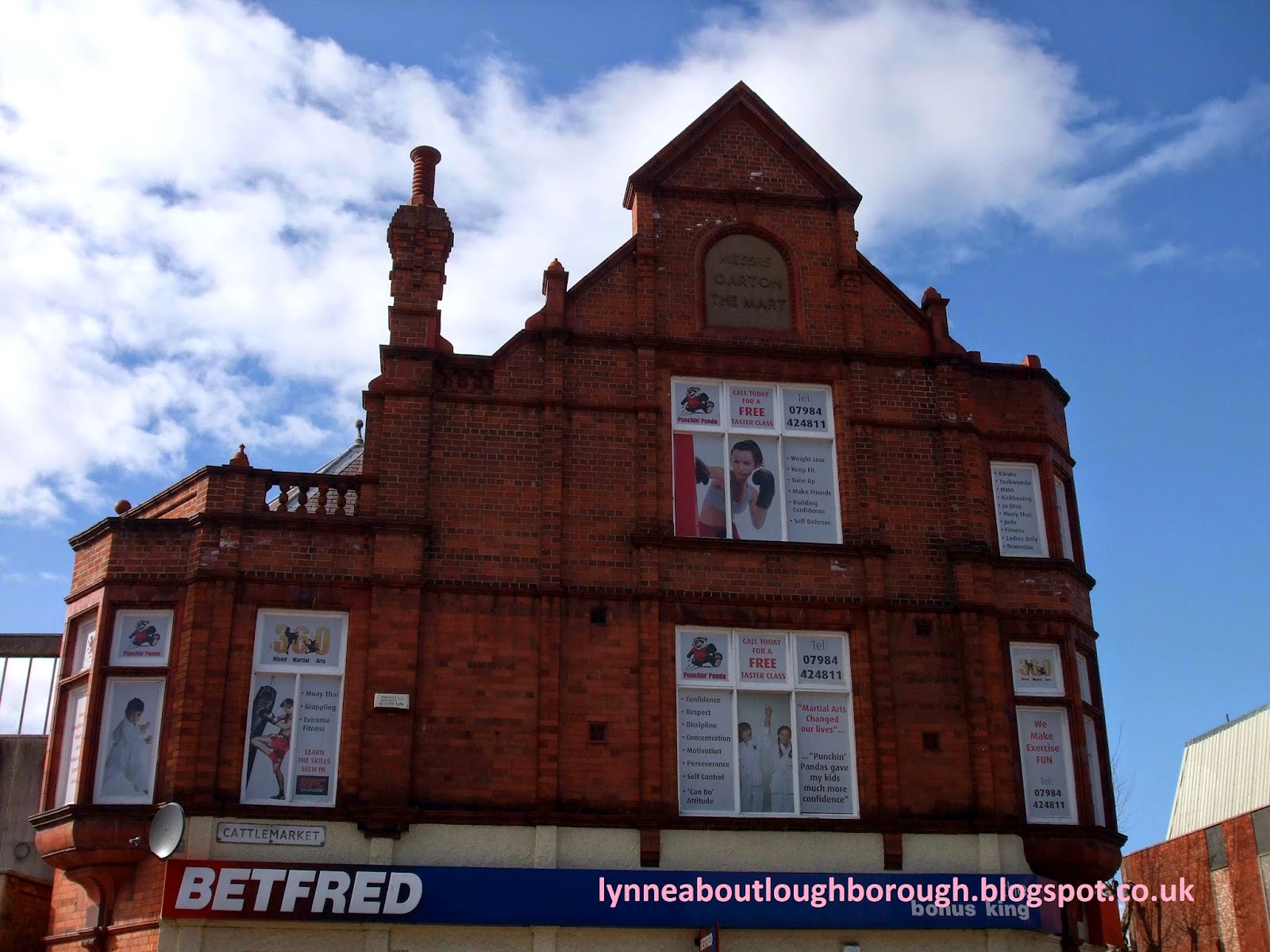
The hall was used for a variety of functions, including meetings, concerts and performances. Later it became the YMCA, and was used to hold bazaars, before becoming the Palais de Danse. Gartons the auction mart moved here from Baxtergate: They, along with partner Amatt, were previously in the building that is now the Grade II listed building that was next door to the Baxtergate Hospital, and was previously used as the nurses’ home and as a medical information centre, and is possibly destined to be a restaurant chain if the cinema plans come into effect. The temperance hall was known as Garton’s Hall as early as September 1924, but it’s not clear if Gartons had already moved there by then. Here are a couple of pictures of the modern-day building.


Sunday, 15 June 2014

Loughborough and the Temperance Movement

Loughborough and the Temperance Movement

Yet again, I find myself being influenced by something I recently read on Facebook! This time the topic was temperance, and the original Facebook post was enquiring about the temperance hotel in Nanpantan. I did a bit of research and discovered a few things, but more of that next time!

The topic of this post is the Temperance movement in Loughborough town centre. From previous research I’ve done, I was aware of the Temperance café in Loughborough town centre, and sometimes include it in one of my walks, so this seems like a good time to share some of my findings with you. As usual, this is a piece of uncompleted research – I’ve got so far, but run out of time!

The Temperance movement was a social movement, which, at the very least, strongly urged people to drink alcohol in moderation. At its most vehement, the movement was extremely critical of  excessive alcohol consumption, and even promoted complete abstinence. It also used its political influence to pressure the government to enact new alcohol laws to regulate the availability of alcohol or even to completely prohibit it. Loughborough was part of that Temperance movement and had had a Temperance Society since at least 1841 and meetings were reported in the local newspapers as being attended by numerous, respectable people. Outdoor meetings were also held.

It may not therefore surprise you to learn that on Wednesday 24th May 1893 there was a Temperance demonstration in Island House Park grounds. Island House was in Granby Street, where the 1960s extension to the public library is, and in 1893, Queen’s Park did not exist, only being created in 1897 to commemorate the Diamond Jubilee of Queen Victoria, so what is now Queen’s Park was the gardens of Island House. The newspaper report in the “Leicester Chronicle and Leicestershire Mercury” of Saturday May 27, 1893, (page 3, issue 4294), which paints a wonderful picture of the whole event, is worth quoting here in full:

“On Wednesday a great temperance demonstration was held in the Island House Park, Loughborough. Soon after one o-clock the members of the various Bands of Hope in connection with the Free Churches of the worn assembled at their respective Sunday schools, from whence they proceeded in marching order to the Market Place, carrying aloft their banners and bannerettes, on which were various mottoes and devices. The spectacle in the Market Place was certainly a very imposing one, and was witnessed by crowds of people. Selections of music, sacred and secular, were played by the Nottingham Sax-tuba Band, conducted by Mr Hindley, after which the Bands of Hope processioned through the main thoroughfare of the town. The procession, which was headed by the Sax-tuba Band, was of great length, and was followed by multitudes of holiday-keepers, many of whom had come from Leicester, Nottingham, Coalville and other surrounding towns, to the Island House grounds. Twp large tents were erected on the grounds, in which the visitors were provided with refreshments. There were the usual outdoor games, and at six o’clock a gymnastic display was given by Sergt. Allen of Leicester. At seven o’clock a public meeting was held in the park. Mr H. Clemerson presided, and amongst his supporters on the platform and around the stand were Councillor Vorley (Leicester), Mr J. T. Nowell (U.K.A.), Rev. J. C. Nesbitt (Leicester), Mrs Phillips, Revs. W. S. Spender, C. Taylor, R. Brewin, R. J. Clifton, A.C. Haycock, T. Anderson, H.F. Francis, F. Co, Mrs Walker, Mrs Edmunds, Mrs Simpson, Mrs Cross, Miss Clarke, Miss Young, Councillor W. Morris, Messrs. J. Peer, J. Adcock, J. Walker, Belton, W.T. Tucker, J. J. Yates, J. Main, R. Viccars, G. Barker, C. Argyle, H. Beeby, T. Levers, W. Topping, S. Caldwell, A. Richards, H.F. Young, Cross, Lacey and others.

The proceedings opened with the singing of temperance hymn, after which The Chairman, in the course of a brief address, congratulated the meeting on the splendid gathering they had seen that day. He felt that the progress of the temperance cause was due to the Bands of Hope, and if they were spared to hold a similar demonstration next year he hoped they would come together in even larger numbers.

Mr J. T. Nowell, the agent of the United Kingdom alliance moved: That this meeting records its warmest thanks to her Majesty’s Government for their patriotic action in introducing into the House of Commons the Liquor Traffic Local Control Bill, a measure deeply affecting the well-being of the country, and calculated, if it passed into law, to secure a great diminution of the evils resulting from intemperance; and this meeting urges the Government to put forth its full power to ensure the passing of this measure into law. That the chairman sign a petition in its favour, to be forwarded for presentation to the House of Commons.

Mrs Phillips seconded the motion in and able address.

Rev. C.J. Nesbitt supported, and said there was the greatest possible reason why the temperance party should now bestir themselves. When the publicans were getting up so large a fund to oppose the Bill it showed that they were staggering [Applause]. Speaking of the drinking habits of the people, the rev. gentleman said they were simply the result of following the fashion. He urged his hearers to be leaders instead of followers of fashion. They could help the temperance cause by all abstaining themselves.

Councillor Vorley supported the resolution, and contended that the people had a perfect right to say whether they would have public houses amongst them or not, The Government Bill simply gave the voters power by a two-thirds majority to veto the renewal of licences, and was therefore a very moderate and reasonable measure. [Applause]. He called upon the people of Loughborough to help the temperance party to strike a blow at the liquor traffic from which it would never recover. [Applause].

The resolution was carried unanimously.

Rev. H. F. Walker moved, and Rev. W. T. Spencer seconded, a vote of thanks to the speakers and the chairman, which having been adopted, the proceedings terminated. Dancing afterwards took place, and was kept up until dusk.” 
 
The Temperance movement became so important in Loughborough that a dedicated building was proposed, and a company was formed in 1895 for the purpose of creating the meeting place. Fund-raising activities took place and eventually, in 1899, the Mayor of Sheffield laid the foundation stone of the new Temperance Hall. But that’s a story for another day …


Sunday, 8 June 2014

If you go down to the park today, you're in for a big surprise!

Sculptures in Queen's Park


First it was legs in the ponds, then it was all things bell-related. Today, it is remembrance!

For the last couple of years the Loughborough In Bloom initiative has commissioned sculptures to adorn the pond area of Queen's Park, outside the Charnwood Museum.


In Queen's Park in 2012 we saw some imaginative legs, partially submerged in the ponds, representing synchronised swimmers, for this was the year that Britain hosted the Olympic Games. These three, two metre high sculptures made from Jesmonite and finished in masonry paint, were created by Loughborough University students, Lucy Buzzacott, Mike Jones and Abi Ross. Entitled "Synch or Swim" and representing grace, artistry and athleticism, they were unveiled on 21st June 2012. Once the sculptures had been in-situ for a year, they were, for quite some time, kept in the park warden's area, and made an interesting end to a guided walk entitled "Loughborough's hidden gems"! In 2014, they again made the news as they were featured in one of the Royal Horticultural Society's major displays at the RHS Flower Show in Cardiff from April 11-13, 2014. What an accolade.


The Great Paul bell casing

In 2013 the Great Paul bell case was mounted on a permanent plinth outside the museum, on the edge of the pond, and to complement this, Ian Tricker, a Loughborough University student, created three bell-related sculptures. At 6 feet tall, these sculptures formed a group entitled Sound of Time, the individual ones being called: Rings True (a group of tuning forks), The Quiet Quartet (a nest of bells) and A Spoken Word A Heard Sound (a half-bell and clapper which was engraved with poems on the theme of bells).


This year, 2014, commemorating the 100th anniversary of the start of World War I, the three sculptures created by Amelia Seren Roberts, a Loughborough University student, represent the different stages of mourning, beginning with helplessness, through confusion and ultimately to acceptance.

The sculptures have actually been in place in Queen's Park for a little while, and each time I've gone into the park I've been intrigued by the shrouded shapes stretching skyward. I was thrilled that by an amazing stroke of luck I was able to be present at the unveiling of Amelia's works!


The speeches
 After a short introduction by the Mayor, Councillor Paul Day, the Chairman of the Loughborough In Bloom Board gave us the background to the sculpture initiative, and heartily congratulated Amelia on her achievements. He was followed by Amelia's tutor from the university, Peter Beacham, who thanked Amelia and all those involved in the project.


Thence to the unveiling! There were a lot of people present, and everyone of them seemed to have a camera and wanted to take pictures, so it was a little difficult for me to take half-way decent pictures, so I've picked out those that I think best represent the ceremony!


Like snakes, these sculptures shed their skins and left them behind.


Each sculpture is accompanied by an information board.


Three-dimensional sculptures with two different finishes.

Confusion (and Amelia)
Helplessness


Acceptance (with Great Paul bell case behind)


Helplessness
Confusion


Acceptance

So, that's three great years of wonderful sculptures in Queen's Park. I'm wondering what earth will be produced for 2015, but in the meantime I'm going to enjoy the spectacle of these remembrance works. Gems certainly, but certainly not hidden!!

Swimming in the park warden's area!


Sunday, 1 June 2014

Loughborough pottery market


A few weekends ago I was lucky enough to have the chance to visit the annual pottery market in the market place in Loughborough. It was a veritable blast of colour, a whirlwind of activity, bunting abounded, the atmosphere was electric and it was a truly inspirational experience!  

I was quite overwhelmed by the sheer number of stalls, mostly selling pottery, but not exclusively, as there was a small selection of food, drink and plants. I was also quite surprised by the number of local craftsmen who were present …

Of course, I couldn’t resist buying a few things, and I would post some photos of what I bought, but most of them are for presents and the event hasn’t arrived yet, so that would spoil the surprise for my recipients. Instead, I’ll show you a few pictures of what the event was like, and give you a few links to the people who were showing their wares. Do bear in mind though that I went just before people were closing up, so although there don’t look to be many people around, actually it was a very busy event.

Sue Barton
Lindsey Thomas


Simon Shaw
 
Lynne Fox 


Steve & Sandra Smith

Michael Redmond


Barbara Butterworth

 
Guy Routledge

Zoe Petrie

http://www.zoepetrie.co.uk/
Martin Shackleton


Ben Brierley


I also picked up a few leaflets detailing future events, including the Loughborough craft trail, and some events a bit further afield.