Sunday, 11 August 2019

Ernest Gimson and Andrew Carnegie

You may be wondering why I am writing a blogpost about Ernest Gimson and Andrew Carnegie, and what on earth these two people might have had in common. 

Both questions are easy enough to answer, but let's start with the latter!

Andrew Carnegie died on August 11th 1919: Ernest Gimson died on August 12th 1919. Thus, August 11-12 is the centenary of the deaths of Gimson and Carnegie, both of whom have a strong connection to our area.

As a librarian by day, and a customer of libraries for the past 55 years, the name Andrew Carnegie has been familiar to me for most of my life. However, it wasn't until I did my Leicestershire your guide training in 2012-2013, and on our exam walk one of my fellow tour guides mentioned our public library, and that he himself had been awarded a Carnegie Scholarship to study at university, that I started to wonder about Carnegie, the man and the frequency with which his name seemed to appear.

So, Carnegie, born in Scotland in 1835, emigrated to the United States with his family when he was in his very early teens. He began working as a bobbin boy in a cotton mill, followed by a stint as a telegraph messenger, then telegraph operator, then superintendent with part of the Pennsylvania railroad. With his steady job, Carnegie was able to trade in shares, and to cut an enormously long story short, he made a very large fortune in the US steel industry. At one time, Carnegie was allegedly the richest man in the US, but, of course, by the time he died he had given away much of his fortune.  

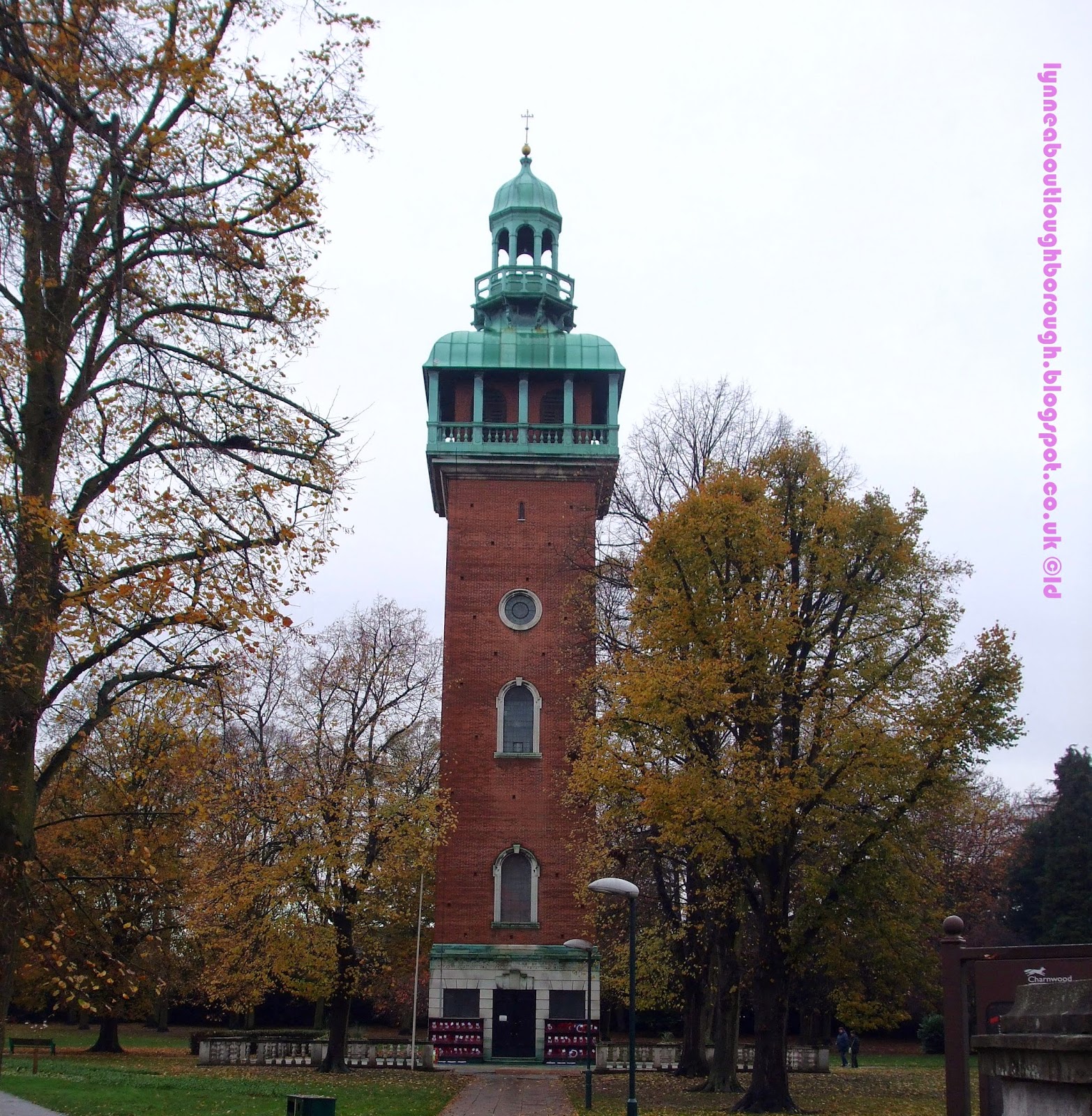
Probably one of the most familiar things associated with Andrew Carnegie are the many public libraries in the UK that bear his name, which includes Loughborough's own! Ours was designed by local architects Barrowcliffe and Allcock, was constructed in 1903-5 and, like many others, is a listed building. I think the first library in Loughborough was a subscription library down on Baxter Gate, which was only available to those who could afford to pay the subscription. The first free public library was on the corner of Ashby Road and Green Close Lane.

Carnegie's connection with these libraries is that he donated some, if not all of the money towards the cost of the buildings. Seems like the idea of match funding has been around far longer than the Heritage Lottery Fund, since Carnegie would only donate the building costs as long as the local authority paid to equip the building and for maintenance costs.  It's possible that Carnegie's strong feeling about the education and welfare of less fortunate children was influenced by his own experience, particularly when Colonel James Anderson made his own personal library available once a week to working boys. 

Not only did Carnegie donate money to the building of libraries - in the UK and the US - he also funded a range of other buildings, like museums (e.g. the Melton [Mowbray] Carnegie Museum), concert halls (e.g. the Carnegie Hall in New York), educational institutions like Carnegie Mellon University in Pittsburgh, the Carnegie educational scholarship as mentioned above, and the Carnegie Medal for children's literature in the UK.

Some Carnegie libraries in the UK are now under threat, as council budgets contract, for example in Abergavenny where a recent plan was to erect a mezzanine level in the market hall for use as a library, while other libraries are being renovated (like Harrogate public library) while others remain as they are, like ours.

Kendal Carnegie Library

Loughborough Carnegie Library


Moving on to Ernest Gimson, we find that he was born in Leicester, son of Josiah Gimson, the engineer and iron founder who owned the Gimson Engineering Company which in turn owned the Vulcan Works. Ernest Gimson was in training to be an architect with the well-known Leicester architect, Isaac Barradale, when he heard William Morris, a leader in the arts and crafts movement, deliver a lecture at the Secular Hall in Leicester. So influenced was he that Gimson moved to London to work as an architect and designer, following Morris's ethos. 

Together with his friends and colleagues, the Barnsley brothers, Gimson moved to Gloucestershire where they worked until Gimson's death in 1919. During his lifetime, Gimson built three homes for his close relatives in Leicestershire, one of which became a home for Donald Gimson, and is our local Stoneywell Cottage, up at Ulverscroft. It's now run by the National Trust and really worth a visit. It's a lovely cottage, full of arts and crafts furniture and decoration, with lots of local slate.          


And there I must leave you for the week!

Below are some useful and interesting websites with more information:

Andrew Carnegie: pioneer, visionary, innovator.

Restoration of Harrogate public library, 2019 and before restoration

Statutory Listing for Harrogate public library

Listing for Abergavenny public library

One proposal for a replacement library for Abergavenny (the Morrisons store has been built but not the library: there have been other proposals which include creating a mezzanine floor in the market hall to house the library, but the link is not currently working).


You are welcome to quote passages from any of my posts, with appropriate credit. The correct citation for this looks as follow:

Dyer, Lynne (2019). Ernest Gimson and Andrew Carnegie. Available from: https://lynneaboutloughborough.blogspot.com/2019/08/ernest-gimson-and-andrew-carnegie.html [Accessed 11 August 2019]

Take down policy:
I post no pictures that are not my own, unless I have express permission so to do. All text is my own, and not copied from any other information sources, printed or electronic, unless identified and credited as such. If you find I have posted something in contravention of these statements, or if there are photographs of you which you would prefer not to be here, please contact me at the address listed on the About Me page, and I will remove these.
Thank you for reading this blog. 

Lynne   

Sunday, 4 August 2019

Holiday connections and anniversaries

Continuing with the holiday connection theme ...

In my last post I'd got as far as sharing with you some connections that made me think of Loughborough whilst I was in Launceston. Hmmm, this was actually the first day of my two-week holiday, and it was the 'let's stop off here for a break' place, in what was to be a 350-mile journey. My thinking now is that if I took a whole blog post to share the revelations from a 2-hour visit to Launceston, then it will take me about 14 blog posts to cover the rest of the holiday, so below are the edited highlights!!!

My most exciting find was on a walk in the countryside near St Ives. In previous years we've walked the coastal paths, so this year we decided to visit some of the inland footpaths and some of the small country lanes. For some reason or other, which now escapes me, I'd gone on this walk carrying with me as little as possible - so no camera, and no phone - so, of course, we had to go back another time for me to take some photos. Hence, late one evening, these are what I took:


Now, I haven't done any research into these initials, but I'm supposing they are Edward Hain, an MP for St Ives, and the owner of a shipping company. Like James Eadie, of the brewery company, remains of which affiliation can be seen on the former Station Hotel in Loughborough, Edward Hain had gone into the tea business, before switching careers. 

The significance to Loughborough of these initials is not in Edward Hain, but in Edward Hands who originally lived on Burton Walks, but moved to Castledine Street, where, if I remember rightly, he had the house extended and his initials inscribed in a plaque. Sorry for the poor quality of the photo:


Driveway into the former home of Edward hands


Edward Hands initials on Castledine Street
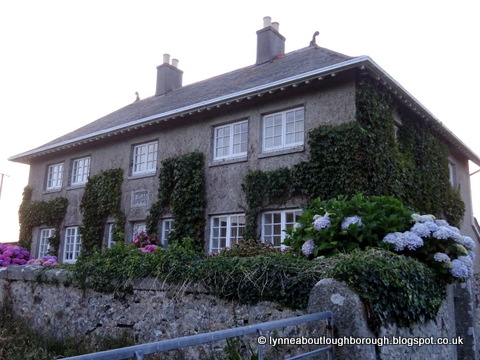
A couple of other connections from St Ives include this attractive house name a lovely Celtic design painted on slate, the other connection being that my children all went to Holywell School:


And just one more, so as not to bore you!! This beautiful blue enamel street sign is oh so similar to some in Loughborough, like Park Street and Charnwood Road, but what a difference - white walls and red brick walls!


The other thing which I wanted to mention today is that today is actually the 6th anniversary of this blog, which I first started on 4 August 2013! Hard to believe it's been going that long! The initial impetus for creating it still holds true: I want to promote Loughborough and show the world what's good about our lovely town, through stories of its history, its current events and everything in between. I'm so pleased you're still with me!

In the spirit of promoting knowledge and a love for our town, I've written a couple of books - 'Loughborough in 50 Buildings', and 'Secret Loughborough', and I'm having a signing event for the latter at the Old Rectory Museum on Saturday 10th August, between 11am and 3pm - everyone welcome - no purchase necessary - and if you've already bought a copy I'd be happy to sign it. 

You are welcome to quote passages from any of my posts, with appropriate credit. The correct citation for this looks as follow:

Dyer, Lynne (2019). Holiday connections and anniversaries. Available from: https://lynneaboutloughborough.blogspot.com/2019/08/holiday-connections-and-anniversaries.html [Accessed 4 August 2019]

Take down policy:
I post no pictures that are not my own, unless I have express permission so to do. All text is my own, and not copied from any other information sources, printed or electronic, unless identified and credited as such. If you find I have posted something in contravention of these statements, or if there are photographs of you which you would prefer not to be here, please contact me at the address listed on the About Me page, and I will remove these.
Thank you for reading this blog. 

Lynne  


Sunday, 21 July 2019

Everywhere reminds me of Loughborough

So glad to be back in sunny Loughborough after a couple of weeks away in Cornwall! As ever, things I've spotted in the many places I've visited during the holiday have been constant reminders of our lovely market town. Indeed, there have been so many interesting connections, I could use up a whole year's worth of blog posts sharing my findings with you ... but I won't!!

So, a quick look at the similarities between Launceston - which was where we broke our long journey - and Loughborough. Both were small market towns, both played a part in the Civil War. 


Costume in Launceston Museum

Launceston Museum
Costumed mannequin at one time in the Old Rectory Museum

The War Memorial in Launceston rises up in the centre of the town, unlike ours which is in the beautiful setting of Queen's Park, and is now accompanied by a memorial to Loughborough's war horse, Songster. 


The town hall clock in Loughborough is pretty special: the clock I spotted in Launceston was attached to a bank building, and was rather ornate:


Both towns had a workhouse. Loughborough's first was on the site now occupied by the Royal Mail sorting office. The Union workhouse was situated on what is now Regent Street. I've posted before about Loughborough's Workhouse, so here's some information about Launceston's:


Now, of course, almost everywhere I go I am tuned in to spot bells! Sadly, they're not always the Taylors variety, but I love to have a quiet poke around, just in case! There were two in Launceston Museum, the first of these was used to summon estate workers to meals, and the second one from a local iron foundry:


The cast of the Great Paul Bell in Queen's Park Loughborough


Another formerly Loughborough-based company is always evident, wherever I go, because I spend a lot of time in bookshops, and whether they're selling new or second-hand books, you can guarantee they've got some Ladybird Books!!! At Launceston Museum, they had a ladybird, but no Ladybird Books:


Boundary stones, milestones and fingerposts? Don't get me started on that one - something I've blogged about before!!!! Here's a boundary stone from the Bude Canal:


And ours from the boundary between Loughborough and Woodthorpe, although experts suggest that this one is not in its original location:


Pubs everywhere are of interest!!! Like Loughborough, Launceston has a White Hart pub: I don't know what the Launceston one was like inside, but it differed on the outside from Loughborough's as it actually had a 3D white hart sitting on the front of the building.


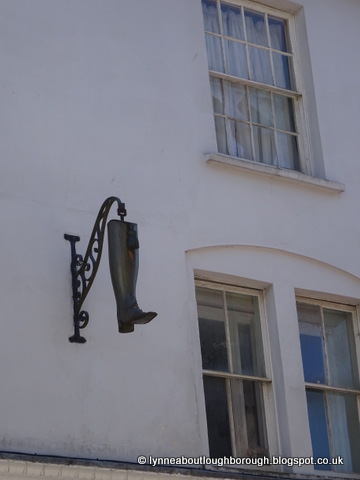
Then I thought I'd spotted another local connection, when I saw an old boot hanging from the front of a building. Did Launceston, like Loughborough, used to have an Old Boot pub?


Excitement continued to grow, until I came to the doorway of the shop, and looked at the tiled floor ... 


Ah well, Leicester's quite close!!!

Another area of employment in Loughborough was lacemaking. Local inventor John Heathcoat had a lacemaking factory on Mill Lane (now Market Street) which was attacked in 1816. The building that replaced it has recently been honoured with a Leicestershire Green Plaque. Lacemaking on display in Launceston Museum was of the Bedfordshire pillow lace type.


Another interest of mine is fire insurance plaques. I don't think there are many in Loughborough: I've only found one, on a house in Park Street. Launceston Museum had a few on display:


And finally, when I was training to be a tour guide we were encouraged to look up, in order to learn more about a town's history from its buildings. I've been used to doing this for many years, but I would also encourage you to look down, as there is a huge amount of history hidden in our streets, which we simply walk over and take for granted! Here's an example from Launceston:


And a couple from Loughborough:


Many of the things I've written about also appear in 'Secret Loughborough'.


You are welcome to quote passages from any of my posts, with appropriate credit. The correct citation for this looks as follow:

Dyer, Lynne (2019). Everywhere reminds me of Loughborough. Available from: https://lynneaboutloughborough.blogspot.com/2019/07/everywhere-reminds-me-of-loughborough.html [Accessed 21 July 2019]

Take down policy:
I post no pictures that are not my own, unless I have express permission so to do. All text is my own, and not copied from any other information sources, printed or electronic, unless identified and credited as such. If you find I have posted something in contravention of these statements, or if there are photographs of you which you would prefer not to be here, please contact me at the address listed on the About Me page, and I will remove these.
Thank you for reading this blog. 

Lynne 

Sunday, 14 July 2019

Knocking on the door to the past

I was talking recently with some friends about answering the door or answering the telephone to unexpected callers, and how these days we often choose not to. This set me thinking back to a conversation I had with another friend years ago who said: "if you can't drop in unexpectedly on your parents, then who can you drop in on?" I must have been thinking about this a lot lately because I dreamed one evening that my parents dropped in on me when I was out, but others in my house were in, so when I got home I was horrified - not horrified to see my parents, but horrified because I hadn't vacuumed for 4 days, the place was untidy and the washing basket was overflowing. And as for the dust ... well!

So these days, I wouldn't dream of calling in on anybody without either phoning them, texting them or emailing them to arrange a suitable time for a visit. I might walk past their house on a regular basis, but I certainly wouldn't interrupt their life without due warning. And even if we did arrange something, we'd be more likely to meet for tea in a cafe in town!

But, as we know, this closed door society hasn't always been like this. Years ago people didn't even used to shut their front door, kids played in the street and not only would you pop in and chat with your friends and neighbours, you'd even - horror or horrors - borrow some sugar from them!

This led me to the curious thought of who from Loughborough's past would I call in on if I happened to be around during their lifetime! Here's some of those who are on my list - and it is just some of them, as there are hundreds more!


  • In 1891 I'd visit William Clarke, who was part of the Clarke's Dyeworks family, at The Gables on Forest Road. It's student accommodation now, but I wonder what it would have been like inside as a new house around 1891? And what would William and his family have been like? In 1911 I'd have called in on his widow, Laura, who was now living at no.55 Park Road. That house would surely have been magnificent in those days. In early 1953 I'd have visited William's son, also William, at his home at no.3 Park Street, unaware that this was probably the last time I'd see him.
  • In 1889 I'd pop in to see Arthur Paget and his wife, Rose, in Radmoor House, to hear how exciting it was to have an invention displayed at the recent Paris Exposition! Arthur died in 1895, and Rose moved away, so, later that year, I'd drop in an Ernest Coltman, son of Huram Coltman, boilermaker, and see how the house and nearby grounds had changed.
  • In 1891 I'd mount the steps of no.20 Burton Street to pop in on Thomas Messenger and talk about the old Messenger business he sold to Walter Burder in 1874. In 1911 I'd be calling in two doors down, at no.22, to pass the time of day with Henry Corah, who ran a printing business. 1939 would see me again calling in at no.20 to see what architectural plans Arnold Barrowcliff was currently working on.
  • In the meantime, in 1891 I'd pop in to see how Walter Burder was getting on in his new house, Field House, after moving here from Park Road. Then I'd walk over to The Elms, off the Leicester Road and see how his younger brother, Alfred was getting on in his big house.  
  • Having visited Edward Middleton, owner of Middleton's Bank in Market Place, at his home in the Grove on Ashby Road (now student halls) in 1871, I'd then walk up to Leicester Road, to visit his son Edward William Craddock Middleton and his wife Augusta Sophia. They're living in Shelthorpe Cottage, a beautiful house in a park setting - lovely and quiet! In 1887 Edward died, and Augusta Sophia continued to live in Shelthorpe House, but eventually moved to Fairfield House, now known as the White House, probably to get away from the steam of the new Great Central Railway, and the constant machinery of the new Tucker's brick works, which both opened around 1898-9. In 1907 I'd pop in to Fairfield House and chat about the recent events Mrs Middleton had been to - she's a very social lady and has numerous friends!
And this would leave me plenty of other folk to visit on other days!

You are welcome to quote passages from any of my posts, with appropriate credit. The correct citation for this looks as follow:

Dyer, Lynne (2019). Knocking on the door to the past. Available from:  [Accessed  14 July 2019]
Take down policy:
I post no pictures that are not my own, unless I have express permission so to do. All text is my own, and not copied from any other information sources, printed or electronic, unless identified and credited as such. If you find I have posted something in contravention of these statements, or if there are photographs of you which you would prefer not to be here, please contact me at the address listed on the About Me page, and I will remove these.
Thank you for reading this blog. 

Lynne